
 Dutch
Dutch  English
  German
  Japanese
  Arabic
  Czech
Czech  Spanish
  French
  Italian
  Danish
  Polish
  Portuguese
  Norwegian
Inhoudsopgave
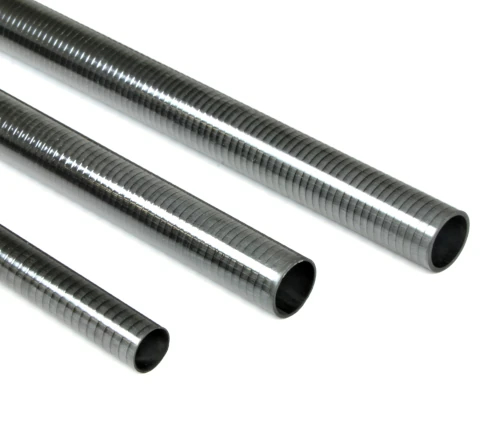
Tapered Carbon Fiber Tube design often confuses buyers at first glance. Shape changes along length. Load paths shift unexpectedly. Small design errors create big failures.
However, once you understand how each process builds structure, decisions become clearer. Filament winding, prepreg rolling, and pultrusion each solve different problems. Yet many customers pick based only on price. That approach often leads to weak performance or wasted budget.
So before selecting any Tapered Carbon Fiber Tube, you should focus on how fibers align, how resin flows, and how geometry affects strength. These factors decide durability far more than marketing claims.
In addition, application type matters heavily. A fishing pole demands flexibility. A drone arm needs stiffness. A structural mast must resist bending and torsion at once. Therefore, no single process fits every project.
This guide breaks down real differences. You will see where each method shines. You will also learn how to avoid common mistakes during sourcing.
Referenties:
1. De ideale koolstofvezel voor drones: Bladen Materialen en Opties
2. Hoe koolstofvezelbuis snijden?
3. Inzicht in hardheids- en samendrukkingsproeven van koolstofvezelbuizen
4. Koolstofvezel vs. grafieten hengel: Welke past het beste bij jouw behoeften
5. 8 fouten die ingenieurs maken bij het kiezen van koolstofvezelbuis en hoe ze deze kunnen vermijden
Key Material and Design Factors in Tapered Carbon Fiber Tube
Before comparing processes, you must understand core design drivers. Without that, choosing any manufacturing route becomes guesswork.
Fiber Orientation and Load Direction
Fiber direction controls strength. Straight fibers handle axial loads better. Angled fibers resist torsion.
Therefore, Tapered Carbon Fiber Tube used in bending structures needs mixed orientations. Pure axial layups fail under twisting forces.
Wall Thickness Variation
Tapered geometry creates uneven stress zones. Thin sections near tips often fail first.
So engineers increase thickness gradually along length. This balances weight and strength. However, poor control during production causes weak transitions.
Resin System Behavior
Resin binds fibers together. Yet too much resin adds weight. Too little reduces bonding strength.
Prepreg systems control resin content better. Wet processes vary more. That difference directly impacts consistency.
Surface Finish and Tolerance
Some applications demand tight tolerances. Others care more about cost.
Pultrusion offers stable dimensions. Filament winding allows more design freedom though surface may need finishing.
Filament Winding Tapered Carbon Fiber Tube Manufacturing
Filament winding builds structure through controlled fiber placement. Fibers wrap around a rotating mandrel at specific angles.
How Filament Winding Works
Continuous fibers pass through resin bath. Then machine winds them along mandrel path.
Angle changes during rotation. That allows precise control over strength directions.
For tapered shapes, mandrel diameter changes along length. This creates gradual profile transitions.
Advantages of Filament Winding
First, fiber alignment matches load paths very well. That improves performance under complex stress.
Second, high fiber volume increases strength without adding much weight.
Third, design flexibility allows custom layups. Engineers can tweak angles for each section.
Limitations You Should Know
However, tooling cost rises for complex tapers. Mandrel design becomes tricky.
Also, surface finish may require extra sanding or coating.
Production speed remains slower than pultrusion. That affects large volume orders.
Prepreg Rolling in Tapered Carbon Fiber Tube Production
Prepreg uses pre-impregnated fiber sheets. These sheets already contain controlled resin content.
How Prepreg Construction Works
Workers wrap prepreg layers around tapered mandrel. Each layer follows planned orientation.
After wrapping, vacuum bagging removes air. Heat cures resin into solid structure.
Key Benefits of Prepreg Tubes
First, resin distribution stays consistent. That improves quality repeatability.
Second, surface finish comes out smooth. Less post-processing needed.
Third, weight control becomes easier due to precise resin ratio.
Downsides from Customer Perspective
Labor cost increases due to manual work.
Production speed drops compared with automated processes.
Also, scrap waste may rise during cutting and layering.
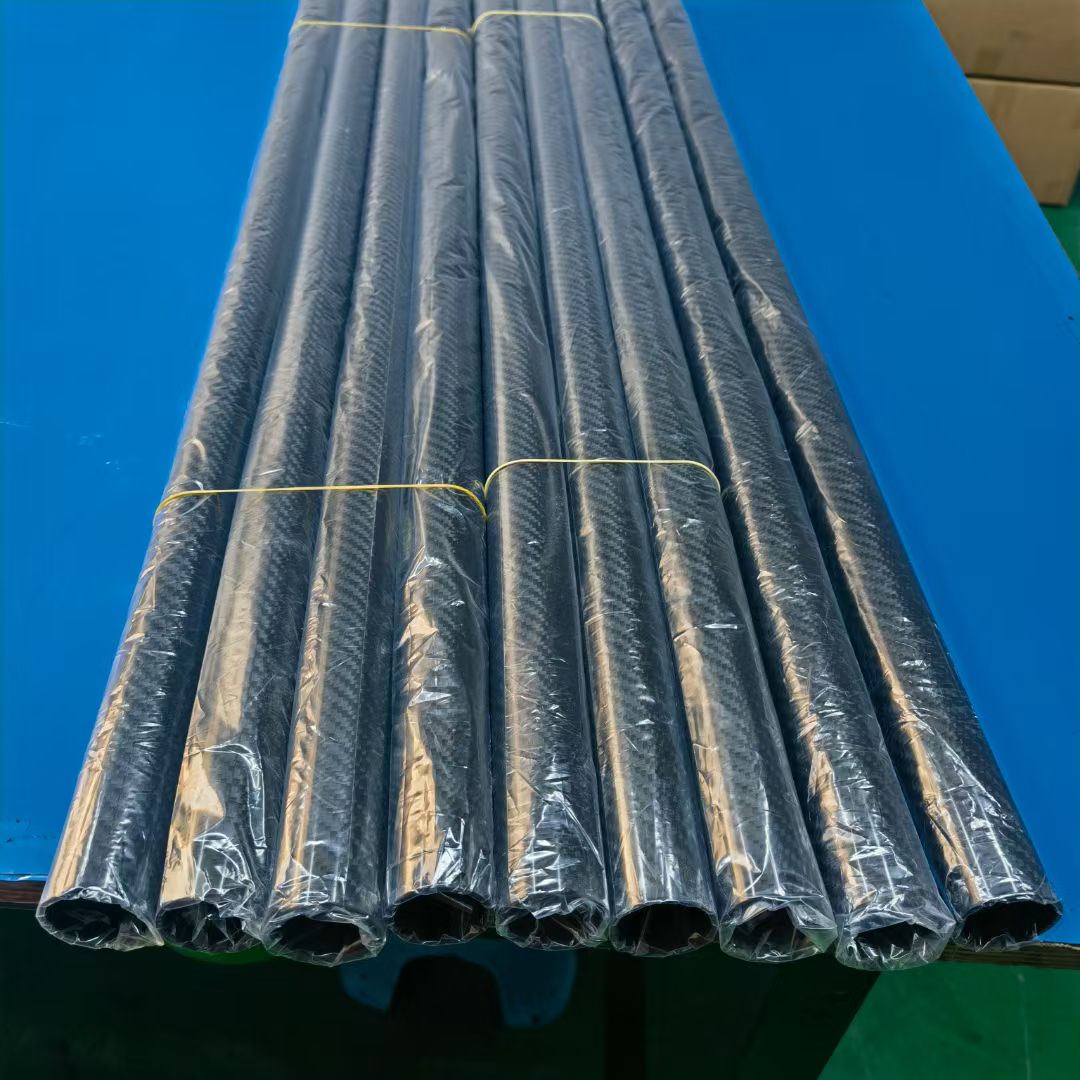
Pultrusion and Its Limits for Tapered Carbon Fiber Tube
Pultrusion pulls fibers through a heated die. That creates constant cross-section profiles.
How Pultrusion Works
Fibers saturate with resin. Then system pulls them through fixed mold. Heat cures material into solid shape.
Process runs continuously. Output stays consistent along length.
Why Pultrusion Struggles with Tapered Shapes
Pultrusion creates straight profiles. Cross-section cannot change during process.
That means true Tapered Carbon Fiber Tube cannot be formed directly.
Some manufacturers machine taper afterward. However, cutting fibers reduces strength significantly.
Advantages Still Worth Considering
Pultrusion offers
- high production speed
- excellent dimensional consistency
- lower cost for simple shapes
For straight rods or tubes, this method performs very well.
When Pultrusion Makes Sense
Use pultruded products for
- structural beams
- supports
- standard tubes without taper
Avoid using it when taper plays structural role.
Comparison: Filament Winding vs Pultrusion vs Prepreg
| Category | Filament Winding | Pultrusie | Prepreg Construction |
|---|---|---|---|
| Strength & Performance | Excellent directional strength control | Strong axial properties, limited flexibility | Balanced performance with high consistency |
| Kostenoverwegingen | Mid-range, depends on complexity | Lowest cost for large volume production | Higher cost due to labor and materials |
| Design Flexibility | High flexibility, supports complex designs | Limited to uniform cross-sections | High flexibility, supports complex geometry |
| Production Speed | Moderate production speed | Fastest production method | Slowest due to manual processing steps |
How to Choose Right Tapered Carbon Fiber Tube for Your Project
Customers often struggle here. Wrong choice wastes time and money.
If Your Project Needs High Strength and Custom Load Control
Choose filament winding. Fiber angles can match load exactly.
If Your Project Needs Clean Finish and Tight Tolerance
Choose prepreg construction. Surface quality saves post-processing effort.
If Your Project Needs Low Cost and Straight Profiles
Choose pultrusion. However avoid taper requirements.
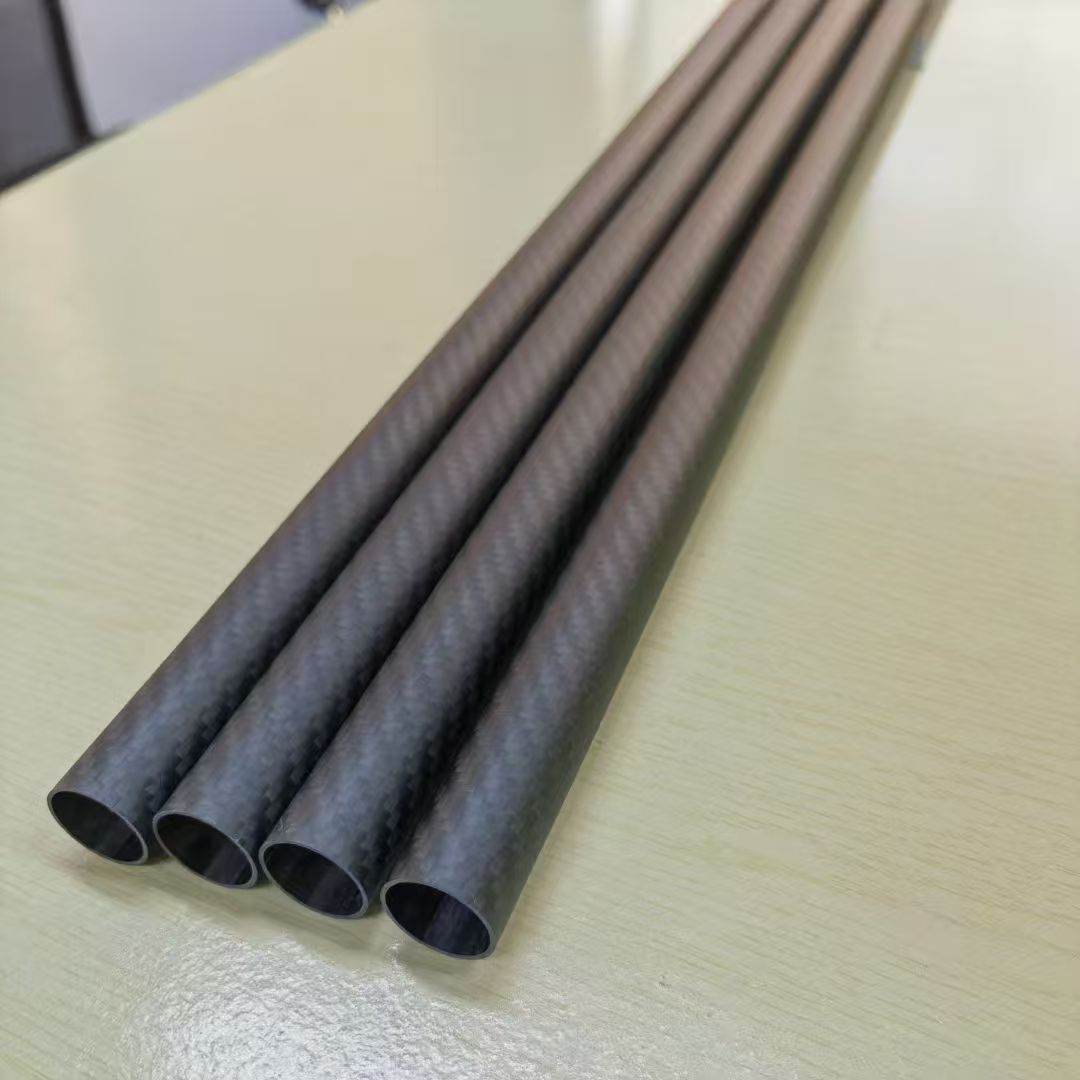
Common Mistakes When Buying Tapered Carbon Fiber Tube
Many buyers focus only on price. That creates problems later.
- Ignoring fiber orientation
- Choosing pultrusion for tapered applications
- Overlooking wall thickness transitions
- Skipping prototype testing
Instead, request samples and test under real load conditions.