 Polish
  English
  German
  Japanese
  Arabic
  Czech
Czech  Spanish
  French
  Italian
  Danish
  Portuguese
  Norwegian
  Dutch
Dutch 
Spis treści
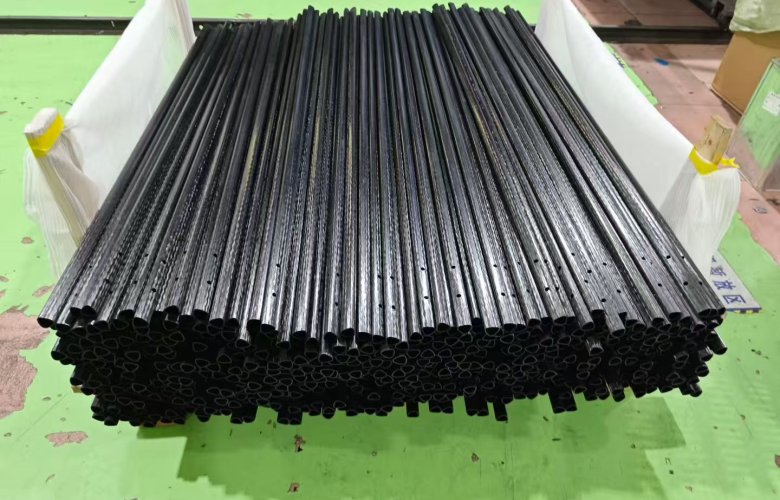
Rura z włókna węglowego selection often looks simple from distance. However practical engineering choices quickly stack up once load paths size limits joints and cost targets enter discussion. For engineers builders and buyers alike carbon fiber tube performance depends far more on construction method than appearance. Therefore understanding prepreg roll-wrapping versus pultrusion helps avoid wasted budget structural mismatch or early failure.
Rura z włókna węglowego appears across frames support arms housings and connectors. Yet identical dimensions may hide wildly different fiber paths resin systems and defect risks. Consequently selecting wrong construction method can cripple strength stiffness or fatigue life. This guide breaks down how prepreg roll-wrapping and pultrusion differ while focusing on decisions customers actually face.
Referencje:
1. Idealne włókno węglowe dla dronów: Materiały i opcje w arkuszach
2. Jak ciąć rury z włókna węglowego?
3. Zrozumienie testów twardości i ściskania rur z włókna węglowego
4. Włókno węglowe vs. wędka grafitowa: Która wędka najlepiej pasuje do Twoich potrzeb?
5. 8 błędów popełnianych przez inżynierów przy wyborze rur z włókna węglowego i sposoby ich uniknięcia
Key Material and Design Factors in Carbon Fiber Tube Selection
Before comparing processes engineers should evaluate material drivers affecting every carbon fiber tube project. These factors often decide success long before manufacturing begins.
Resin Selection in Carbon Fiber Tube Construction
First resin choice shapes heat resistance fatigue behavior and long-term stability. Epoxy dominates carbon fiber tube production thanks to predictable cure and bonding strength. However vinyl ester and polyester appear in cost-driven pultruded carbon fiber tube programs.
Meanwhile prepreg roll-wrapped tubes rely on carefully metered epoxy systems. As a result resin content stays consistent across wall thickness. Consequently mechanical results repeat more reliably across batches.
Fiber Orientation and Layup Design Control
Next fiber direction determines load capacity more than fiber grade. Axial fibers resist tension compression and bending. Off-axis layers control torsion crack spread and joint durability.
Pultrusion favors straight axial fiber alignment. Therefore bending strength excels while torsional response suffers. Prepreg roll-wrapping allows layered angles such as ±45° or hoop plies. Hence designers tune behavior per application.
Wall Thickness and Structural Design Choices
Wall thickness alone never guarantees strength. Instead fiber volume and orientation matter more. Pultruded carbon fiber tube often maintains uniform thickness along length. That consistency suits mass production.
Conversely roll-wrapped tubes vary thickness deliberately. Designers thicken joints reinforce midspan or taper ends. Therefore tapered carbon fiber tube designs almost always use roll-wrapping.
Surface Finish and Dimensional Accuracy
Surface quality impacts bonding sliding and appearance. Pultrusion yields smooth exterior surfaces straight from tooling. However internal surfaces often remain resin-rich.
Roll-wrapped tubes require post-processing sanding or clear coat. Still dimensional tolerance improves when mandrel control remains tight. That accuracy benefits carbon fiber tubing connectors and press-fit joints.
Environmental and Load Conditions
Operating environment changes everything. Moisture heat UV exposure and vibration influence resin choice fiber angles and safety factors. Pultruded carbon fiber tube suits dry stable environments.
Prepreg roll-wrapped structures perform better under mixed loads temperature swings and fatigue cycles. Therefore aerospace motorsport and advanced frames favor roll-wrapped solutions.
Prepreg Roll-Wrapping Carbon Fiber Tube Explained
Prepreg roll-wrapping builds carbon fiber tube layer by layer around a mandrel. Each ply arrives pre-impregnated with controlled resin content.
How Prepreg Roll-Wrapping Works
Technicians cut prepreg sheets at defined fiber angles. These plies wrap around mandrel surfaces under tension. Afterwards vacuum bagging and oven cure consolidate layers.
Because operators control orientation thickness and sequence performance tuning remains precise. Therefore carbon fiber tube frame designers favor this approach.
Strength and Performance Characteristics
Roll-wrapped tubes handle combined bending torsion and compression efficiently. Multi-axis layups slow crack propagation. Fatigue life improves substantially.
Moreover designers integrate local reinforcements around holes joints or connector zones. That feature proves essential for complex assemblies using carbon fiber tubing connectors.
Design Freedom Advantages
Prepreg roll-wrapping supports oval square tapered and stepped geometries. Tapered carbon fiber tube sections appear frequently in sporting goods drones and frames.
Lengths remain flexible. Wall thickness changes easily. Engineers iterate designs without retooling entire production lines.
Cost and Volume Considerations
Roll-wrapping costs more per unit. Labor and cure time raise price. However tooling cost stays low.
Therefore small batches prototypes and performance-critical products justify roll-wrapped construction.
Pultrusion Carbon Fiber Tube Manufacturing Overview
Pultrusion offers continuous automated production for straight constant-section carbon fiber tube designs.
How Pultrusion Works
Dry fibers pull through resin bath then heated die. Resin cures during pulling. Finished tube exits continuously at controlled speed.
Fiber alignment remains primarily axial. Resin distribution remains consistent. Scrap stays minimal.
Mechanical Behavior of Pultruded Carbon Fiber Tube
Pultruded tubes excel under axial tension compression and bending. However torsional stiffness stays limited due to fiber orientation.
Consequently pultruded carbon fiber tube suits beams rails struts and linear members with predictable loading.
Dimensional Consistency and Finish
Pultrusion delivers consistent outer diameter wall thickness and straightness. Surface finish appears smooth and glossy.
However internal resin richness sometimes complicates bonding. Designers often roughen surfaces for adhesive joints.
Cost Efficiency and Scalability
Pultrusion shines for volume production. Once tooling runs output scales cheaply. Therefore cost per meter drops dramatically.
For standardized tube profiles pultrusion offers unbeatable economics.

Application-Driven Selection for Carbon Fiber Tube Projects
Choosing correct construction method depends on use case.
Carbon Fiber Tube Frame Applications
Frames endure combined loads vibration and joint stresses. Roll-wrapped tubes dominate bicycles drones robotics and structures requiring joints.
Structural Beams and Linear Supports
Straight beams benefit from pultruded carbon fiber tube. Uniform loading suits axial fiber alignment.
Tapered Carbon Fiber Tube Requirements
Tapers demand roll-wrapping. Pultrusion cannot vary section geometry during run.
Carbon Fiber Tubing Connectors and Joints
Connector zones benefit from local reinforcement. Roll-wrapped tubes allow thickened ends and fiber steering.
Prepreg Roll-Wrapping vs Pultrusion: Direct Comparison
Understanding differences helps match construction method with application needs.
Structural Performance Comparison
Roll-wrapped carbon fiber tube handles torsion fatigue and complex loads better. Pultruded carbon fiber tube dominates axial stiffness.
Therefore multi-directional stress favors roll-wrapping. Straight load paths favor pultrusion.
Design Flexibility Comparison
Roll-wrapping supports custom profiles tapers and variable thickness. Pultrusion restricts geometry to constant cross sections.
Hence carbon fiber tube frame designs with joints bends or tapers almost always require roll-wrapped parts.
Cost and Production Volume Comparison
Pultrusion wins for long runs standardized designs and price sensitivity. Roll-wrapping fits low volume performance-driven builds.
Customers balancing cost versus function must weigh volume carefully.
Quality Control and Defect Risks
Pultrusion reduces void risk due to controlled process. Roll-wrapping quality depends on process discipline.
However advanced prepreg methods achieve excellent repeatability with proper controls.
Practical Selection Checklist for Engineers and Buyers
Before ordering carbon fiber tube review these questions:
What loads dominate bending torsion compression
Does geometry require taper variable thickness or shape change
What production volume justifies tooling investment
Will connectors holes or bonded joints exist
What environment temperature and fatigue cycles apply
Answers quickly guide process choice.
Final Recommendation: Matching Carbon Fiber Tube Construction to Purpose
Neither prepreg roll-wrapping nor pultrusion wins universally. Each solves different problems.
Choose pultruded carbon fiber tube for straight high-volume cost-driven designs. Choose prepreg roll-wrapped construction for frames joints tapers and mixed loads.
Understanding construction early prevents redesign delays wasted material and unexpected failure. Smart selection saves money improves reliability and boosts confidence across product lifecycle.