
 Portuguese
  English
  German
  Japanese
  Arabic
  Czech
Czech  Spanish
  French
  Italian
  Danish
  Polish
  Norwegian
  Dutch
Dutch 
Índice
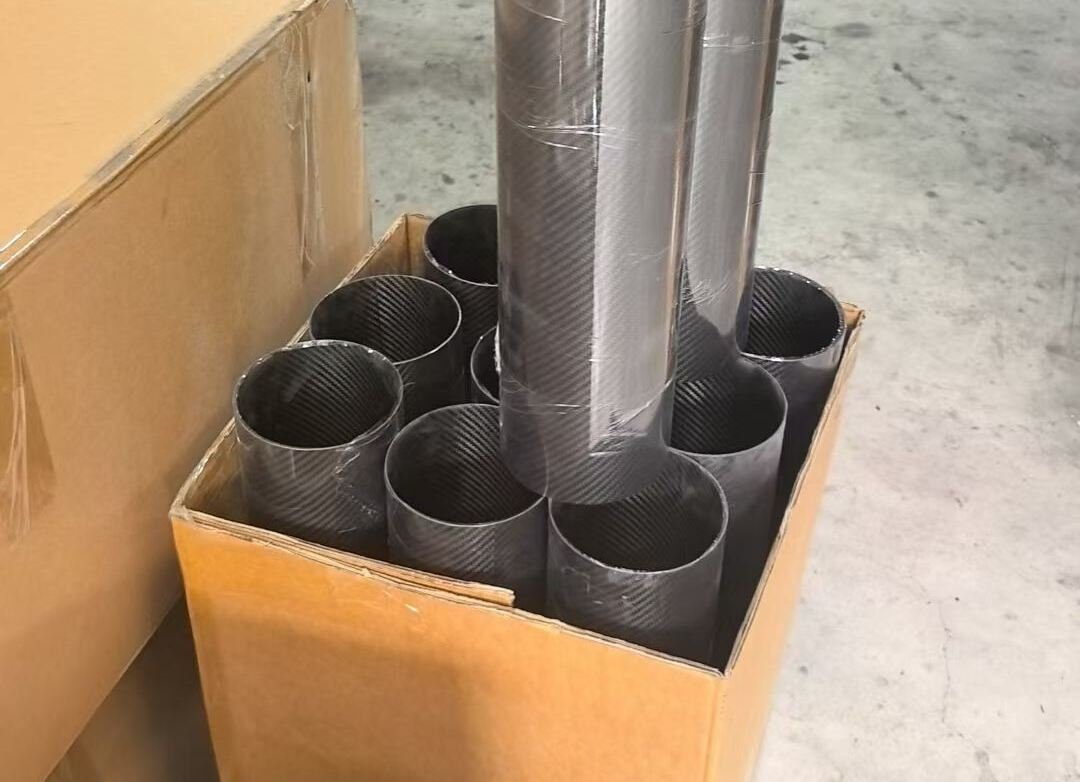
Looking for carbon fiber pipe for sale in small quantities?. one to replace a cracked part on an existing rig, and two spares in case it happens again.
You reach out to a supplier and get a quote that assumes you’re ordering a full production run. Or worse, you get no reply at all, because your order is too small to bother with. This happens constantly to engineers doing repairs, hobbyists building a one-off project, and product teams running early tests before committing to volume.
Buying a small batch of carbon fiber pipe is possible — but it works differently than a bulk order, and knowing how it works ahead of time saves you a lot of frustration.
Why Small Orders Get Ignored — or Overpriced
Carbon fiber pipe production usually runs most efficiently in batches. A supplier sets up the mandrel, mixes the resin, prepares the fiber layup, and cures a run of pipes together. Doing all that setup work for two or three pieces isn’t very different in effort from doing it for two hundred — which is exactly the problem.
Some factories simply pass on small orders because the margin isn’t worth the production slot. Others will take the order but charge a price that reflects the full setup cost divided across just a few pieces, which can look shockingly high compared to the per-unit price you saw advertised for bulk quantities.
Neither response means something is wrong with your order. It just means small-batch buying needs a slightly different approach than requesting a standard bulk quote.
Artigos relacionados:
T800 Carbon Fiber Tube for Wind Tunnel Testing
Small Batch Carbon Fiber Pipe Orders: Can You Buy Just a Few Pieces?
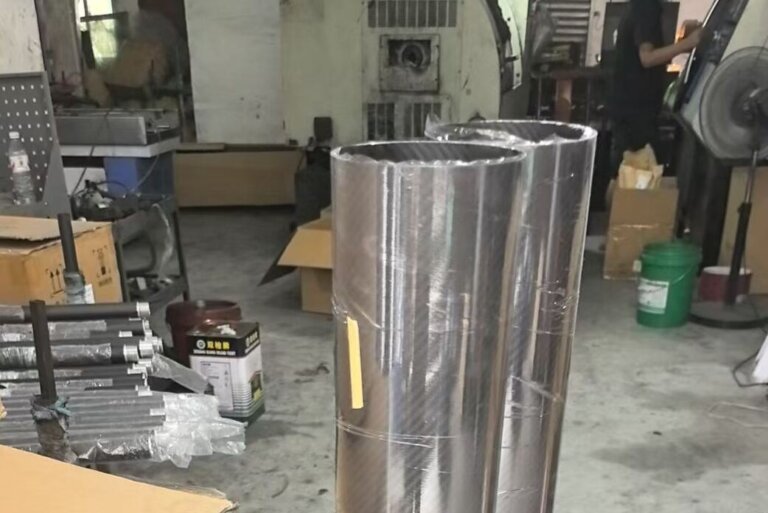
Carbon Fiber Pipe Supplier vs Trading Company: What’s the Difference?
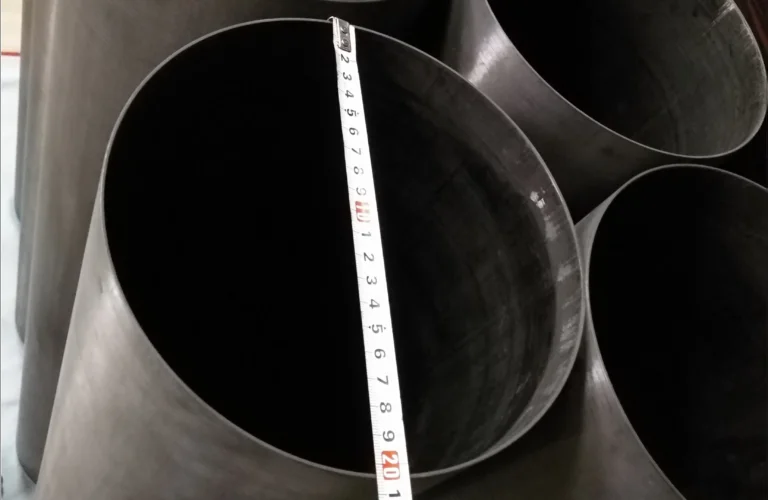
What Makes a Reliable Carbon Fiber Pipe Manufacturer?
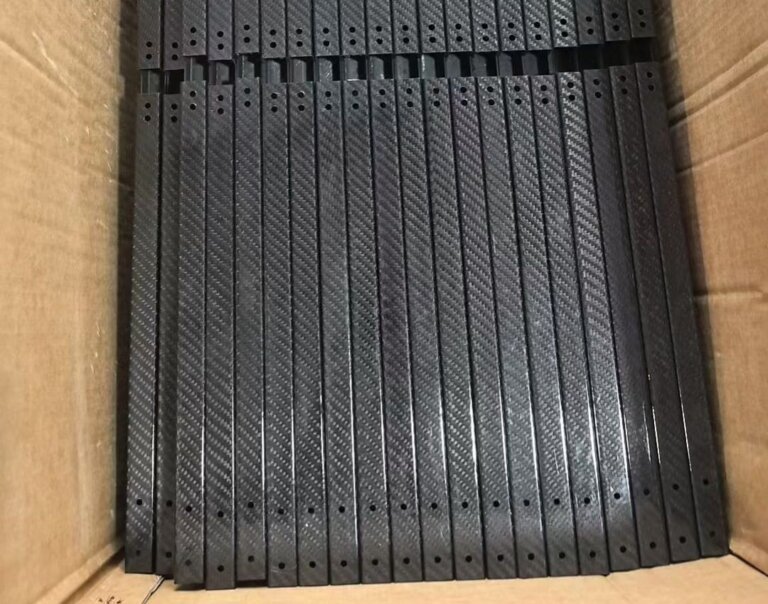
Carbon Fiber Tube Selection Guide for Industrial Applications
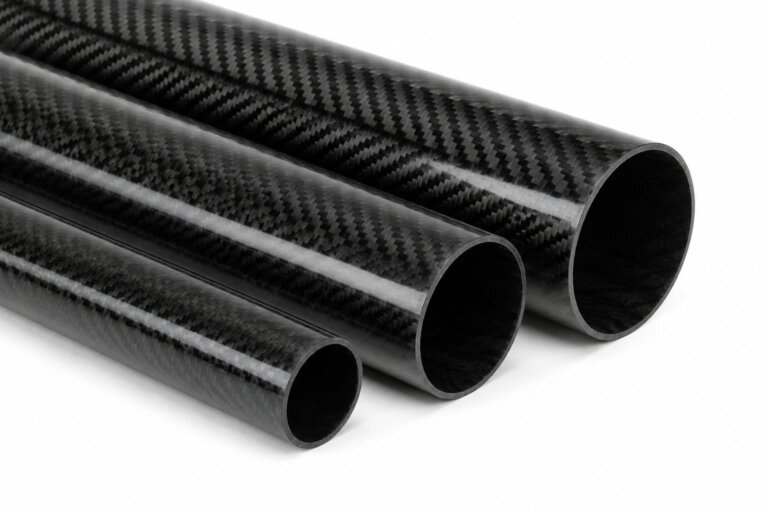
Como escolher o tubo de fibra de carbono de 4 polegadas certo para o seu projeto
What Counts as a “Small Batch” for Carbon Fiber Pipe?
This depends heavily on the manufacturing process, not just the piece count.
For standard round tubes already in production — common diameters, common wall thicknesses — a supplier may treat an order of even one or two pieces as “in stock” and ship it without any special setup. There’s no batch to start; it’s already sitting on the shelf.
For custom sizes, shapes, or layups, the story changes. A tapered profile or a non-standard wall thickness usually requires setting up a specific mandrel or adjusting the winding pattern, regardless of whether you order 5 pieces or 50. In that case, “small batch” might mean a minimum of 10 or 20 pieces just to make production worthwhile for the supplier — even though that number still feels small compared to a typical wholesale order.
Before assuming a supplier won’t take your order, ask specifically whether your size is a standard stock item or a custom setup. The answer changes everything about pricing and minimums.
Why Small Orders Cost More Per Piece
If you’ve gotten a quote for 5 pieces and it looks nearly as expensive as a quote for 50, this is usually why: the fixed costs of production don’t scale down with quantity.
Setting up a mandrel, preparing a specific resin mix, and running the curing oven takes roughly the same labor and machine time whether you’re producing a handful of pipes or a hundred. On a large order, that setup cost gets spread thin across many pieces. On a small order, it gets concentrated onto just a few — which is why the per-piece price can jump significantly.
Material waste plays a role too. Cutting custom lengths from standard stock leaves offcuts that a supplier can’t easily reuse or sell, and that waste has to be priced in somewhere.
Understanding this helps you read a quote correctly. A high per-piece price on a small order usually isn’t a markup — it’s math.
When Small Batch Makes Sense: Prototypes, Repairs & Testing
Small batch ordering fits a specific set of situations well, even with the higher per-piece cost.
Prototype development is the most common one. Before committing to a full production run, product teams want to test fit, strength, and finish on a handful of real pipes rather than relying on a datasheet. A drone manufacturer, for example, might order five sample tubes in different wall thicknesses just to run stiffness comparisons before locking in a spec.
Repairs and replacements are another common reason. If one section of an existing structure — a robotics frame, a piece of test equipment, a telescoping pole — needs a matching replacement, you don’t need a bulk order. You need the exact right piece, fast.
Testing and certification work also often calls for small quantities, since destructive testing only requires a limited number of samples before results are conclusive.
In all of these cases, paying a higher per-piece price for a small batch is usually still cheaper — and faster — than committing to a full production order you don’t actually need yet.
How to Get the Best Price on a Small Carbon Fiber Pipe Order
A few adjustments can bring the cost of a small order down without changing what you actually need.
Choosing standard diameters and wall thicknesses over custom dimensions avoids triggering a new production setup altogether. If your project has any flexibility on size, ask your supplier which sizes they already keep in stock.
Combining orders helps too. If you know you’ll need a similar part again in a few months, ask whether ordering a slightly larger batch now — even just doubling the quantity — meaningfully changes the price. Sometimes the jump from 5 to 15 pieces barely moves the total cost, since the setup expense is already fixed.
It’s also worth asking directly whether a small trial order can roll into pricing credit on a larger follow-up order, if your project is expected to scale. Some suppliers are willing to treat a small first order as the start of a longer relationship rather than a one-off transaction, and price it accordingly.
Buying a small batch of carbon fiber pipe is not unusual, and it doesn’t mean you’re stuck with a bad price or a supplier who won’t take your order seriously. It just means understanding how the process works — what counts as a standard size, why setup costs affect small-quantity pricing, and when it makes sense to combine or scale your order. Whether you need three pieces for a repair or a handful of samples for testing, a supplier willing to explain their minimums and pricing honestly is worth working with, even on your smallest order.
Carbon Fiber Pipe
Small Batch Order FAQs
Answers to common questions about minimum order quantities, prototype orders, pricing, shipping, and test reports.
It depends on the process and size — standard stock sizes often have no minimum, while custom diameters or shapes may require a small batch minimum to justify setup costs.
Yes, many suppliers accept single-piece or small-quantity orders, especially for standard sizes already in production.
Setup costs — such as mandrel preparation or fiber layup adjustments — are spread across fewer pieces, so the unit cost naturally goes up on small runs.
Not usually. Small batches of in-stock sizes often ship faster because they do not require scheduling a full production run.
Yes, some suppliers offer pricing adjustments or credits when a small trial order leads to a larger follow-up order.
Reliable suppliers can usually provide test data even for small orders, though it may be based on the production batch rather than a piece-specific report.