
 German
  English
  Japanese
  Arabic
  Czech
Czech  Spanish
  French
  Italian
  Danish
  Polish
  Portuguese
  Norwegian
  Dutch
Dutch 
Inhaltsübersicht
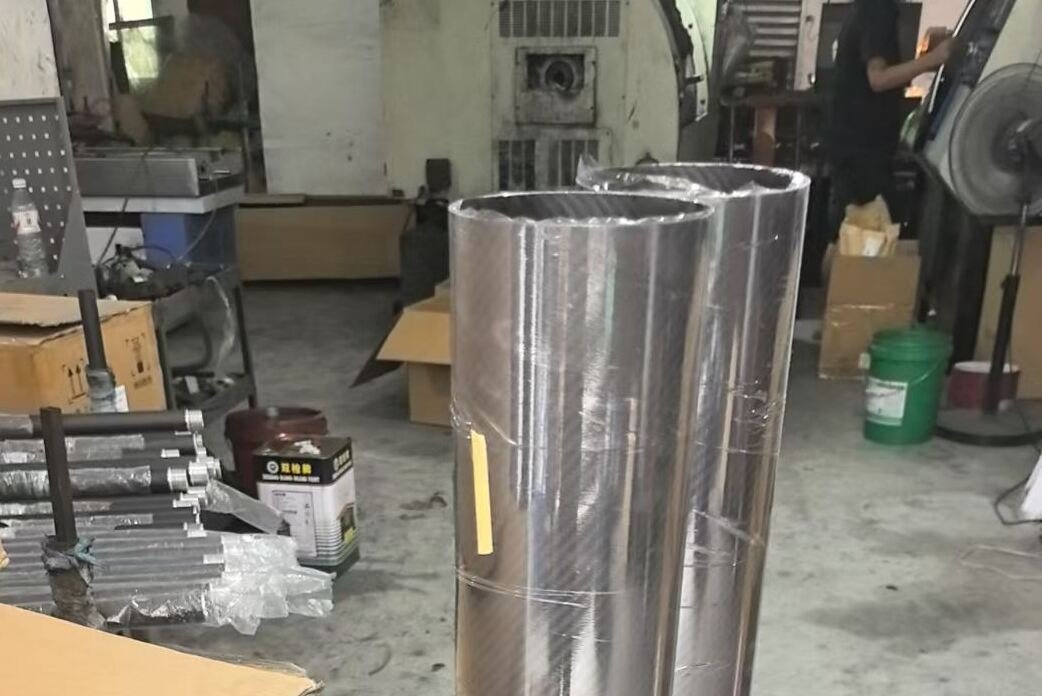
You send an inquiry to five companies for a batch of carbon fiber pipe. All five reply within a day. All five send similar-looking product photos, similar price ranges, and similar promises about quality.
Then you ask one question: “Can we do a video call to see your production floor?”
Two of them say yes right away. Two take three days to respond and eventually reschedule. One never answers that question directly again.
This is usually the moment buyers realize not everyone they’re talking to is actually a factory. Some are carbon fiber pipe suppliers with real production lines. Others are trading companies — sales offices that forward your order to a factory and manage the relationship in between. Both can get you a product. But the experience, the price, and what happens when something goes wrong can look very different depending on which one you’re actually dealing with.
Why Buyers Often Can’t Tell a Supplier from a Trading Company
Websites don’t make this easy. A trading company can use the same stock photos, the same “our factory” language, and the same product catalog as a real manufacturer. Some even rent a small warehouse space and photograph it to look like a production facility.
This isn’t always dishonest — some traders are upfront about their role, and that’s fine. The problem shows up when a company implies it manufactures the product but can’t answer basic process questions when you dig in. A buyer sourcing 500 pieces of custom carbon fiber pipe doesn’t find out the truth until lead times slip or a batch comes back inconsistent, and by then the deposit is already gone.
Verwandte Artikel:
T800 Carbon Fiber Tube for Wind Tunnel Testing
Small Batch Carbon Fiber Pipe Orders: Can You Buy Just a Few Pieces?
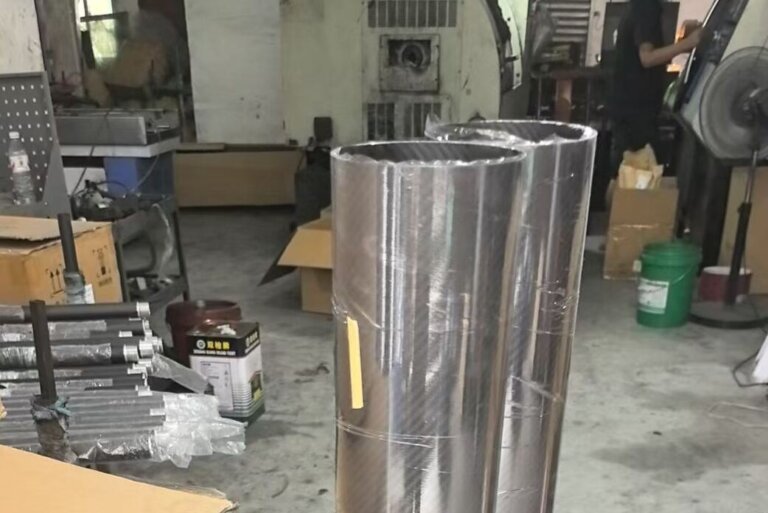
Carbon Fiber Pipe Supplier vs Trading Company: What’s the Difference?
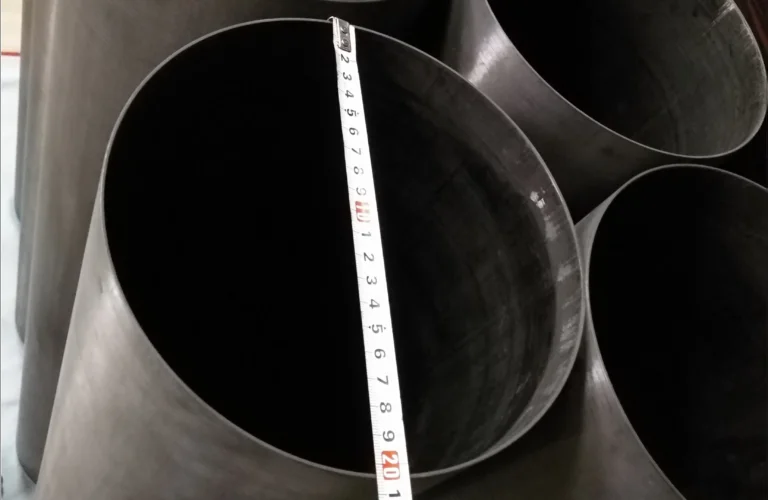
What Makes a Reliable Carbon Fiber Pipe Manufacturer?
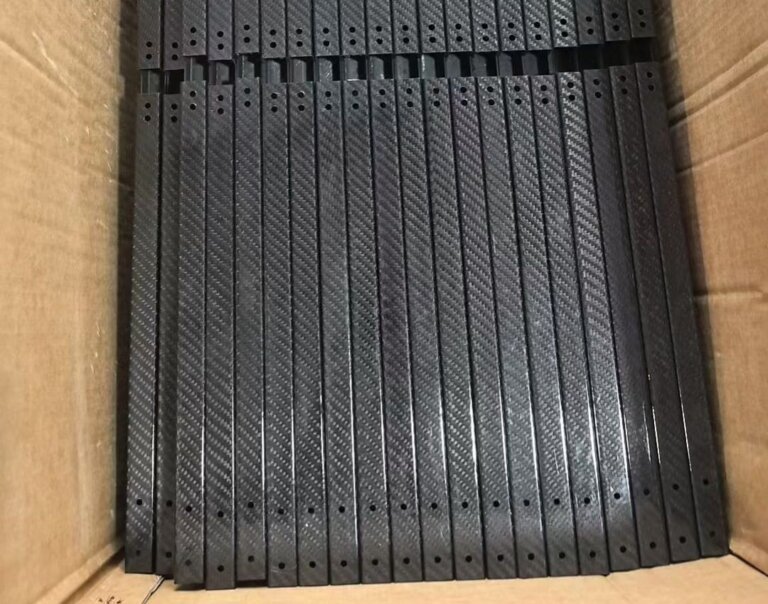
Carbon Fiber Tube Selection Guide for Industrial Applications
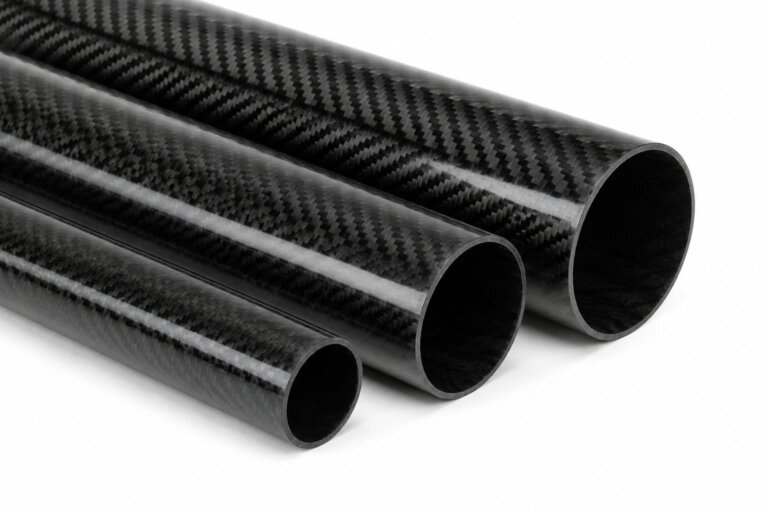
So wählen Sie das richtige 4-Zoll-Kohlefaserrohr für Ihr Projekt aus
Who Actually Makes Your Carbon Fiber Pipe?
A real carbon fiber pipe supplier owns the equipment — mandrels, winding or roll-wrapping machines, curing ovens, cutting and finishing tools. They control the fiber layup, the resin ratio, and the curing schedule directly. If your drawing calls for a specific wall thickness or fiber orientation, the engineer answering your email is the same person who can adjust the production line.
A trading company controls none of this. They place your order with a factory, sometimes one they’ve never visited, and relay your specifications and questions back and forth. This works fine when the order is simple and the factory is reliable. It becomes a problem when your project needs technical back-and-forth — tolerance adjustments, material substitutions, or a rushed change to a drawing mid-production.
One buyer sourcing tapered carbon fiber tubing for a robotics arm project found this out the hard way. His trading company contact kept saying “no problem” to every technical question, but the factory behind them had never made a tapered profile before. The first batch came back with inconsistent wall thickness along the taper — a mistake a direct supplier’s engineer likely would have flagged before production started.
Price, Communication & Quality Control: How the Two Compare
Price. A trading company adds a margin on top of the factory’s price, usually somewhere between 10% and 30%, depending on order size and relationship. A direct supplier skips that markup — but not always. Some suppliers price higher for small orders or first-time buyers, so it’s worth comparing actual quotes rather than assuming direct is always cheaper.
Communication. With a supplier, your questions go straight to someone involved in production. With a trader, questions pass through a middleman first, which adds delay — especially across time zones. A same-day answer can turn into a two- or three-day wait.
Quality control. This is where the gap matters most. A supplier controls the process end to end, so if a batch fails testing, they know exactly why and can fix it at the source. A trader has to relay the problem to the factory, wait for their response, and pass it back to you — often with less technical detail than you’d get directly.
None of this means trading companies are a bad choice. For buyers who need help navigating a foreign market, want a single point of contact across multiple product types, or are placing a small one-time order, a trader can genuinely simplify things. The issue is only when you think you’re buying direct and you’re not.
What Happens When Something Goes Wrong?
This is the real test. A defective batch, a missed tolerance, a shipment that doesn’t match the approved sample — every buyer eventually deals with one of these.
With a direct supplier, the conversation usually starts with “let’s look at the production data together.” They can pull the batch records, check the resin cure log, and tell you exactly where the deviation happened. Fixes tend to move faster because there’s no third party relaying information.
With a trading company, the same issue often means waiting for them to escalate to the factory, get an explanation, and translate it back to you. Some traders handle this well and take ownership on your behalf. Others become slower and less transparent exactly when you need clarity the most — because they’re now managing a problem they didn’t create and don’t fully control.
Before you place a large order, it’s worth asking upfront: “If there’s a quality issue, how do we resolve it, and how fast?” The answer tells you a lot about who you’re really working with.
How to Verify If You’re Talking to a Real Carbon Fiber Pipe Supplier
A few direct questions usually clear this up fast:
Ask for a live video call showing the actual production floor — not a pre-recorded video. Ask who signs the business license, and check whether the name matches your invoice. Ask a specific process question, like which winding angle they use for torsional loads, or how they control resin content during roll-wrapping. A real supplier answers without hesitation. A trader either passes the question along or gives a vague, general answer.
None of this is about distrust for its own sake. It’s about knowing who you’re actually building a relationship with, so you can plan your project — and your backup options — accordingly.
Both suppliers and trading companies have a place in the market, and the right choice depends on your order size, your need for technical support, and how much direct control you want over production. What matters most is knowing which one you’re actually working with before you commit. A company willing to show you its production floor, explain its process in detail, and take direct responsibility for quality is usually the safer long-term partner — whether you’re placing a single prototype order or scaling into full OEM production.
Carbon Fiber Pipe
Supplier FAQs
Answers to common questions about buying carbon fiber pipe from a direct manufacturer or trading company.
Not necessarily — trading companies can be useful for small orders or when you need help with language barriers. The risk comes when a trader presents itself as a factory without disclosing it.
Ask for a live video tour of the production floor, request their business license, and ask specific process questions. A trading company usually cannot answer detailed manufacturing questions.
Usually yes, since there is no markup from a middleman. However, pricing also depends on order volume, customization, and production capacity.
Often, yes. Messages typically pass through the trader before reaching the factory, which can slow down quotes, technical clarifications, and issue resolution.
Yes, if they work with a reliable factory. The key is transparency — ask who actually manufactures the product and whether you can contact them directly if needed.
Ask about their manufacturing process, minimum order quantity, lead time, and whether they can provide test reports from actual production batches.