
 Italian
  English
  German
  Japanese
  Arabic
  Czech
Czech  Spanish
  French
  Danish
  Polish
  Portuguese
  Norwegian
  Dutch
Dutch 
Indice dei contenuti
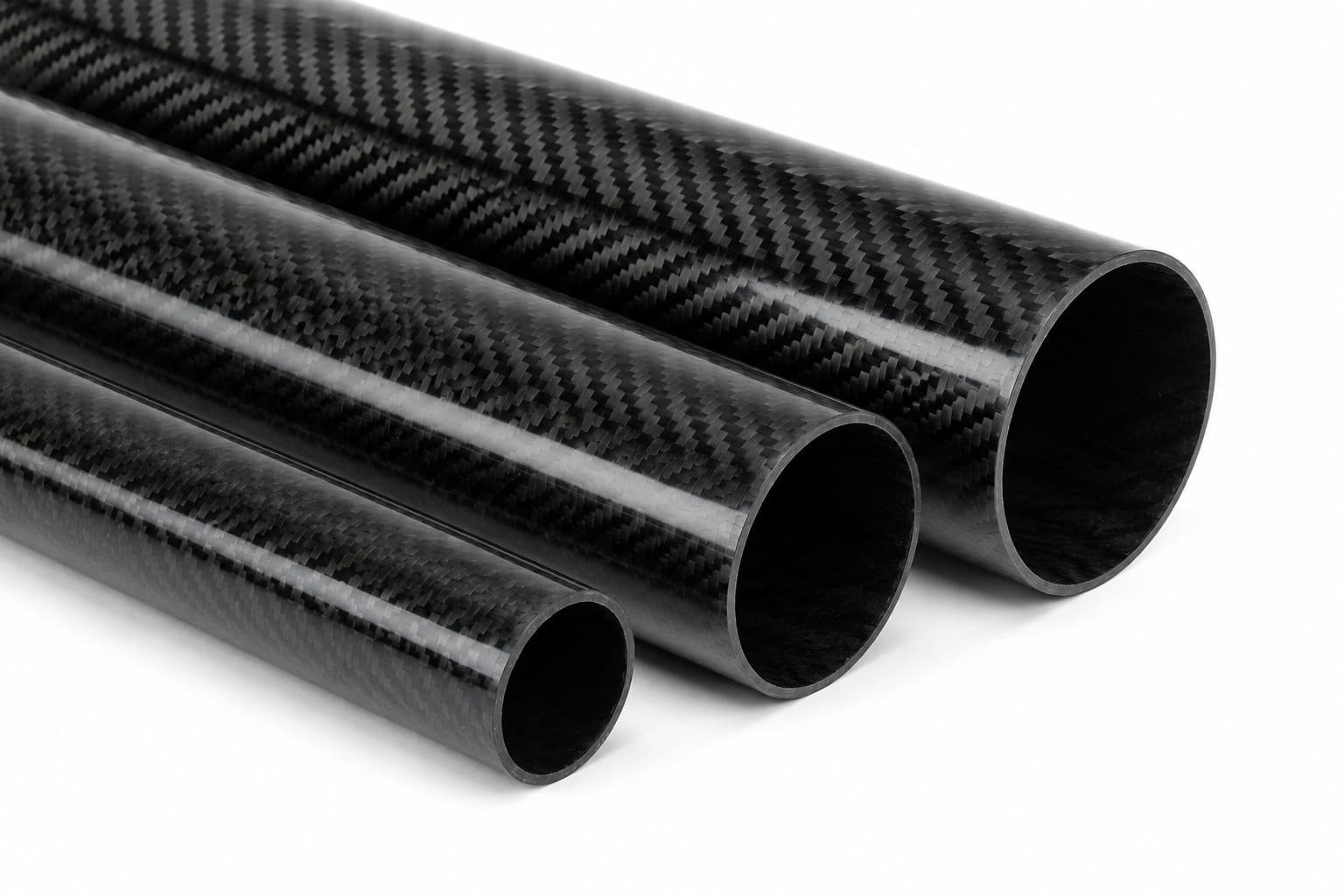
A buyer needs a 4 inch carbon fiber tube for a structural assembly and receives three quotes. Each supplier lists a 4-inch diameter, yet one offers a 2 mm wall, another a 4 mm wall, and the third proposes a custom layup. The prices differ sharply.
That is normal. Diameter alone does not define whether 4 inch carbon fiber tubing will fit, carry the required loads, or survive the operating environment. The right choice depends on dimensions, laminate design, manufacturing method, tolerances, and quantity.
Why 4 Inch Carbon Fiber Tube Specifications Can Be Misleading
A “4 inch” description may refer to the outside diameter (OD), inside diameter (ID), or a nominal product category. These are not interchangeable. A tube with a 4-inch OD and 2 mm wall has a very different internal clearance and structural profile than a tube with the same OD and 5 mm wall.
Buyers also need to compare length, fiber orientation, resin system, finish, and manufacturing method. Two large diameter carbon fiber tubes can look similar on a quotation while performing very differently in bending, torsion, compression, or connection areas.
A common case involves a customer who specifies only a 4-inch OD. During review, the supplier learns that a metal insert must fit inside the tube. The ID and local load from the insert become the controlling requirements, not the OD.
Before requesting a price, state clearly whether the 4-inch dimension is OD or ID. Then define the dimensions that cannot change.
Articoli correlati:
Come verificare le dimensioni dei tubi in fibra di carbonio per gli UAV
Lastre in CFRP per attrezzature da esterno: raggi UV, umidità e invecchiamento atmosferico a lungo termine
Piastre in fibra di carbonio per telai: prevenire la deformazione dopo la lavorazione CNC
Tubi in fibra di carbonio per l'allineamento e il controllo del trim della trave di coda di un aliante
Tubo in fibra di carbonio per posizionamento dell'antenna UAV e progettazione GNSS
Ordine di tubi in fibra di carbonio in più dimensioni per la costruzione di un aliante UAV
How Does Wall Thickness Affect a 4 Inch Carbon Fiber Tube?
A thicker wall can raise stiffness and load capacity, but thicker is not automatically better. It adds weight, material cost, machining time, and may leave too little internal space for wiring, inserts, shafts, or connectors.
For a long industrial frame, a thicker wall may reduce deflection. For a robotic arm, unnecessary wall thickness can increase moving mass and require larger motors. A marine support may need extra wall material around mounting zones, while a UAV support may prioritize low weight and carefully placed fiber reinforcement.
The answer depends on support conditions and loads. A tube fixed at both ends behaves differently from a cantilevered tube. Bending loads, torsion, impact risk, fastener locations, and temperature exposure all affect the correct carbon fiber tube wall thickness.
Do not simply request the thickest 4 inch carbon fiber structural tube. Give the supplier the expected load, span, mounting method, and allowable deflection so it can recommend a sensible construction.
4 Inch Carbon Fiber Tube: Roll Wrapped or Pultruded?
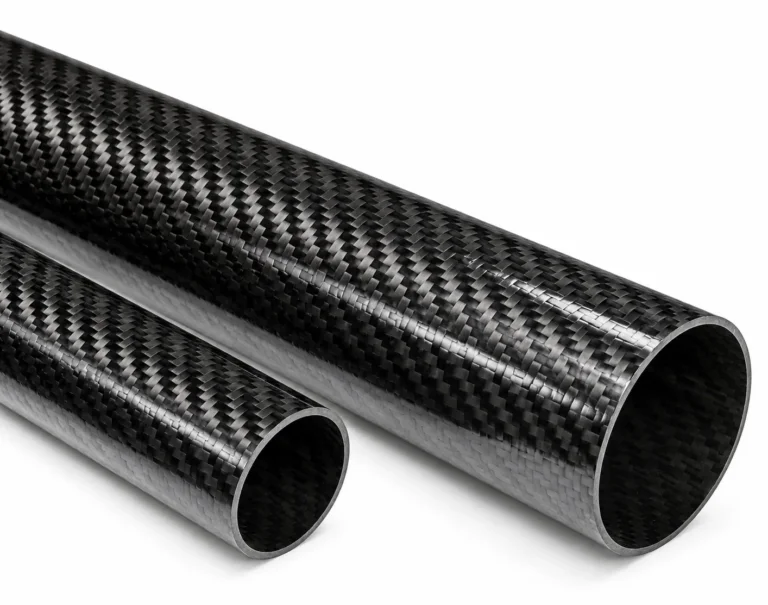
A tubo in fibra di carbonio avvolto in rotoli is built by wrapping prepreg layers around a mandrel. This gives the manufacturer control over fiber angles, wall thickness, surface finish, and local reinforcement. It is often a practical choice for custom 4 inch carbon fiber tube projects, prototypes, and lower-volume structural applications. Roll-wrapped construction can combine axial fibers for bending with angled layers for torsional loads.
A tubo pultruso in fibra di carbonio is produced continuously with fibers primarily oriented along the length. It is efficient for consistent profiles and larger production volumes, and it performs well in axial tension and bending applications. However, pultruded designs generally provide less freedom to alter the laminate for special torsional, crush, or connection requirements.
Neither method is automatically superior. Compare quantity, load direction, geometry, tolerance, budget, and cosmetic requirements before deciding.
When Do You Need a Custom 4 Inch Carbon Fiber Tube?
Standard tubing works well when the available OD, ID, wall, and length already match the assembly. Move to a tubo in fibra di carbonio su misura when the part must meet a non-standard length, controlled tolerance, special fiber orientation, defined surface finish, or specific internal dimension.
Custom production also makes sense when the tube needs CNC-machined holes, bonded fittings, metal inserts, or a finished end connection. These details should be considered before the tube is made. Drilling or modifying a finished tube without reviewing the laminate can create local damage or reduce strength around the joint.
For example, a buyer may begin with a standard 4 inch carbon fiber pipe, then discover it must match a proprietary connector. A custom ID, wall thickness, and machining plan may cost more per piece, but it can prevent assembly delays, adapters, and rework later.
How to Compare 4 Inch Carbon Fiber Tube Suppliers
Do not compare quotations by unit price alone. Check whether every supplier quoted the same fiber type, wall thickness, process, tolerance, finish, length, inspection level, and freight terms. A low price may reflect a thinner wall, different resin, looser dimensions, or a different manufacturing method.
Ask about sample availability, dimensional inspection, production capacity, lead time, and communication during design review. If your part will be assembled with other components, ask whether the supplier can support CNC machining, bonding, surface preparation, and prototype production.
A capable 4 inch carbon fiber tube supplier should ask technical questions before giving a final quote. That is usually a better sign than receiving an immediate price with no review of the application.
For custom projects, CarbonCore Dynamics can review drawings, dimensions, loads, and quantity before recommending roll wrapping, pultrusion, custom layup, surface finishing, CNC machining, prototype production, or OEM production support.
A 4 inch carbon fiber tube is not defined by diameter alone. Wall thickness, fiber direction, process, tolerances, load conditions, and quantity need to be evaluated together.
If you are comparing options, send your dimensions, drawing, quantity, and application requirements. An experienced engineering team can help you review the specification before production begins.
How to Compare 4 Inch Carbon Fiber Tube Suppliers
Do not compare quotations by unit price alone. Check whether every supplier quoted the same fiber type, wall thickness, process, tolerance, finish, length, inspection level, and freight terms. A low price may reflect a thinner wall, different resin, looser dimensions, or a different manufacturing method.
Ask about sample availability, dimensional inspection, production capacity, lead time, and communication during design review. If your part will be assembled with other components, ask whether the supplier can support CNC machining, bonding, surface preparation, and prototype production.
A capable 4 inch carbon fiber tube supplier should ask technical questions before giving a final quote. That is usually a better sign than receiving an immediate price with no review of the application.
For custom projects, CarbonCore Dynamics can review drawings, dimensions, loads, and quantity before recommending roll wrapping, pultrusion, custom layup, surface finishing, CNC machining, prototype production, or OEM production support.
A 4 inch carbon fiber tube is not defined by diameter alone. Wall thickness, fiber direction, process, tolerances, load conditions, and quantity need to be evaluated together.
If you are comparing options, send your dimensions, drawing, quantity, and application requirements. An experienced engineering team can help you review the specification before production begins.
Frequently Asked Questions
Can I order a custom 4 inch carbon fiber tube?
Yes. A custom 4 inch carbon fiber tube can be made with specified OD, ID, wall thickness, length, fiber orientation, finish, and machining features. Custom work is most useful when standard tubing does not fit a connector, insert, assembly tolerance, or structural requirement. Provide a drawing and expected production quantity for an accurate review.
What wall thickness is available for a 4 inch carbon fiber tube?
Available wall thickness depends on the production method, required ID, diameter tolerance, and laminate design. Rather than selecting thickness from a catalog alone, provide your loading, span, mounting points, and internal-clearance needs. The supplier can then assess whether a standard wall or a custom laminate is more appropriate.
Can you manufacture a tube from my drawing?
Yes, a carbon fiber tube manufacturer can generally review a 2D drawing or CAD model and confirm manufacturability. The drawing should identify OD, ID, length, tolerances, surface requirements, hole locations, and any mating components. Include the application so the laminate can be reviewed rather than copied from an unrelated tube design.
What is the difference between pultruded and roll-wrapped tubing?
Pultruded carbon fiber tubing uses continuous, lengthwise fiber reinforcement and is well suited to consistent, repeat-volume profiles. Roll-wrapped tubes use layered prepreg around a mandrel, allowing more control of fiber angles, wall thickness, and cosmetics. The better choice depends on loading, geometry, quantity, and cost targets.
Can I specify both the inner and outer diameter?
Yes, and you should whenever the tube mates with an insert, shaft, sleeve, or connector. Specifying OD and ID defines wall thickness directly. If wall thickness is structurally important, list it separately on the drawing as well and identify which dimensions are critical to the assembly.
Can a 4 inch carbon fiber tube be CNC machined?
Yes, large diameter carbon fiber tubing can be CNC trimmed, drilled, or machined when the operation is planned around the laminate and appropriate composite tooling is used. Provide hole patterns, edge conditions, and tolerances early. This helps avoid placing holes where they may create undesirable local stresses or interfere with a bonded joint.
What tolerances can you achieve?
Achievable tolerances depend on diameter, length, process, wall thickness, post-machining, and inspection method. A supplier should confirm tolerances for OD, ID, length, straightness, and machined features separately. Avoid assuming that a standard tube provides precision-machined tolerances; place those requirements directly on the RFQ or drawing.
Can I order prototype quantities?
Yes. Prototype quantities are often used to confirm fit, finish, assembly methods, and structural behavior before an OEM release. Unit cost may be higher than production pricing because setup is spread across fewer parts. A prototype can still be less expensive than discovering an ID, tolerance, or connector problem after a larger order.