 Dutch
 English
 German
 Czech
 Spanish
 Hebrew
 French
 Danish
 Portuguese
 Norwegian
Inhoudsopgave
Je hebt online een leverancier gevonden. De website ziet professioneel uit. De productfoto’s zien er scherp uit. De prijs is lager dan bij alle anderen.
Dan stel je een eenvoudige vraag: “Kun je een videogesprek vanuit de fabriek regelen?” En de antwoorden worden traag. Vaag. Of ze stoppen gewoon.
Dit gebeurt vaker dan de meeste kopers verwachten. Veel advertenties voor aangepaste koolstofvezelbuizen worden geplaatst door handelsbedrijven, niet door fabrieken. Sommige zijn echte fabrikanten met beperkte apparatuur. Andere zijn legitieme fabrieken die hun capaciteiten simpelweg niet duidelijk uitleggen, waardoor kopers onnodig zenuwachtig worden.
Het kiezen van de verkeerde bron kost niet alleen tijd. Het kan betekenen dat een batch wordt afgekeurd, een prototypedeadline wordt gemist, of een product de tests niet doorstaat omdat de wanddikte of harsverhouding niet overeenkwam met wat het datasheet beloofde. Deze gids loopt de vragen door die serieuze kopers moeten stellen voordat ze een aanbetaling doen, en waarom elk antwoord ertoe doet.
Bent u een echte fabrikant van aangepaste koolstofvezelbuizen?
Dit is meestal de eerste vraag die kopers stellen, en het is de juiste vraag om mee te beginnen.
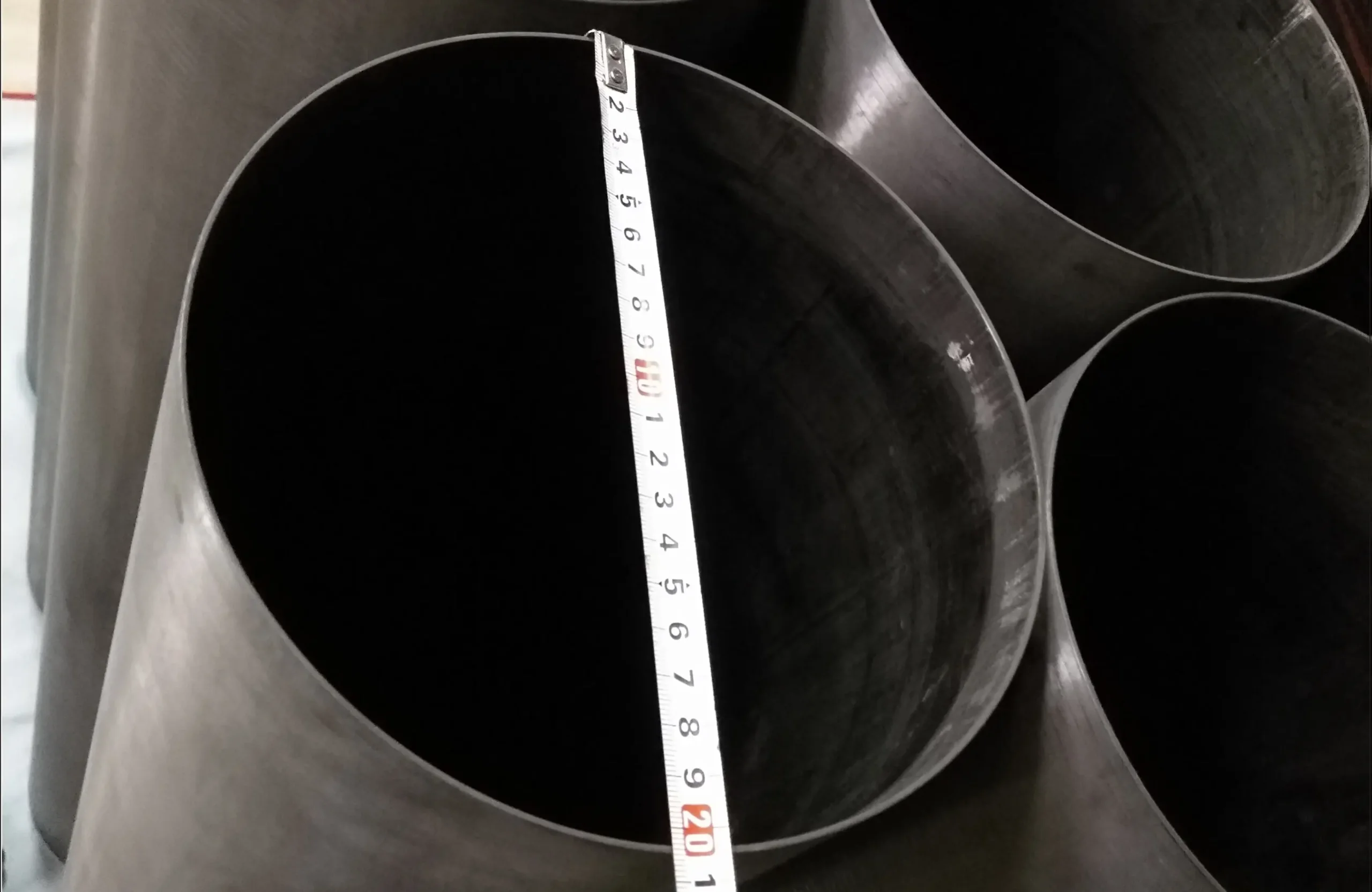
Een echte fabrikant van aangepaste koolstofvezelbuizen bezit of bedient productieapparatuur — doorns, filamentwind- of rolwikkelmachines, uithardingsovens en snijgereedschap. Een handelsbedrijf bezit niets hiervan. Ze sturen je order door naar een fabriek, rekenen een marge, en beheren de communicatie daartussen.
Er is niets mis mee om via een handelaar te kopen als de prijs en levertijd voor jou werken. Het probleem is wanneer een handelaar zich voordoet als fabriek. Je verliest directe toegang tot engineering, en kwaliteitsproblemen duren langer om op te lossen omdat berichten een extra laag passeren.
Vraag om een live videogesprek waarin de productievloer te zien is. Vraag wie de bedrijfslicentie ondertekent en of die overeenkomt met de bedrijfsnaam op de factuur. Een koolstofvezelbuisfabriek die niets te verbergen heeft, zal meestal zonder aarzelen ja zeggen.
Gerelateerde artikelen:
Hoe u kwaliteitscontrole voor koolstofvezelcomponenten voor drones kunt beoordelen
Hoe u de afmetingen van koolstofvezelbuizen voor UAV's kunt verifiëren
CFRP Sheets for Outdoor Equipment: UV, Moisture and Long-Term Weathering
Carbon Fiber Plates for Frames: Prevent Warping After CNC
Carbon Fiber Tubes for Glider Tail Boom Alignment & Trim Control
Carbon Fiber Tube for UAV Antenna Placement & GNSS Design
Wat kunt u produceren?
Koolstofvezelbuizen omvatten een breed scala aan producten, en niet elke fabriek maakt ze allemaal.
Sommige werkplaatsen produceren alleen standaard ronde buizen in vaste maten. Andere maken gevormde profielen, taps toelopende stokken, vierkante of rechthoekige secties, of buizen met gelijmde eindfittingen. Een droneproducent in Nederland bestelde ooit taps toelopende armen bij een leverancier die alleen ervaring had met rechte buizen — de wanddikte varieerde langs de tapsheid omdat de doorn niet voor die vorm was ontworpen, en de helft van de batch faalde bij de balanstest.
Vraag vóór bestelling om foto’s of tekeningen van vergelijkbare onderdelen die de leverancier daadwerkelijk heeft geproduceerd — geen standaard catalogusafbeeldingen. Als uw toepassing een tapsheid, een bocht of een gelijmde verbinding vereist, bevestig dan dat ze die vorm eerder hebben gemaakt, niet alleen een rechte buis.
Welke processen heeft u?
Het proces dat wordt gebruikt om een aangepaste koolstofvezelbuizen affects its strength, weight, and consistency more than most buyers realize.
Roll-wrapping is common for standard round tubes and keeps costs down. Filament winding gives more control over fiber angle, which matters for parts under torsion, like drive shafts. Pultrusion works well for constant cross-sections produced in long lengths. Each process has trade-offs in strength, surface finish, and minimum order quantity.
Ask your supplier which process they use for your specific size and application, and why. A supplier who can explain the trade-off between roll-wrapping and filament winding for your torsion load is giving you real engineering input, not a sales pitch.
What Sizes and Materials Can You Make?
Outer diameter, wall thickness, and length ranges vary a lot between factories. So does material selection — 3K plain weave, 3K twill, unidirectional layup, and different resin systems (epoxy, high-temperature epoxy) all behave differently under load and heat.
A aangepaste koolstofvezelbuizen order for a robotics arm needs different fiber orientation than a UAV boom tube, even if the outer diameter looks identical on paper. Ask for the achievable OD and ID tolerance range, minimum wall thickness at your required diameter, and whether the resin system suits your operating temperature. Request a mechanical test report from actual production, not a theoretical value pulled from a fiber supplier’s datasheet.
Can You Customize?
Customization means more than “yes, we can do it.” It means the supplier can adjust wall thickness, layup angle, length, and finish to match your drawing — and explain the cost and lead time impact of each change.
If you’re sourcing a custom carbon fiber pipe manufacturer for a new product, ask how they handle first-article inspection and what happens if the first sample doesn’t match spec. A supplier who walks you through their revision process before you ask is usually one worth working with long-term.
Can You Handle Prototypes and OEM Production?
Prototype runs and full custom carbon fiber pipe OEM production require different things from a supplier. A prototype needs flexibility — small quantities, fast turnaround, willingness to adjust the design after testing. Mass production needs consistency — the tenth batch should match the first one.
Some factories are strong at one and weak at the other. A shop set up for high-volume runs may charge a steep premium for a single prototype, or refuse it outright. A small prototyping shop may not have the capacity or quality system for a 10,000-unit order.
Ask directly: what’s your minimum order for a first sample, and what’s your typical lead time scaling from prototype to production volume? The answer tells you whether this supplier fits your project timeline.
Sourcing a custom carbon fiber pipe supplier — whether in China or elsewhere — comes down to verifying real capability instead of trusting a polished website. Ask to see the factory, ask what processes and materials they actually work with, and ask how they handle both a single prototype and a full OEM run. A supplier willing to walk through production data, testing methods, and process details openly is usually the one that becomes a dependable long-term partner.
If you’re comparing suppliers or getting ready to source a carbon fiber pipe manufacturer in China for your next project, we’re happy to review your drawings, answer technical questions, and recommend the right process for your application — whether you need one prototype or a full production run.
Veelgestelde vragen
Can I order just one carbon fiber pipe for a prototype?
Yes, most manufacturers that support prototyping will accept single-piece orders, though pricing per unit is higher than volume production.
Do you provide free samples?
Standard stock sizes are often available as free or low-cost samples. Custom dimensions usually require a paid sample run since tooling or mandrel setup is involved.
Can you manufacture carbon fiber pipe from my drawing?
Yes, as long as the drawing specifies OD, ID or wall thickness, length, and material requirements. Supplying a 2D or 3D file speeds up quoting and helps the manufacturer review the project more accurately.
What tolerances can a carbon fiber pipe supplier typically achieve?
This depends on the process. Filament winding and precision mandrel roll-wrapping can hold tighter OD/ID tolerances than basic roll-wrapping. The required tolerance should be confirmed with the supplier before production.
Do you offer material test reports?
Reliable suppliers can provide tensile, flexural, or torsion test data from actual production batches, not just fiber manufacturer datasheets. Test requirements should be confirmed before placing the order.
What's the lead time for a custom carbon fiber pipe order?
Prototype samples typically take 1–2 weeks; full OEM production runs depend on volume and complexity, often 3–6 weeks.
Do you support OEM and private label carbon fiber pipe manufacturing?
Yes, many factories offer OEM services including custom branding, packaging, and documentation for resale.
What's the minimum order quantity for wholesale carbon fiber pipe?
MOQs vary by size and complexity. Standard tube sizes often have lower MOQs than custom-shaped or tapered profiles.
Can carbon fiber pipe be made in non-round shapes?
Yes, square, rectangular, and tapered profiles are possible, but not every factory has tooling for these. Confirm the supplier's manufacturing capability before ordering.
How do I know if a supplier is a real carbon fiber pipe factory and not a trading company?
Ask for a live video tour of the production floor, request the business license, and ask specific process questions a trader typically can't answer in detail. You can also ask about the manufacturing process, equipment, material sourcing, quality control, and production capacity.