
 Dutch
Dutch  English
  German
  Japanese
  Arabic
  Czech
Czech  Spanish
  French
  Italian
  Danish
  Polish
  Portuguese
  Norwegian
Inhoudsopgave
Echte testresultaten uit een ruimtevaartproject
Bij een ruimtevaartproject waaraan ik heb meegewerkt, stuitte een team op een probleem dat in eerste instantie onbegrijpelijk leek. Ze testten een vierkante koolstofvezelbuis en een ronde. Beide waren aangeduid als hoogwaardige koolstofvezel. Dezelfde leverancier, vergelijkbaar gewicht, vergelijkbare specificaties op papier. Maar toen ze stijfheidstests uitvoerden, verbog de vierkante koolstofvezelbuis veel meer dan verwacht.
Dat resultaat zorgde ervoor dat het hele prototype-schema vertraging opliep. Het team moest even pauzeren en zich afvragen wat ze eigenlijk als vanzelfsprekend beschouwden: als het materiaal hetzelfde is, waarom zijn de prestaties dan zo verschillend? Dit is waar veel ingenieurs door verrast worden.
Waarom de stijfheid van vierkante buizen van koolstofvezel vaak achterblijft bij de technische verwachtingen
De vierkante koolstofvezelbuis werd om een eenvoudige reden gekozen. Het was gemakkelijker te monteren en in de constructie in te passen. Vanuit ontwerpoogpunt was dat logisch. Het team ging ervan uit dat de stijfheid van de koolstofvezelbuis ongeveer gelijk zou zijn aan die van een ronde buis met hetzelfde gewicht.
Maar tijdens de tests in de lucht- en ruimtevaart vertelden de cijfers een ander verhaal. Onder buigbelasting vertoonde de vierkante buis meer doorbuiging. Dit werd een ernstig probleem omdat er strenge eisen aan de stijfheid van de constructie werden gesteld.
Het probleem lag niet aan het materiaal zelf. Het ging erom hoe de vorm zich onder belasting gedroeg. Vlakke zijden kunnen spanning niet zo goed opvangen als gebogen oppervlakken. De hoeken zorgden juist voor extra spanningspunten in plaats van de sterkte te vergroten. Dit is een veelvoorkomend probleem bij het ontwerpen van constructieve koolstofvezelbuizen, maar het wordt in de vroege ontwikkelingsfase vaak over het hoofd gezien.
Gerelateerde artikelen:
Productie van koolstofvezel: wat kopers moeten weten voordat ze een keuze maken
Koppelstukken voor koolstofvezelbuizen: hoe kies je het juiste type?
Kan een leverancier van koolstofvezelbuizen zich aan uw op maat gemaakte lay-upschema houden?
Fabrikant van grote koolstofvezelplaten | Panelen op maat
In rollen gewikkelde koolstofvezelbuis: 5 belangrijke voordelen ten opzichte van gepultrudeerde buizen
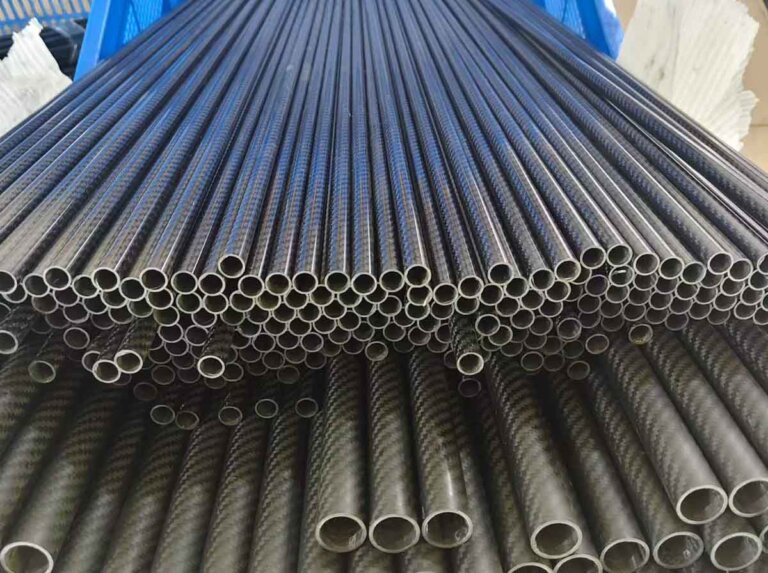
T700 versus T300 koolstofvezelbuizen: prestaties en kwaliteitscontrole
Ronde versus vierkante koolstofvezelbuis: inzicht in de invloed van de vorm op de structurele prestaties
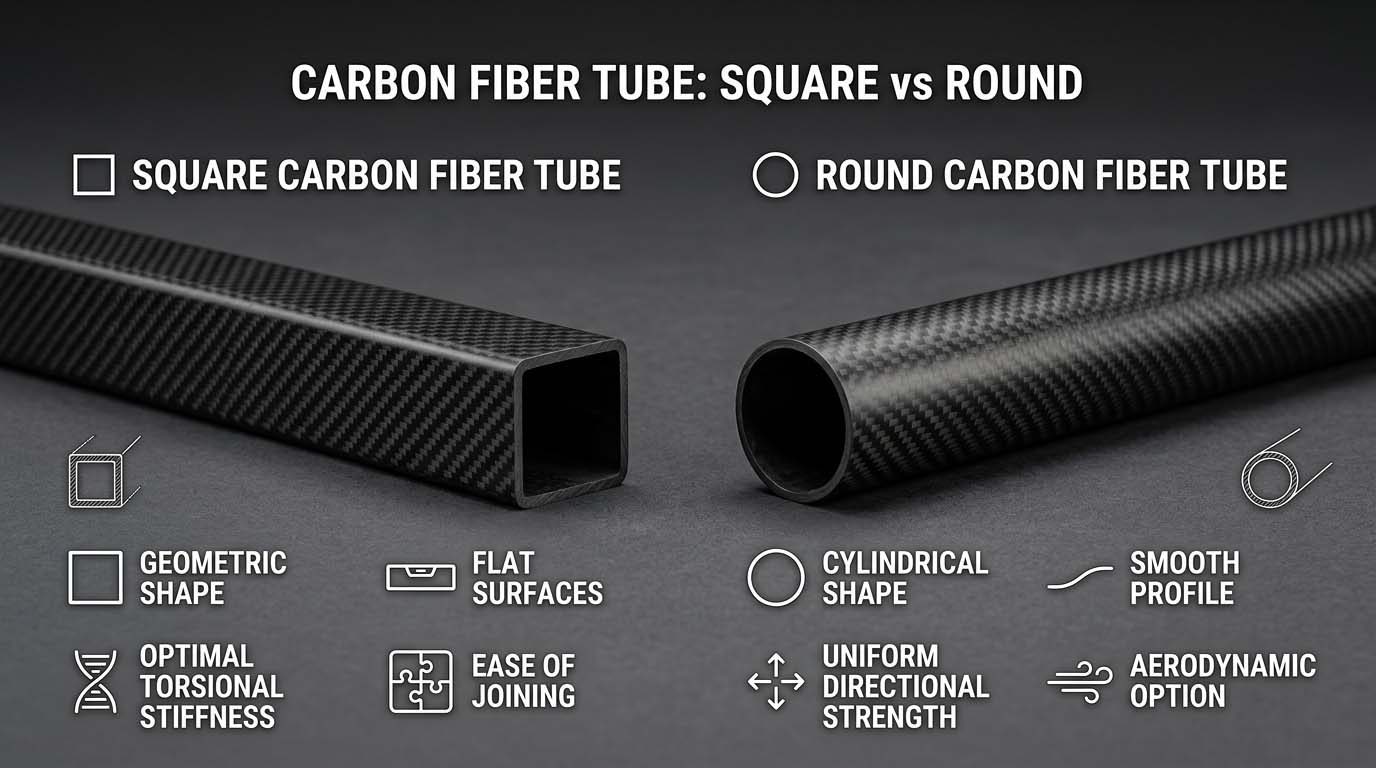
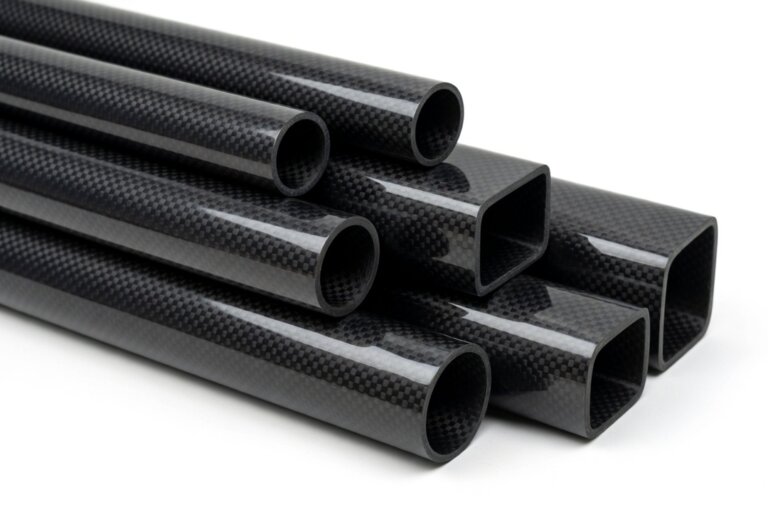
Als je een ronde vergelijkt met vierkante koolstofvezelbuis, het grootste verschil zit hem in de manier waarop de belasting door de vorm wordt verdeeld. Bij een ronde buis wordt de spanning gelijkmatig over de gehele doorsnede verdeeld. Daardoor is de buis zeer goed bestand tegen buiging.
Een vierkante buis werkt anders. De platte wanden buigen doorgaans gemakkelijker door. De hoeken dragen de belasting niet gelijkmatig, waardoor ze onder belasting zwakke plekken kunnen worden. Dus zelfs als beide buizen van dezelfde koolstofvezel zijn gemaakt, zijn hun structurele prestaties niet gelijk.
In praktijktests blijken ronde buizen bij hetzelfde gewicht vrijwel altijd een hogere stijfheid te hebben. En dat verschil is niet gering. In sommige gevallen is het verschil zelfs zo groot dat niet aan een ontwerpvereiste wordt voldaan. De vorm is niet zomaar een ontwerpdetail. Ze heeft rechtstreeks invloed op de werking van het onderdeel.
Pultrusie versus pull-winding bij koolstofvezelbuizen: waarom het productieproces de modulus beïnvloedt
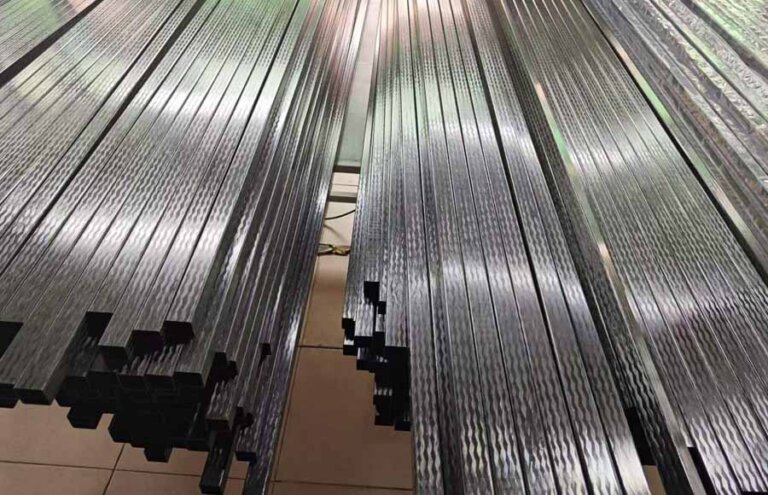
Ook het productieproces speelde in dit geval een rol. De vierkante buis werd vervaardigd door middel van pultrusie. De ronde buis werd vervaardigd door middel van pull-winding.
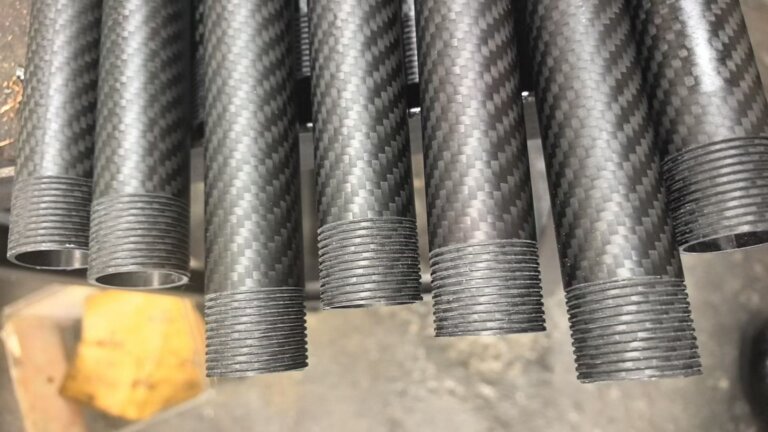
Bij pultrudeerbare koolstofvezelbuizen lopen de vezels meestal recht over de lengte. Dit komt de treksterkte ten goede, maar biedt weinig ondersteuning bij buiging of torsie. Bij pull-winding worden vezels onder een hoek aangebracht. Dit zorgt voor betere ondersteuning wanneer de buis buigt of verdraait.
Veel ingenieurs kijken naar de moduluswaarden en gaan ervan uit dat die uitsluitend afhankelijk zijn van het type vezel. In de praktijk is dat niet het geval. Het productieproces van koolstofvezelbuizen beïnvloedt de manier waarop de vezels worden geplaatst, en dat heeft weer invloed op het gedrag van de buis onder belasting.
Als je pultrusie en pull-winding met elkaar vergelijkt, vergelijk je dus niet alleen processen. Je vergelijkt twee verschillende structurele gedragingen.
Analyse van koolstofvezelbuizen op basis van de Young-modulus: waarom de materiaalkwaliteit alleen niet voldoende is om het probleem op te lossen
Toen het probleem met de stijfheid zich voordeed, was het eerste idee om van materiaal te veranderen. Het team overwoog om over te stappen van T300 naar T700 of zelfs T800 koolstofvezel.
Op papier zou dat de stijfheid moeten vergroten. Maar uit de tests bleek dat de verbetering gering was. Het probleem werd hiermee niet opgelost.
Dit komt doordat de Young-modulus van een koolstofvezelbuis niet alleen afhangt van de vezelkwaliteit. Als de vorm en de wanddikte gelijk blijven, is de winst beperkt. Een koolstofvezelbuis met een hoge modulus presteert alleen goed als de constructie ervoor zorgt dat de vezels de belasting efficiënt kunnen dragen.
In dit geval beperkten de vierkante vorm en de dunne wanden de mogelijkheden van het materiaal. Alleen het veranderen van de vezelkwaliteit kon daar geen oplossing voor bieden.
Hoe lucht- en ruimtevaartingenieurs de modulus van koolstofvezelbuizen verhogen door middel van ontwerpoptimalisatie
Het team moest het roer omgooien. In plaats van zich uitsluitend op het materiaal te richten, keken ze naar het ontwerp in zijn geheel. Ze pasten de hoeken van de vezels aan, maakten het materiaal op cruciale plekken dikker en testten verschillende lagenopbouwen.
In sommige versies week men zelfs af van een strikt vierkante vorm. Kleine wijzigingen in de geometrie maakten een groot verschil in stijfheid.
Testen en valideren waren hierbij van cruciaal belang. Elke wijziging werd getoetst aan de hand van echte gegevens, niet alleen via simulaties. Zo konden verdere vertragingen worden voorkomen.
Een ervaren fabrikant heeft ook bijgedragen aan het verfijnen van het proces. Door de manier waarop de vezels tijdens de productie werden geplaatst aan te passen, hebben ze de prestaties verbeterd zonder dat het gewicht al te veel toenam. Dit soort samenwerking maakt vaak het verschil tussen slagen en zakken voor een test.
Samenvatting
Stijfheid in een koolstofvezel buis komt niet alleen door het materiaal. Vorm, proces en vezelopbouw spelen allemaal een rol, en soms zijn die zelfs belangrijker dan de vezelkwaliteit. Een overstap van T300 naar T700 of T800 lost geen ontwerp op dat te kampen heeft met geometrische of productietechnische beperkingen.
Bij lucht- en ruimtevaartprojecten wordt vaak aangenomen dat beter materiaal ook betere prestaties oplevert. Maar de daadwerkelijke testresultaten laten vaak iets anders zien. Wanneer ingenieurs nauw samenwerken met fabrikanten van composietmaterialen en zich richten op de volledige constructie, kunnen ze de werkelijke oorzaak van het probleem achterhalen en de juiste keuze maken vierkante koolstofvezelbuis ontwerp op basis van daadwerkelijke prestaties, niet op aannames.