
 Polish
  English
  German
  Japanese
  Arabic
  Czech
Czech  Spanish
  French
  Italian
  Danish
  Portuguese
  Norwegian
  Dutch
Dutch 
Spis treści
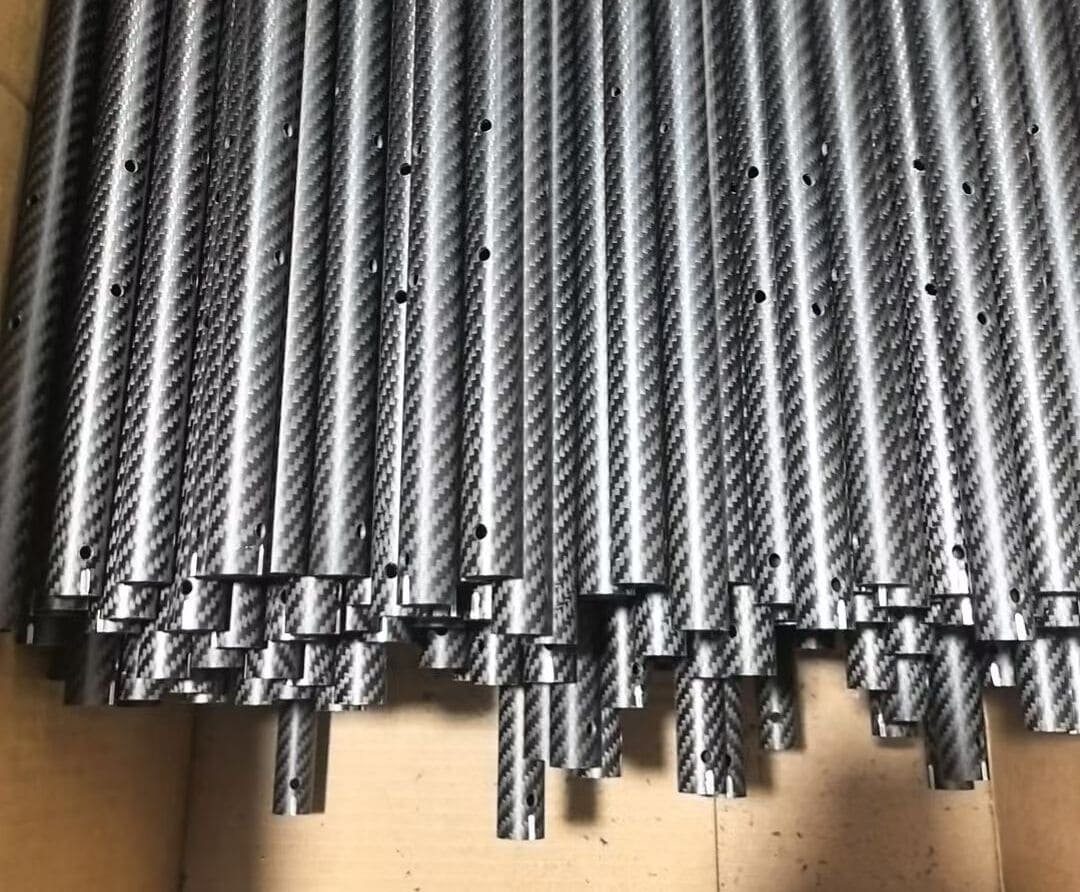
China’s drone industry has moved far beyond consumer quadcopters. Agricultural spraying, industrial inspection, mapping, logistics, security, and VTOL systems all place higher demands on UAV structures. As drones carry larger payloads and fly for longer periods, reducing structural weight becomes increasingly important.
For drone manufacturers, the challenge is not simply finding a light material. The structure must also provide enough stiffness, strength, dimensional stability, and resistance to vibration. This is where the carbon fiber drone tube becomes a practical choice for many UAV designs.
China’s Drone Industry Is Driving Demand for Lightweight UAV Components
The China drone industry covers a wide range of applications, from agricultural aircraft to industrial inspection and delivery UAVs. Each application creates different structural requirements, but weight remains a common concern.
A heavier frame requires more power to stay airborne. That can reduce payload capacity or flight time. For UAV manufacturers, replacing heavier structural parts with lightweight carbon fiber components can help create a better balance between weight and performance.
This is why carbon fiber drone tubes are increasingly used in frames, support structures, landing systems, and other UAV components.
Powiązane artykuły:
Jak weryfikować wymiary rur z włókna węglowego do UAV
Arkusze CFRP do sprzętu outdoorowego: odporność na promieniowanie UV, wilgoć i długotrwałe warunki atmosferyczne
Płyty z włókna węglowego do ram: zapobieganie deformacji po CNC
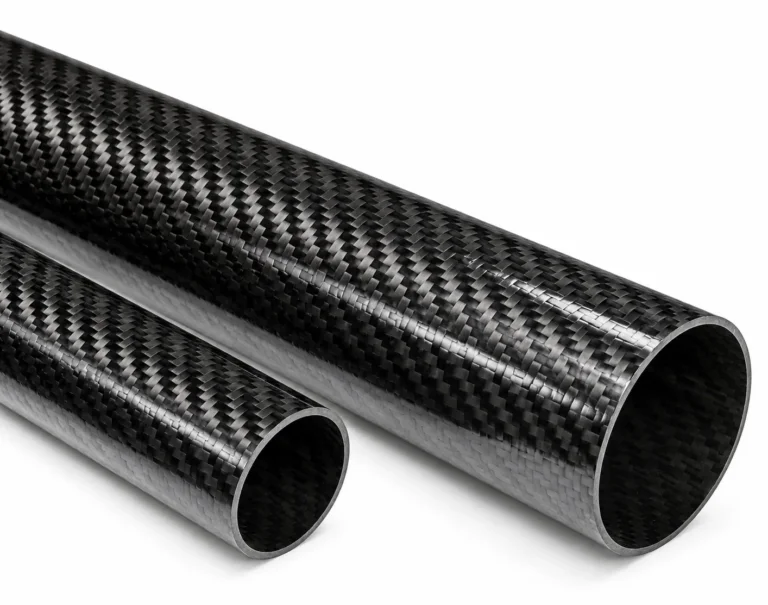
Rury z włókna węglowego do wyrównania belki ogonowej szybowca i kontroli trymowania
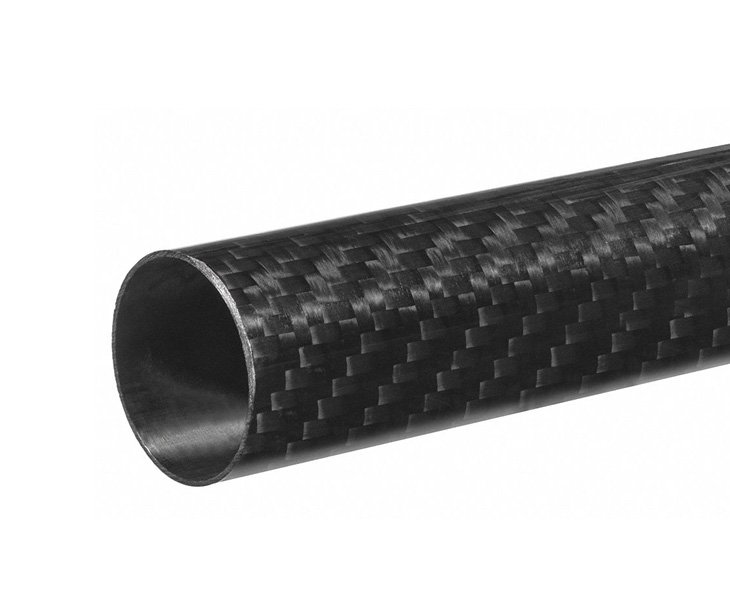
Rura z włókna węglowego do rozmieszczenia anteny UAV i projektowania GNSS
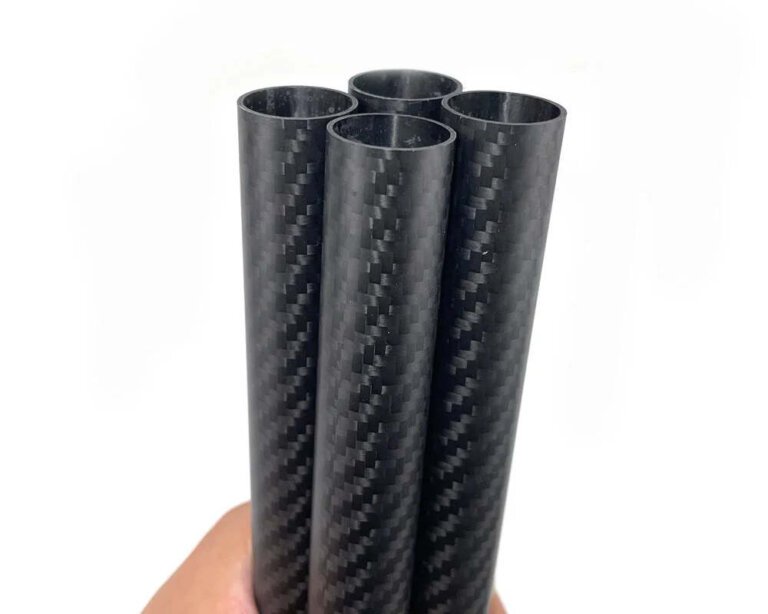
Zamówienie rur z włókna węglowego w wielu rozmiarach do budowy szybowca UAV
Why Weight Matters in Modern Drone Design
Drone design often creates a weight spiral. A heavier structure needs more motor power. More power can require a larger battery, which adds even more weight. The result is less useful payload and shorter flight time.
A lightweight drone frame helps break this cycle. Carbon fiber has a high strength-to-weight ratio, allowing engineers to build structural members without adding unnecessary mass.
For a commercial UAV, even a small reduction in structural weight can create more room for batteries, cameras, sensors, or agricultural payloads. The right carbon fiber drone tube can therefore contribute to the overall efficiency of the aircraft.
Why Carbon Fiber Drone Tubes Outperform Conventional Materials
Aluminum, steel, and fiberglass all have useful applications in UAV manufacturing. Carbon fiber is not automatically the best choice for every structure, but it offers a useful combination of low weight and high stiffness.
A carbon fiber UAV tube can also resist corrosion and maintain stable dimensions in many operating environments. Engineers can adjust fiber orientation, wall thickness, resin system, and tube construction to suit different load conditions.
For structures exposed to bending, vibration, or repeated loading, a well-designed Rura kompozytowa z włókna węglowego can provide a better weight-to-performance balance than many conventional materials.
Where Are Carbon Fiber Drone Tubes Used in UAV Manufacturing?
Carbon fiber tubes for drones can be found in many structural areas. They are commonly considered for drone arms, frame members, landing gear, payload supports, motor structures, and other lightweight supports.
The requirements change with the aircraft. A racing drone may prioritize low weight and stiffness, while an agricultural UAV needs a structure that can handle larger payloads and repeated vibration. A VTOL aircraft may need longer structural members with carefully controlled stiffness.
For this reason, a carbon fiber drone frame tube should be selected according to its actual load, length, diameter, wall thickness, and installation method rather than simply choosing the lightest available option.
How to Choose the Right Carbon Fiber Drone Tube
Before ordering a carbon fiber UAV tube, buyers should define the basic engineering requirements. These include outer and inner diameter, length, wall thickness, expected loads, fiber orientation, carbon fiber grade, surface finish, and operating environment.
Production method also matters. Roll-wrapped carbon fiber tubes allow manufacturers to adjust fiber directions and laminate structures for specific applications. Pultruded tubes can be attractive for standard profiles and larger production volumes.
For OEM projects, the best choice is usually the tube that provides the required stiffness and strength without adding unnecessary weight. Engineers should evaluate the complete structure rather than selecting a material grade in isolation.
China’s Carbon Fiber Manufacturing Advantage for UAV Applications
China’s large UAV manufacturing base creates demand for suppliers that can support both prototypes and repeat production. For drone OEMs, the important factors go beyond the price of a carbon fiber tube. Dimensional consistency, surface quality, production capacity, machining accuracy, and delivery reliability all affect the final assembly.
CarbonCore Dynamics provides custom carbon fiber tubes for UAV applications based on requirements such as diameter, length, wall thickness, fiber orientation, and surface finish. We can also support related carbon fiber drone parts oraz carbon fiber UAV components for OEM projects.
Wnioski
As UAV designs become lighter and more capable, structural materials have a direct impact on aircraft performance. A properly designed carbon fiber drone tube can help manufacturers reduce structural weight while maintaining the stiffness and strength needed for demanding applications.
For custom UAV structures, CarbonCore Dynamics can work with your drawings and specifications to develop carbon fiber tubes for prototypes and OEM production. Contact us to discuss your carbon fiber drone tube requirements.