
 Turkish
  English
  German
  Japanese
  Arabic
  Czech
Czech  Spanish
  French
  Korean
  Italian
  Danish
  Polish
  Portuguese
  Russian
  Norwegian
  Dutch
Dutch 
İçindekiler
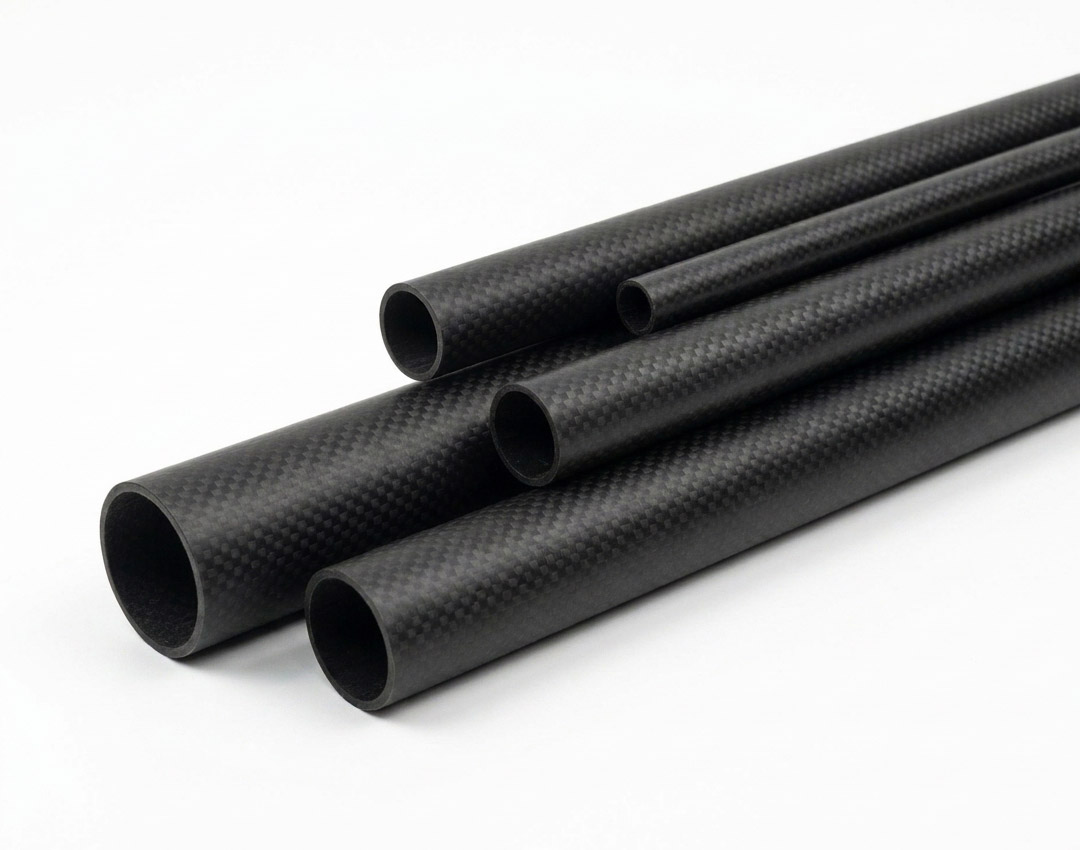
A machinery manufacturer from Canada recently contacted us looking for an 8-foot karbon fiber tüp. The request sounded simple at first. Then the real requirements appeared.
The tube needed to stay straight over a long span. It had to look good because it would remain visible on the machine. Most importantly, it had to be light and strong enough to work as a side wing on a planing cage.
This is a challenge many equipment builders face when choosing between roll wrapped and pultruded karbon elyaf tüpler.
Straight Carbon Fiber Tubes Matter More Than Most Buyers Expect
Many engineers focus on diameter and wall thickness first. They often discover another problem after installation.
A long tube that bends slightly can create alignment issues across the whole assembly. Bearings wear faster. Components no longer sit where they should.
This is why many buyers ask for dimensional consistency before discussing material grades.
Why Straightness Matters
Roll Wrapped Carbon Fiber Tubes Handle Complex Loads Better
Not every karbon fiber tüp sees force from only one direction.
The customer in this case planned to use the tubes as structural wings on industrial equipment. During operation, the tubes would face vibration, bending, and twisting at the same time.
Roll wrapped carbon fiber tubes use multiple fiber angles inside the laminate. That helps distribute loads across the structure and gives engineers more control over stiffness and strength.
Related articles:
Roll Wrapped Carbon Fiber Tube: 5 Key Benefits Over Pultruded Tubes
T700 vs T300 Carbon Fiber Tubes: Performance & Quality Verification
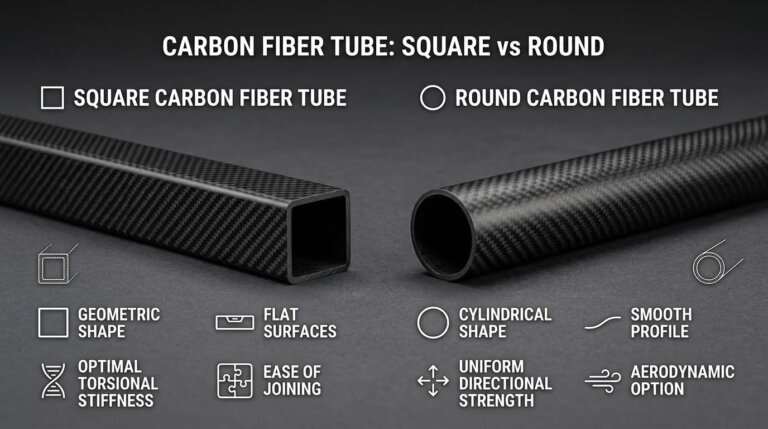
Square Carbon Fiber Tube vs Round Tube: Stiffness Differences Explained for Aerospace
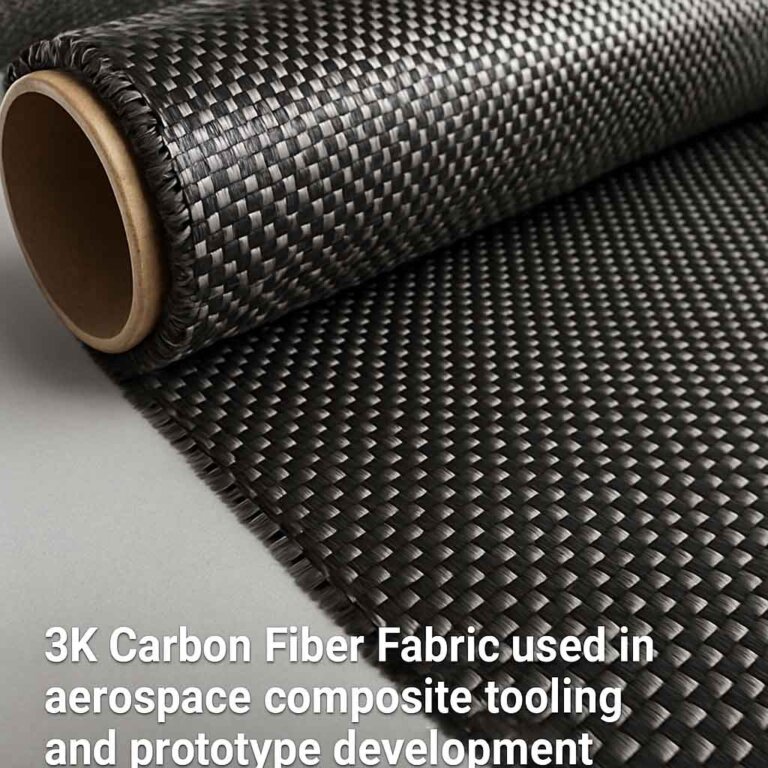
Carbon Prepreg vs Tooling Prepreg: Which Material Should Aerospace Engineers Choose?
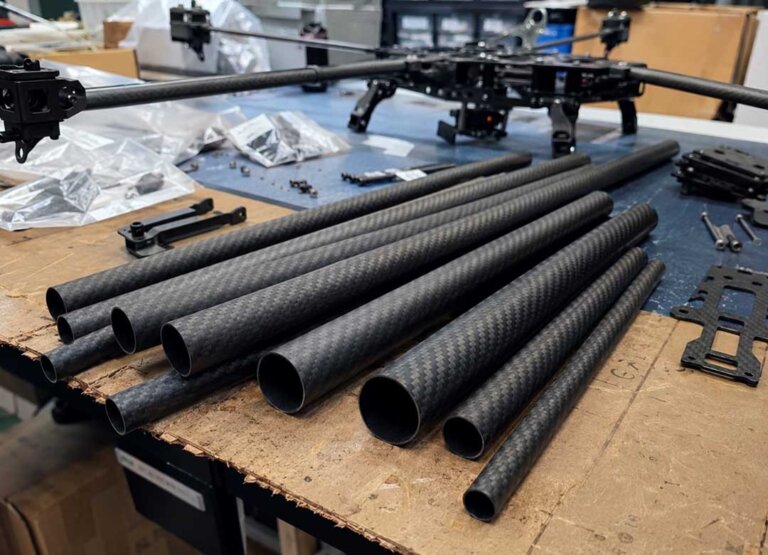
Aerospace Composite Materials for Prototype and Structural Applications
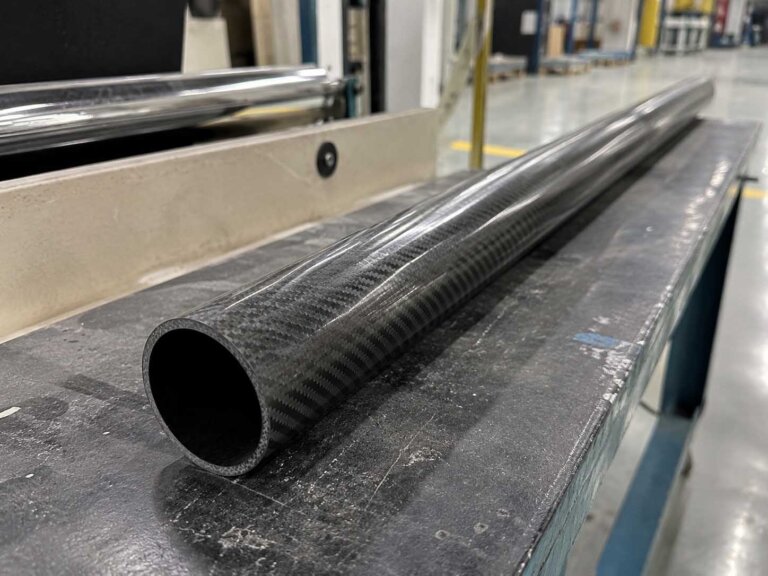
Carbon Fiber Tube : Why Layup Structure Matters More Than Material Grade
Glossy 3K Twill Carbon Fiber Tubes Solve Appearance Problems
A common complaint with standard pultruded tubes is appearance.
They work well for many projects, but the surface often lacks the woven carbon fiber look customers expect. When the tube remains visible on a finished machine, appearance suddenly becomes part of the buying decision.
Many equipment manufacturers choose this option when the product will be seen by end users.
Why Buyers Choose Glossy 3K Twill
Roll Wrapped vs Pultruded Carbon Fiber Tubes Comparison
The table below highlights the differences buyers usually consider when selecting a karbon fiber tüp for industrial equipment, automation systems, and structural applications.
| Özellik | Roll Wrapped | Pultruded |
|---|---|---|
| Görünüş | Excellent 3K Twill | Smooth Carbon Surface |
| MOQ | Düşük | Yüksek |
| Güç | Higher | Orta düzeyde |
| Stiffness Design | Flexible | Limited |
| Cost (Small Orders) | Better | Zayıf |
| Cost (Large Orders) | Higher | Lower |
| Surface Finish | Glossy / Matte | Usually Matte |
| Özelleştirme | Mükemmel | Limited |
For buyers ordering only a few pieces, appearance, customization, and lead time often matter more than the lowest possible unit price. On the other hand, large production runs may benefit from the lower manufacturing cost of pultruded tubes.
Low MOQ Carbon Fiber Tubes Help Reduce Development Risk
Most new projects start with testing, not mass production.
The Canadian customer only needed two tubes for the first order. He wanted to verify straightness, appearance, and performance before committing to larger quantities.
This is where many suppliers struggle. Pultruded tubes often require tooling and larger production runs.
Why Low MOQ Matters
Choosing the Right Carbon Fiber Tube Depends on Your Project
There is no single karbon fiber tüp that fits every application.
For high-volume projects where cost is the main concern, pultruded carbon fiber tubes can be a practical choice.
For machinery components that require a woven surface, controlled stiffness, low MOQ, and custom specifications, roll wrapped carbon fiber tubes often provide more flexibility.
The best solution starts with understanding how the tube will actually be used, not simply comparing prices on a quotation sheet.