 Czech
Czech  English
  German
  Japanese
  Arabic
  Spanish
  French
  Italian
  Danish
  Polish
  Portuguese
  Norwegian
  Dutch
Dutch 
Obsah
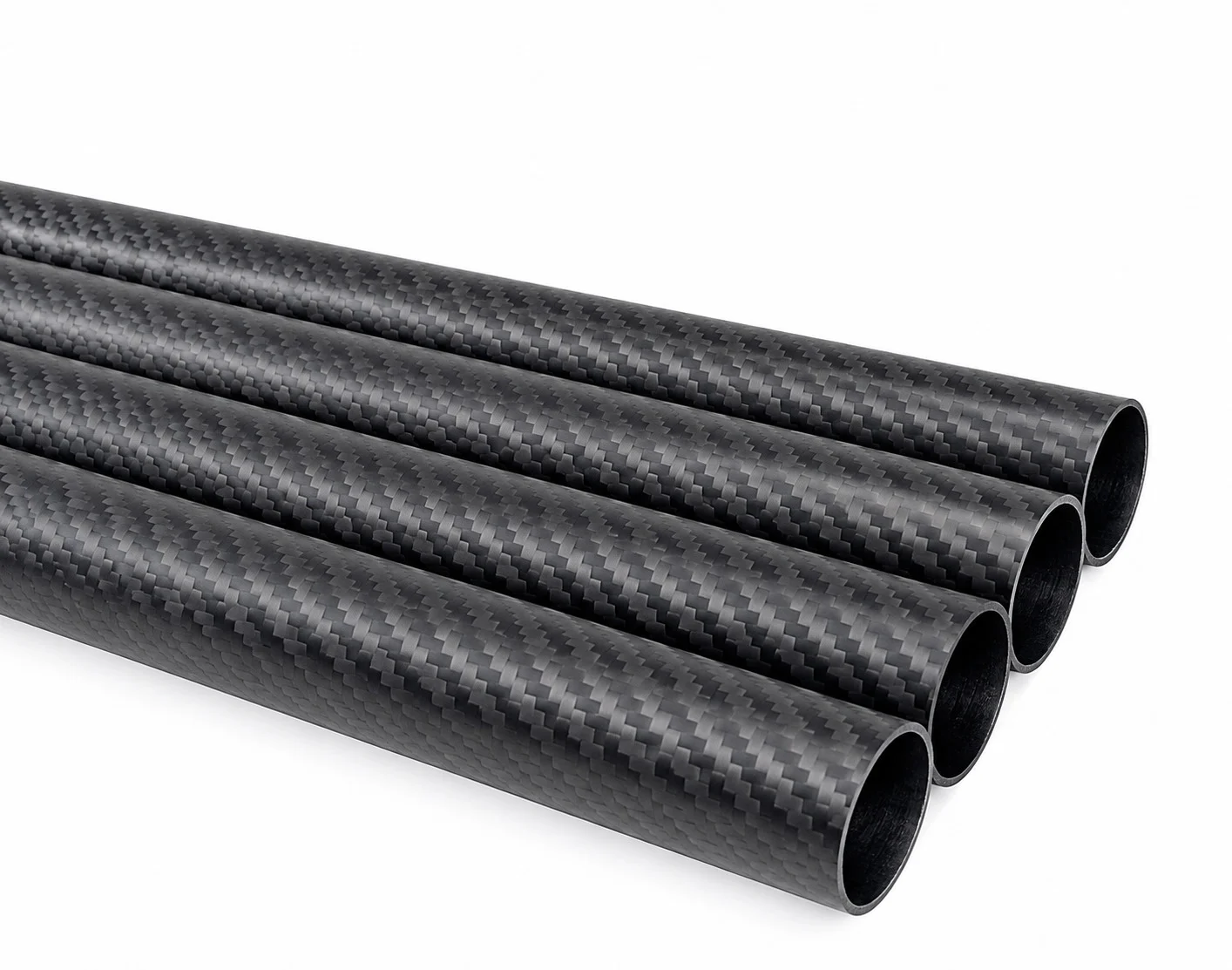
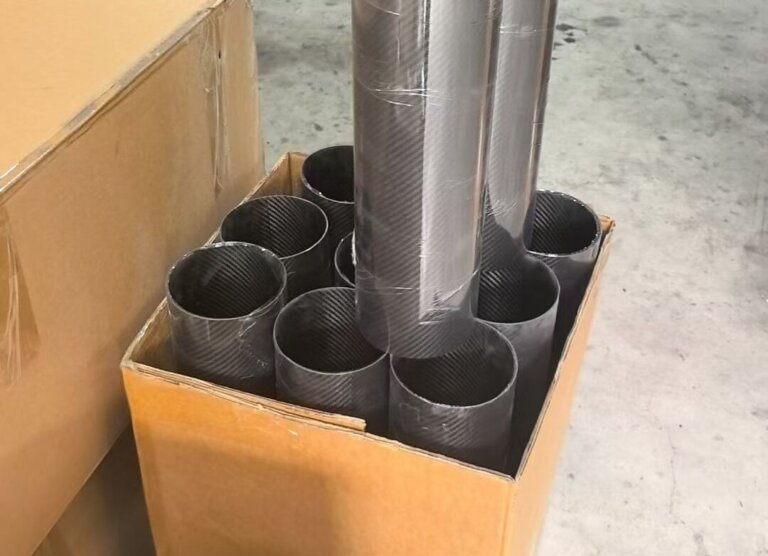
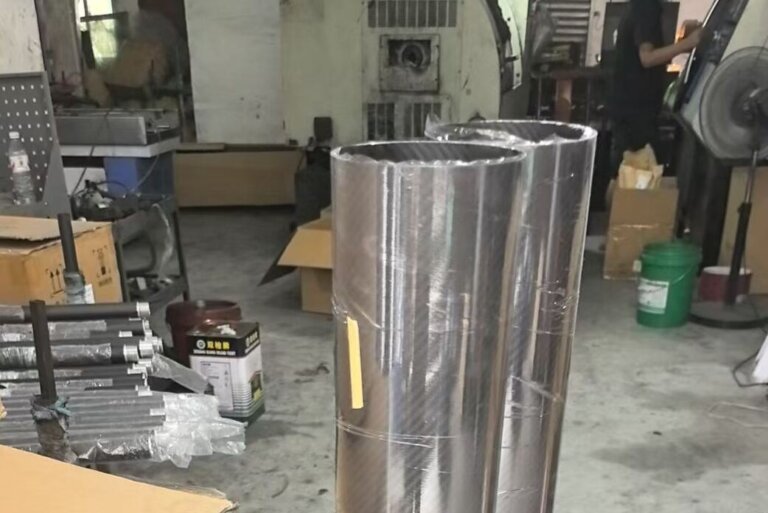
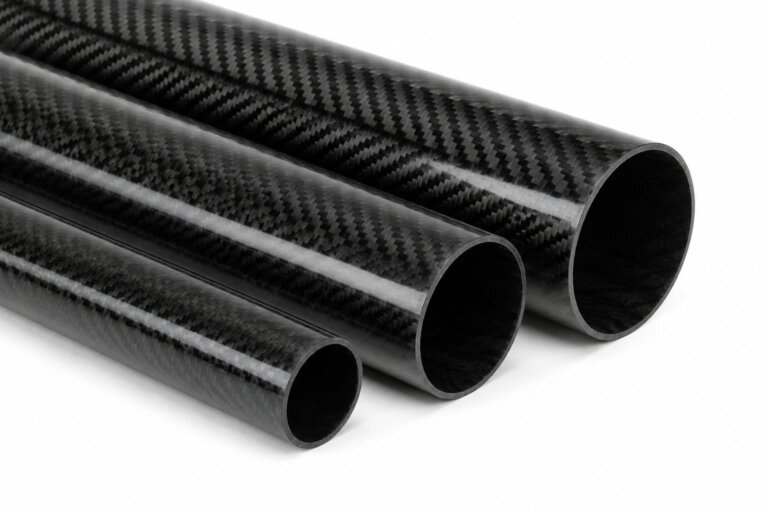
A T800 carbon fiber tube is an effective lightweight structural solution for wind tunnel model support applications that require high stiffness, low deflection, and stable performance under aerodynamic loading. For scaled-building wind tunnel tests, a custom roll-wrapped T800 carbon fiber tube can function as a rigid cantilevered support strut, also known as a sting, supporting a PLA or other lightweight model while minimizing unwanted vibration.
This type of project requires more than selecting a strong carbon fiber grade. The final support performance depends on the tube diameter, wall thickness, unsupported length, laminate orientation, mounting condition, model weight, and aerodynamic test environment.
Požadavky na projekt
A customer required a round carbon fiber tube for use as a fixed-base support strut in high-frequency aerodynamic testing of 1:400 scale building models.
The proposed tube requirements included:
Application: Wind tunnel testing support for scaled building models
Support condition: Rigidly fixed at the base with the model mounted at the top
Tube length: 15–30 in / 381–762 mm
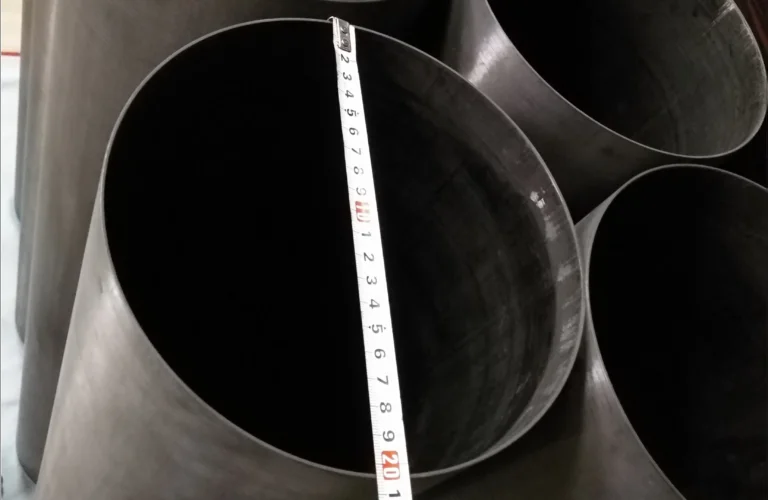
Tube diameter: 2–3 in / 50.8–76.2 mm
Wall thickness: 1/16–1/8 in / approximately 1.6–3.2 mm
Surface requirement: Matte finish for friction-fit installation
Structure concept: Unidirectional internal layers with a twill weave outer layer
Priority: High bending stiffness and low vibration
Because the tube works as a cantilever, the root end carries the highest bending moment. The tube must remain stiff enough to prevent visible displacement of the building model during airflow testing, while remaining lightweight enough to reduce unnecessary loading on the fixture and avoid excessive interference with the test setup.
Související články:
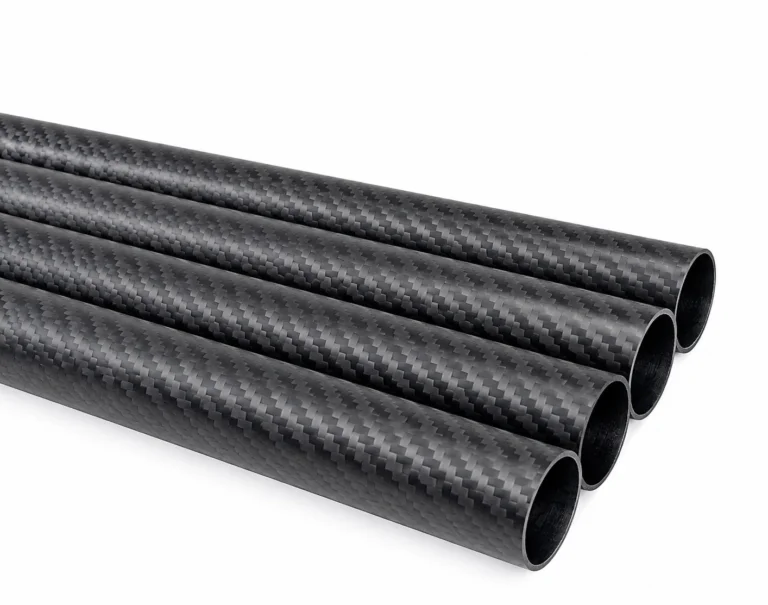
T800 Carbon Fiber Tube for Wind Tunnel Testing
Small Batch Carbon Fiber Pipe Orders: Can You Buy Just a Few Pieces?
Carbon Fiber Pipe Supplier vs Trading Company: What’s the Difference?
What Makes a Reliable Carbon Fiber Pipe Manufacturer?
Carbon Fiber Tube Selection Guide for Industrial Applications
Jak vybrat správnou 4palcovou trubku z uhlíkových vláken pro váš projekt
Why Wind Tunnel Sting Applications Demand More Than Standard Tubes
In wind tunnel testing, the tube holding a scale model is often called a “sting.” Its job sounds simple — keep the model in place — but the requirements are tighter than they look. It has to resist bending under aerodynamic load, avoid flexing enough to skew position data, and stay clear of its own resonance frequency during high-frequency testing. A tube that’s merely “strong” isn’t automatically the right fit here; what matters most is stiffness and vibration behavior, not just how much load it can take before failing.
This is where a general-purpose carbon fiber tube and a properly specced T800 carbon fiber tube start to diverge.
Why Choose a T800 Carbon Fiber Tube?
T800 carbon fiber is commonly selected for high-performance composite structures because it offers higher stiffness than standard-modulus carbon fiber grades. It is suitable for applications where weight reduction and bending resistance are both important, including aerospace components, drone structures, precision test fixtures, robotic arms, and wind tunnel support systems.
For a wind tunnel sting application, a T800 carbon fiber tube may provide several advantages:
High specific stiffness for long unsupported support structures
Lower structural weight than steel or aluminum support members
Good fatigue resistance for repeated test cycles
Low thermal expansion compared with many metal alternatives
Customizable layup for axial stiffness, torsional stability, and local reinforcement
Clean carbon fiber appearance with matte or gloss finishing options
However, T800 alone does not guarantee that a tube will meet the stiffness target. A well-engineered laminate design is equally important. In many applications, the combination of T800 fiber, a sufficiently large outer diameter, and a predominantly axial UD layup is more important than simply increasing wall thickness.
Where T800 Fits in the Fiber Grade Lineup
T800 sits between T700 and T1000 in Toray’s fiber family, and it’s a common choice when a project needs a meaningful jump in strength over standard-modulus fibers without moving to the higher cost of T1000. For sting applications specifically, it’s worth being clear about what T800 actually improves: tensile strength gains are more significant than stiffness gains. If the strut’s main failure risk is bending or vibration rather than snapping under tension, wall thickness, layup structure, and tube geometry usually matter more than jumping to a higher fiber grade. A well-designed T800 carbon fiber tube can outperform a poorly laid-up T1000 tube in exactly this kind of stiffness-critical use case.
Recommended Tube Construction
For a high-stiffness carbon fiber tube used as a wind tunnel model support, a roll-wrapped construction is recommended. Roll-wrapped tubes allow the laminate structure to be tailored according to the loading direction and fixture requirements.
A practical hybrid layup may include:
0° unidirectional carbon fiber layers as the main structural layers for bending stiffness along the tube length
90° hoop layers to improve circularity, crushing resistance, and radial stability
±45° reinforcement layers to improve torsional performance and resistance to off-axis loads
3K 2×2 twill carbon fiber outer layer for surface quality, machining stability, and a professional carbon fiber appearance
The internal UD carbon fiber layers carry most of the longitudinal bending load. Since the building model is mounted at the top of a fixed-base tube, the support behaves similarly to a cantilever beam. Axial fiber orientation is therefore critical for reducing deflection.
The twill outer layer is not only decorative. It can provide a consistent outer surface, improve handling during production, and support a matte finish that is better suited to friction-fit assembly than a high-gloss surface.
Wall Thickness and Length Considerations
The requested wall thickness range of 1/16–1/8 in is feasible for many custom carbon fiber tubes. However, the correct wall thickness should be determined by the final load case.
A 15 in tube and a 30 in tube may have the same diameter and wall thickness, but the longer tube will deflect much more under the same top load. In cantilever applications, deflection increases rapidly as unsupported length increases.
For this reason, the 30 in version should be evaluated as the critical design condition. Depending on the building model weight, wind speed, and acceptable movement at the model top, the tube may require:
A higher percentage of 0° T800 UD layers
A larger outer diameter within the 2–3 in range
A wall thickness closer to 1/8 in
Local reinforcement at the fixed base
Reinforced mounting zones at the model interface
For applications with a strict vibration requirement, the design should also consider the tube’s natural frequency. A stiffer and lighter structure generally helps raise the natural frequency and reduce the risk of resonance during high-frequency aerodynamic testing.
Sizing for Stiffness: Diameter, Wall Thickness, and Length Together
A tube spec rarely stands on wall thickness alone — diameter, wall thickness, and length all interact. A strut in the 2–3 inch diameter range with a 1/16″ to 1/8″ wall, running 15 to 30 inches long, sits in a length-to-diameter ratio where stiffness and buckling resistance both need attention, not just tensile strength. Thicker walls add stiffness but also add weight and cost, which matters when the tube is mounted on precision test equipment. The right answer usually comes from matching wall thickness to the actual span and mounting condition, rather than defaulting to the thickest option in the tolerance range.
Getting From Spec Sheet to Sample
Custom sting tubes like this typically don’t come off a standard catalog page — diameter, wall thickness, layup combination, and finish all need to be confirmed against the specific test setup before production starts. Roll-wrapped hybrid layups (unidirectional plus twill) can be produced in small batches for testing and validation before committing to a larger order, which is usually the right way to confirm stiffness and fit before scaling up.
Možnosti přizpůsobení
A custom T800 carbon fiber tube can be produced with tailored structural and cosmetic specifications, including:
T700, T800, or hybrid carbon fiber material options
Round tube OD and ID customization
Wall thickness from approximately 1.6 mm to 3.2 mm or higher
Lengths from 15–30 in, with CNC cut-to-length service
UD, hoop, ±45°, and twill hybrid laminate structures
3K twill matte surface finish
Root-end reinforcement for rigid fixture mounting
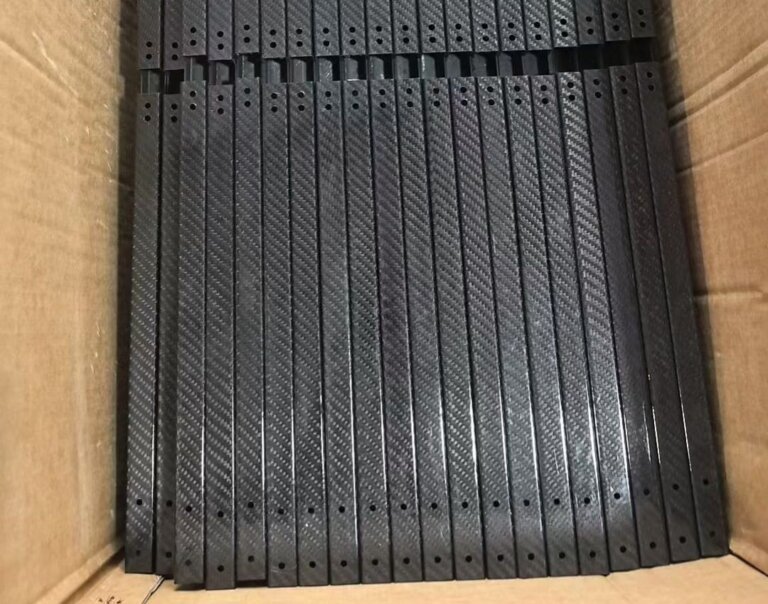
Drilling, slotting, trimming, sanding, and bonding preparation
Tight-tolerance dimensions for model installation
Information Needed for Final Design
Before confirming the final T800 carbon fiber tube specification, the following information should be reviewed:
Building model weight and center of gravity
Maximum wind speed and expected aerodynamic force
Test frequency range
Maximum acceptable deflection at the model top
Required tube outer diameter or model mounting-hole diameter
Insertion depth and connection method
Quantity, sample requirement, and delivery location
A custom T800 carbon fiber tube with a UD structural core and 3K twill matte outer layer can provide a strong solution for wind tunnel building model support. By optimizing fiber orientation, diameter, wall thickness, and mounting details, the tube can be engineered for high stiffness, reduced vibration, stable installation, and repeatable aerodynamic testing performance.
T800 Carbon Fiber Tube
Frequently Asked Questions
Answers to common questions about T800 carbon fiber tubes, layup design, wall thickness, surface finish, and custom production.
Applications needing a strength upgrade over standard-modulus fiber without the cost of T1000 — sting tubes, structural test fixtures, and lightweight support struts among them.
It depends on whether the load case is stiffness-driven or strength-driven. For most sting applications, layup structure and wall thickness affect stiffness more than the jump from T800 to T1000.
Yes — combining unidirectional and twill weave layers in the same tube is a common approach for parts needing both axial stiffness and torsional resistance.
Commonly in the 1/16" to 1/8" range, though the right thickness depends on tube length and how the base is mounted.
Yes, matte finishing with controlled outer diameter tolerance is standard for parts that rely on friction fit rather than adhesive bonding.
Small-batch and sample orders are available for testing and validation before larger production runs.
Yes, sample tubes can be produced first so stiffness, fit, and finish can be confirmed against the actual test setup.
Diameter, wall thickness, length, layup preference, surface finish, and the load or mounting condition the tube will see in use.