
 Danish
  English
  German
  Japanese
  Arabic
  Czech
Czech  Spanish
  French
  Italian
  Polish
  Portuguese
  Norwegian
  Dutch
Dutch 
Indholdsfortegnelse
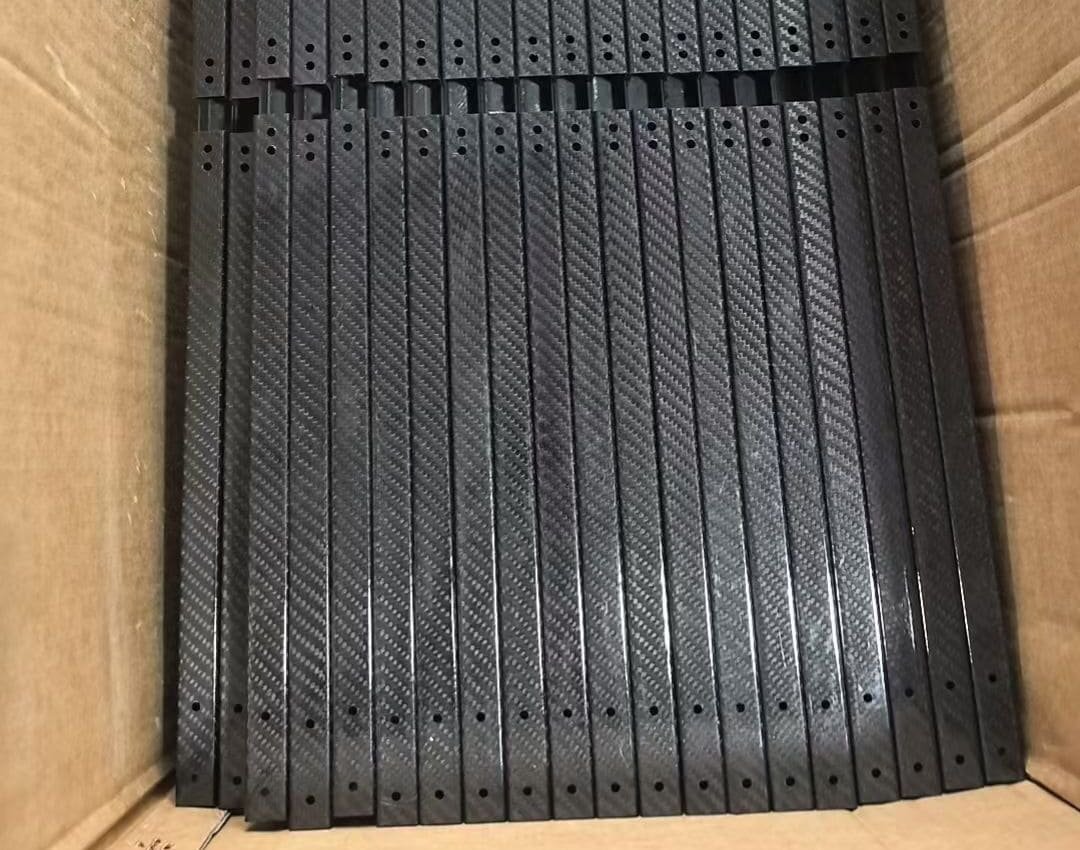
You search for a kulfiberrør til salg and quickly find suppliers offering similar-looking tubes at very different prices. One listing shows a glossy woven finish, another offers a matte tube at half the price, and a third asks for a drawing before quoting. The difference is often more than branding.
Two carbon fiber tubes may look alike in a product photo but perform differently because of wall thickness, fiber orientation, tolerance, resin system, or manufacturing method. Before placing an order, confirm what you are actually buying and whether the tube fits your structural, assembly, and production requirements.
Why Do Carbon Fiber Tubes Have Such Different Prices?
Carbon fiber tube price is affected by more than diameter and length. Larger diameters, thicker walls, longer tubes, higher-grade fiber, tighter tolerances, special surface finishes, and CNC machining all increase material use or production time. Quantity also matters. A one-piece prototype and a high-volume carbon fiber tube wholesale order will usually have very different unit costs.
Manufacturing method can also change the quotation. For example, one buyer may receive a quote for a standard pultruded carbon fiber tube, while another supplier quotes a custom roll wrapped carbon fiber tube with a different fiber layup. The tubes may share the same outside diameter, but they are not necessarily equivalent products.
A low price may be suitable for a simple, non-critical application. It may also reflect thinner walls, wider tolerances, lower material content, or limited quality control. Compare complete specifications, not just the unit price.
Relaterede artikler:
CFRP-plader til udendørsudstyr: UV, fugt og langvarig vejrpåvirkning
Kulfiberplader til rammer: Forhindrer skævhed efter CNC
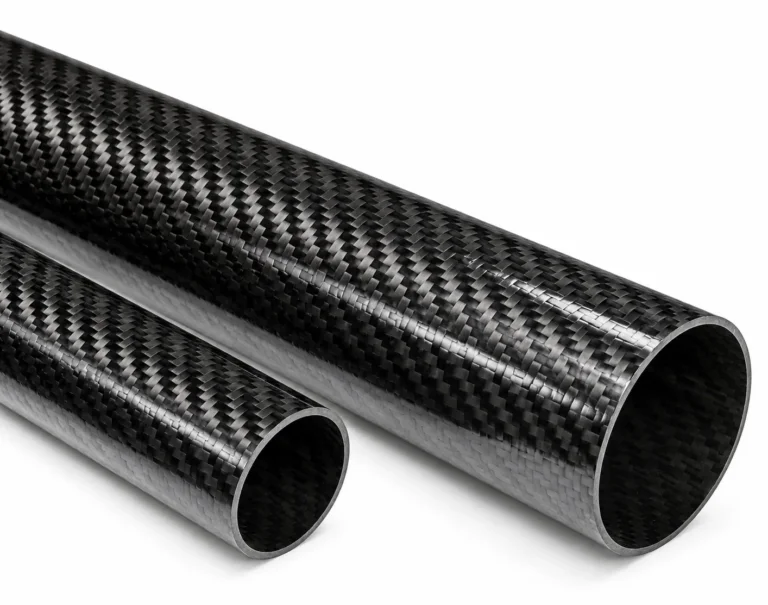
Kulfiberrør til svæveflyets halebomjustering og trimkontrol
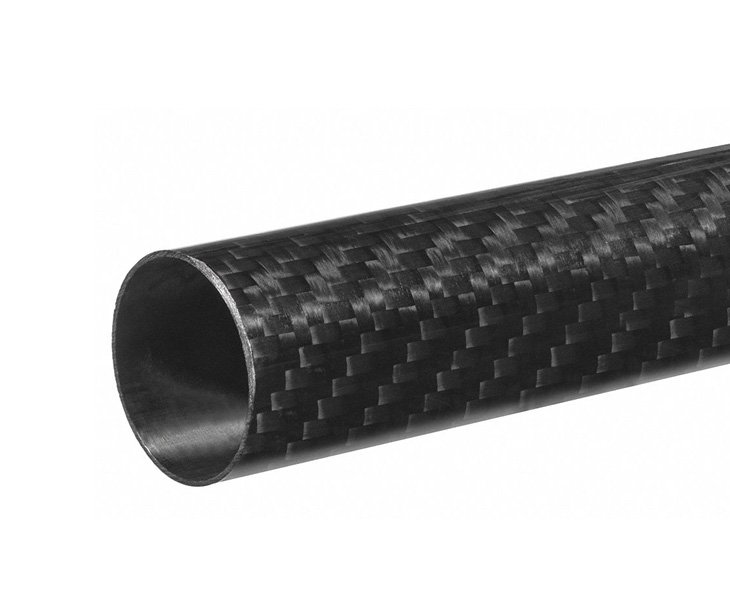
Kulfiberrør til placering af UAV-antenne og GNSS-design
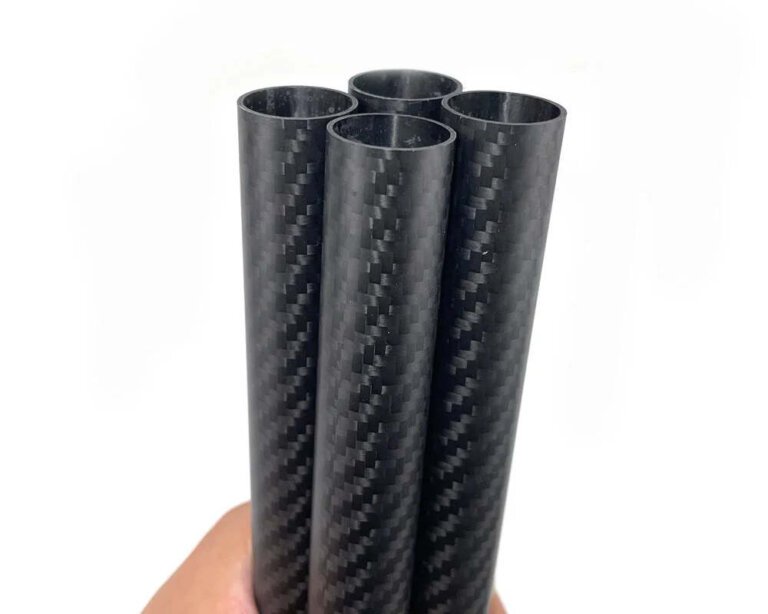
Bestilling af kulfiberrør i flere størrelser til opbygning af UAV-svævefly
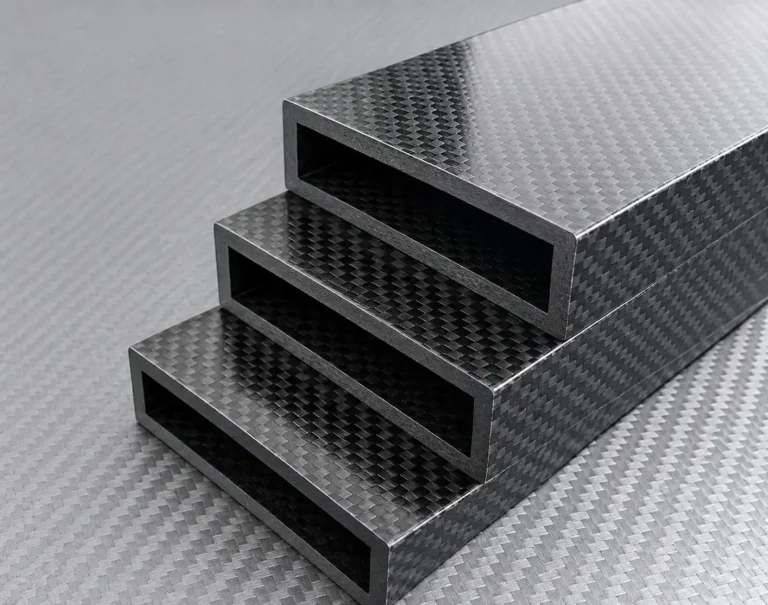
Rektangulært kulfiberrør til lette rover-robotarme
What Specifications Should You Check Before Buying Carbon Fiber Tubing?
Before requesting a quotation for kulfiberrør, prepare the basic dimensions and functional requirements. At minimum, provide outer diameter (OD), inner diameter (ID), wall thickness, length, tolerance, fiber orientation, and desired surface finish.
OD and ID should never be confused. If a tube must slide over a connector, shaft, or insert, the ID controls the fit. If it must fit inside a clamp, housing, or outer sleeve, the OD may be the critical dimension. Wall thickness is calculated from both values, so providing only one diameter can lead to an incorrect quotation.
For example, a customer may request a 20 mm carbon fiber structural tube based only on outside diameter. After reviewing the assembly, the supplier learns that a 17 mm insert must fit inside the tube. The required ID then determines whether the selected wall thickness is practical.
Send a drawing or complete dimensions whenever possible. A simple PDF, CAD file, or annotated sketch can prevent costly misunderstandings.
Should You Buy Roll Wrapped or Pultruded Carbon Fiber Tubes?
Roll-wrapped and pultruded tubes serve different purchasing needs. Roll wrapping allows more flexibility in wall thickness, fiber orientation, cosmetic finish, and custom dimensions. It is often a practical choice for custom carbon fiber tubing, prototype development, low-volume production, and applications that require specific bending or torsional behavior.
Pultruded carbon fiber tubes are produced through a continuous process. They are well suited to standard profiles, straight structural parts, and larger production quantities where repeatability and competitive unit cost are priorities. However, pultrusion usually offers less flexibility in fiber layup than roll wrapping.
Neither process is automatically better. A long support tube for a repeated OEM assembly may benefit from pultrusion. A lightweight arm, precision instrument support, or custom mechanical structure may require roll-wrapped construction. Select the process based on application, quantity, structural requirements, and budget rather than appearance alone.
How Should You Compare a Carbon Fiber Tube Supplier?
A carbon fiber tube supplier should provide more than a price list. Compare the material information, manufacturing process, dimensional tolerance, surface quality, quality-control process, sample availability, production capacity, lead time, OEM support, and communication quality.
Ask whether the supplier can explain how the tube is made and what specifications are included in the quotation. A supplier that asks about your load condition, assembly method, and application before quoting may be more useful than one that immediately offers the lowest price. Those questions often reveal whether OD, ID, wall thickness, finish, or fiber orientation needs clarification.
For repeat production, review whether the carbon fiber tube manufacturer can maintain consistent dimensions and surface quality between batches. This matters for tubes used with bonded inserts, machined fittings, clamps, telescoping assemblies, or automated assembly operations. A low-cost tube that causes fitment issues can create more expense than it saves.
What Should You Ask Before Ordering Carbon Fiber Tubes for Sale?
Before ordering carbon fiber tubes for sale, use your RFQ to confirm the details that affect fit, strength, production, and cost:
Is the quoted diameter OD or ID?
What wall thickness is included in the quote?
What carbon fiber grade and resin system are used?
Is the tube roll wrapped or pultruded?
What tolerance can the supplier achieve for OD, ID, length, and straightness?
Can the supplier provide samples before production?
Can the tube be made from a technical drawing?
What quantity is required for prototype, OEM, and repeat production?
Can the supplier provide CNC machining, bonded inserts, or custom production?
A buyer may compare two quotations and assume they cover the same tube. Later, one quote may prove to be for a pultruded tube with standard dimensions, while the other is for a custom roll-wrapped tube with machining included. A good RFQ leads to a more accurate quotation and reduces misunderstandings during production.
Purchase Based on Requirements, Not Price Alone
The best carbon fiber tube for your project is not automatically the lowest-priced option or the thickest available tube. Performance depends on material, geometry, wall thickness, fiber orientation, manufacturing process, and real load conditions. Compare specifications, manufacturing methods, tolerances, application requirements, and supplier capabilities before making a decision.
CarbonCore Dynamics supplies standard carbon fiber tubes, custom carbon fiber tubing, roll-wrapped and pultruded profiles, CNC-machined parts, prototypes, and OEM production. If you are comparing carbon fiber tubes for an upcoming project, send us your dimensions, drawings, quantity, and application requirements. Our engineering team can review the specifications and recommend a suitable tube for your application.
Ofte stillede spørgsmål
Can I buy only one carbon fiber tube?
Many carbon fiber tube suppliers can provide a single tube or a small prototype quantity, especially for standard carbon fiber tube sizes. For custom carbon fiber tubing, minimum order quantity may depend on diameter, wall thickness, fiber layup, machining requirements, and the manufacturing method needed for the project.
Do you have carbon fiber tubes for sale in standard sizes?
Standard carbon fiber tubes for sale are commonly available in a range of outer diameters, wall thicknesses, and lengths. Availability varies by supplier. Before ordering, confirm the OD, ID, length tolerance, surface finish, and whether the listed tube is roll wrapped or pultruded.
Can I order a custom carbon fiber tube?
Yes. A custom carbon fiber tube can be produced with non-standard dimensions, special wall thickness, custom fiber orientation, surface finish, length, and machining features. Sending a drawing and describing the load, assembly method, and expected quantity helps the supplier recommend a workable construction.
How much does a carbon fiber tube cost?
Carbon fiber tube cost depends on size, wall thickness, length, carbon fiber grade, manufacturing process, finish, tolerance, machining, and order quantity. A standard pultruded tube may have a lower cost for volume orders, while custom roll-wrapped carbon fiber tubing generally requires a project-specific quotation.
What affects carbon fiber tube price?
Carbon fiber tube price is mainly affected by raw material content, tube geometry, wall thickness, fiber layup, process selection, required tolerances, surface quality, machining, and quantity. Comparing price without comparing these details can result in purchasing tubes with different structural or dimensional characteristics.
Can you manufacture carbon fiber tubes from my drawing?
Yes. A carbon fiber tube manufacturer can typically review a drawing that includes OD, ID, wall thickness, length, tolerance, finish, and machining details. If the tube supports a load or must fit another component, include assembly information so the construction can be reviewed accurately.
Do you provide samples before bulk production?
Samples are often available before bulk production, particularly for custom carbon fiber tube OEM projects. A sample allows you to check dimensions, fit, surface quality, machining, and assembly compatibility. For critical structural applications, discuss inspection requirements and sample approval criteria before production begins.
Can you supply carbon fiber tubes for OEM projects?
Yes. Carbon fiber tube OEM production can include standard and custom profiles, repeat production, controlled dimensions, CNC machining, prototype support, and packaging based on your assembly process. Share annual demand, delivery schedule, drawings, and quality requirements to evaluate the most suitable production approach.