
 Danish
  English
  German
  Japanese
  Arabic
  Czech
Czech  Spanish
  French
  Italian
  Polish
  Portuguese
  Norwegian
  Dutch
Dutch 
Indholdsfortegnelse
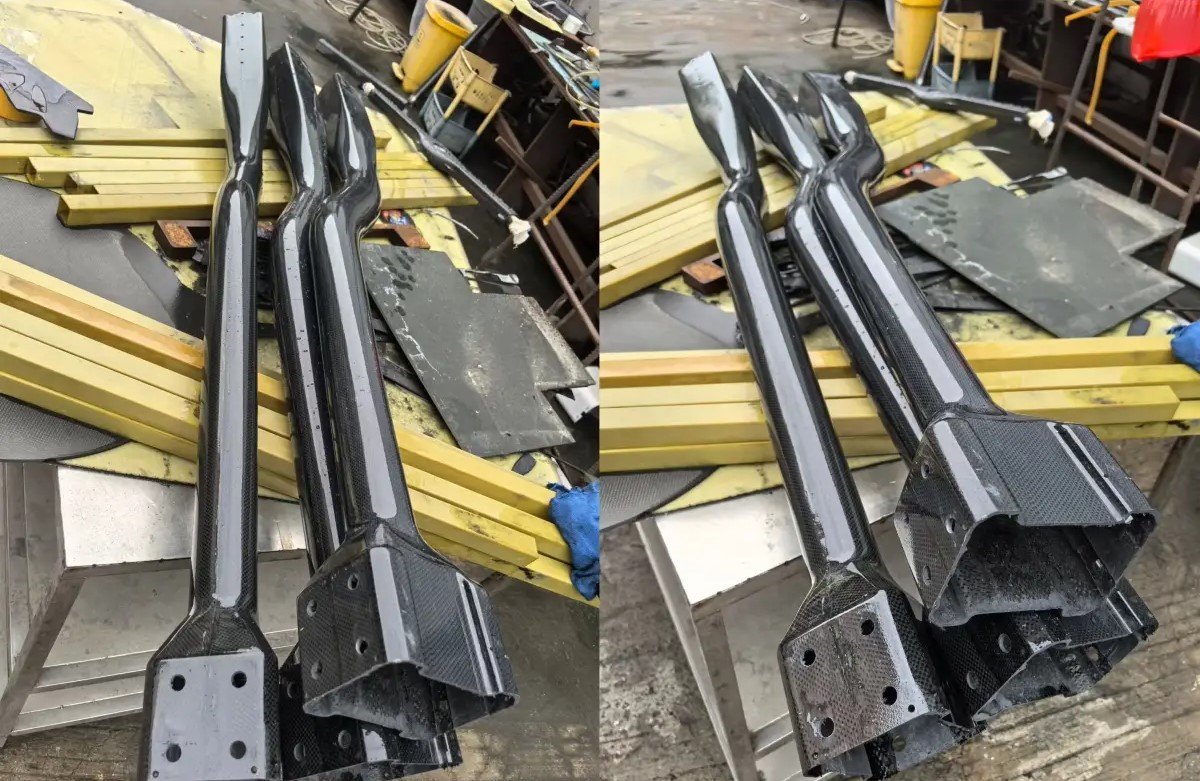
The holes line up. The outside dimensions match the drawing. Yet one corner of the frame sits above the mounting surface.
Tightening the screws pulls it down, but that does not explain why the part moved after cutting.
When buying carbon fiber plates for frames, check more than thickness and surface finish. The finished part needs to hold its shape after it leaves the CNC fixture—not just while the machine holds it flat.
Flat Before Cutting, Bowed After Release: Where Frame Warping Starts
A sheet can look flat on the machine because clamps or vacuum pressure hold it against the table. Once released, it may return to its original shape.
Cutting can also change how stress is distributed through the part. Large openings, narrow arms, and thin connecting sections leave less material to resist movement. Residual stress that was held within the original sheet may show up as bowing or twisting after machining. Uneven clamping and cutting forces can add further distortion.
Do not blame the cutter before checking the incoming material.
Record the sheet’s shape before machining, then inspect the finished frame after release. This comparison helps separate an existing material problem from distortion introduced during processing.
Relaterede artikler:
CFRP Sheets for Outdoor Equipment: UV, Moisture and Long-Term Weathering
Carbon Fiber Plates for Frames: Prevent Warping After CNC
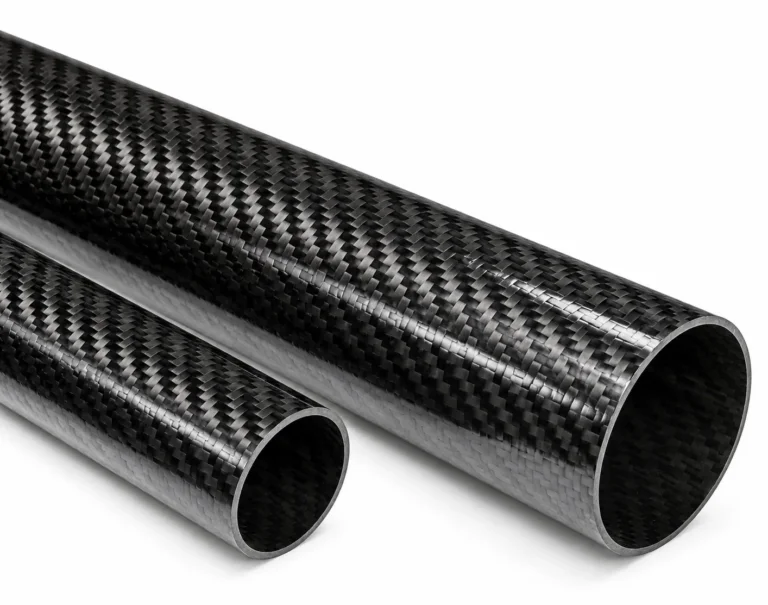
Carbon Fiber Tubes for Glider Tail Boom Alignment & Trim Control
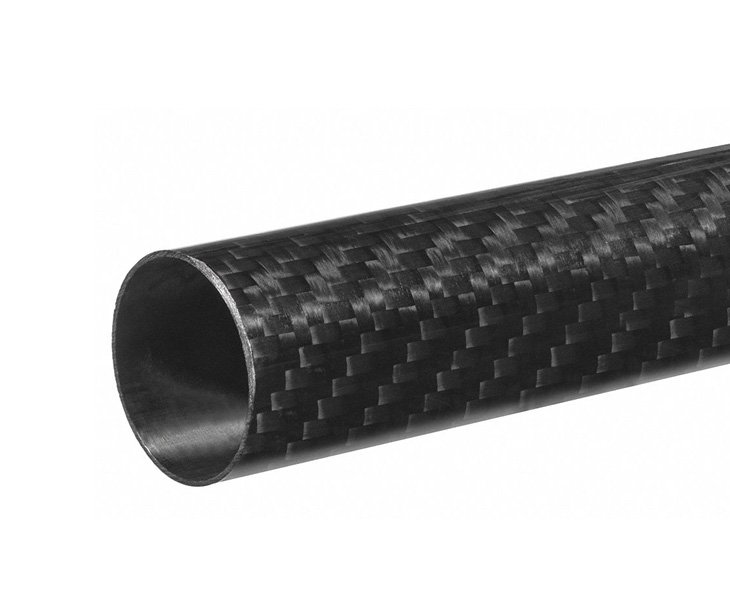
Carbon Fiber Tube for UAV Antenna Placement & GNSS Design
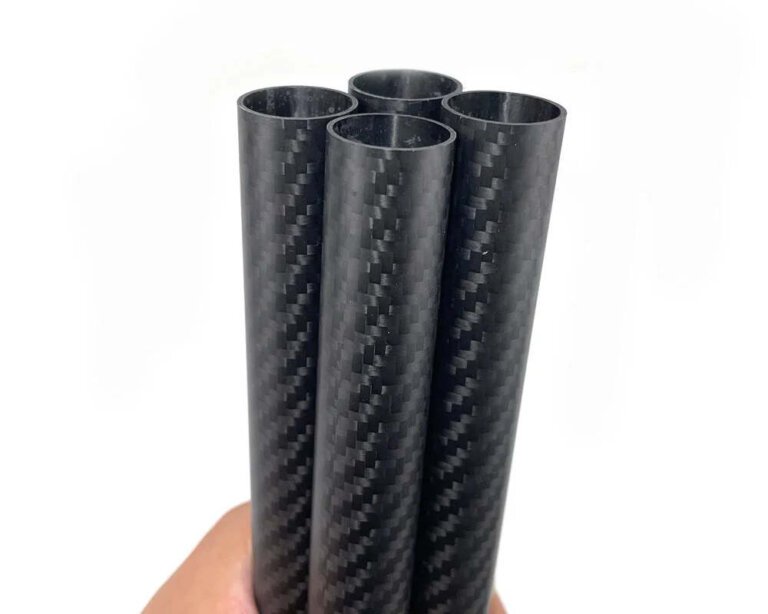
Multi-Size Carbon Fiber Tube Order for a UAV Glider Build
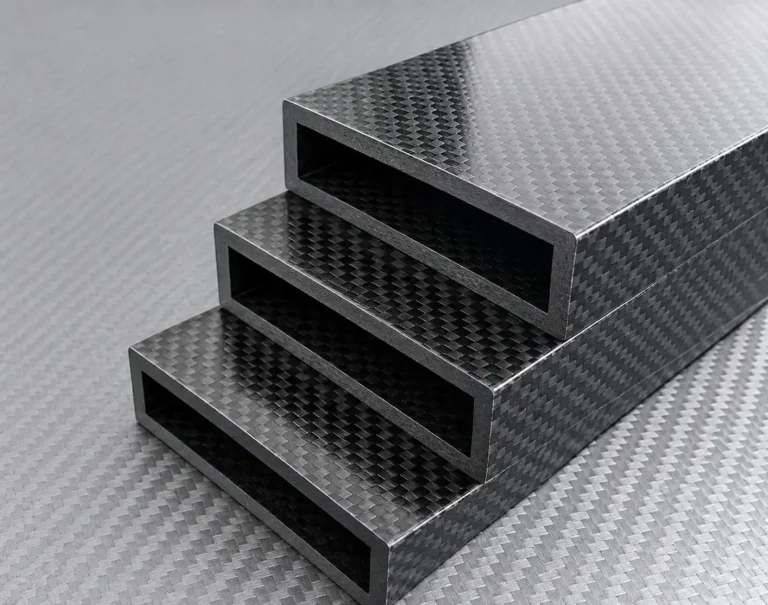
Carbon Fiber Rectangular Tube for Lightweight Rover Robotic Arms
Carbon Fiber Plates for Frames: What Layup Symmetry Can
Two plates can have the same thickness and twill surface but different internal structures. The outer weave does not tell you how the layers beneath it are arranged.
A symmetric laminate has matching material and fiber directions on either side of its mid-plane. In classical laminate theory, this removes coupling between in-plane loading and bending. A balanced layup addresses different coupling effects; “balanced” and “symmetric” are not interchangeable terms. Neither description guarantees a perfectly flat manufactured plate.
Ask the supplier about the laminate, not just the cosmetic layer.
For carbon fiber plates for frames, useful purchasing details include the internal fiber directions, whether the layup is symmetric, and how incoming flatness is checked. These questions are more helpful than simply requesting “high-quality 3K carbon.”
Hold the Plate Without Forcing It Flat
A fixture should secure the material without using excessive force to correct its natural shape.
Support matters most around long arms, narrow webs, and large cutouts. A plate may begin the job well supported, then become flexible as the cutter removes its surrounding material.
A backing board or close-fitting support can reduce movement beneath the cutting area. Vacuum workholding may suit some shapes, but its holding force must remain adequate as openings are cut. Mechanical clamps need broad contact areas and enough pressure to resist cutting—not enough to bend the stock.
For carbon fiber plates for frames with delicate sections, consider retaining tabs or a surrounding border until the last operation. Sharp, composite-appropriate tools and controlled cutting forces also help protect edges and reduce movement. There is no single feed-and-speed setting that suits every carbon laminate.
Approve the Finished Frame, Not Just the Uncut Sheet
A small square sample tells you little about a large frame with narrow arms and several openings.
Use a representative part for first-article approval. It should include the features most likely to expose a problem: long unsupported sections, closely spaced mounting points, or large pockets.
A practical check follows the part through the process:
Measure the incoming sheet.
Machine the agreed frame design.
Inspect it after removing all machining restraints.
Repeat the measurement after an agreed settling period.
Check fit with the actual spacers or mating components.
Measuring immediately after release and again after the part has relaxed can reveal changes that a fixture-based inspection misses.
Keep the results with the approved drawing. A sample that fits only after being forced into place should not quietly become the production standard.
Specify Flatness Before Ordering Carbon Fiber Plates for Frames
“Must be flat” leaves too much room for disagreement.
State which areas matter. A frame may need close contact at four mounting pads without requiring the same limit across every decorative opening or unsupported arm.
The inspection plan should identify the support points, measurement method, allowed deviation, and whether the part is checked freely or in a defined restrained condition. Measurements should not use pressure that hides the shape error.
There is no universal flatness limit for every frame. Set the requirement around the assembly’s needs, then confirm that the supplier can measure it consistently.
Ofte stillede spørgsmål
Why do carbon frame plates warp after cutting?
Possible causes include an already bowed sheet, fixture pressure, cutting forces, and residual stress redistribution. Compare the plate before machining with the released part to narrow down the cause.
Does a symmetric layup guarantee flatness?
No. Symmetry removes certain laminate coupling effects, but manufacturing stresses and processing conditions can still affect the final shape.
Will a thicker plate solve the problem?
Greater thickness can increase bending stiffness, but it does not remove residual stress or correct poor workholding. Review the cause before adding weight and material cost.
How should the finished frame be inspected?
Use the agreed support and measurement conditions. Remove machining restraints for a free-state check, and record any change after the specified settling period.
Can the assembly screws pull a warped frame flat?
Do not treat extra screw force as an automatic fix. Some assemblies use planned restraint, but that condition must be part of the design. Otherwise, forced fit can hide a part that does not meet its acceptance requirement.
Before releasing a batch of carbon fiber plates for frames, agree on the finished-part check. A short discussion about support points and flatness limits is easier than sorting out a box of frames that need force to assemble.