
 Danish
  English
  German
  Japanese
  Arabic
  Czech
Czech  Spanish
  French
  Italian
  Polish
  Portuguese
  Norwegian
  Dutch
Dutch 
Carbon Fiber Tube 2000mm for Aerospace Structural Applications
As aerospace prototype projects continue pushing for lighter and stronger structures, demand for high-performance composite materials keeps rising. Recently, one Canadian aerospace customer contacted us while searching for a reliable supplier of structural carbon fiber tubes. After reviewing technical documents, dimensional tolerances, and layup specifications, our company became one of their leading candidates for prototype development support.
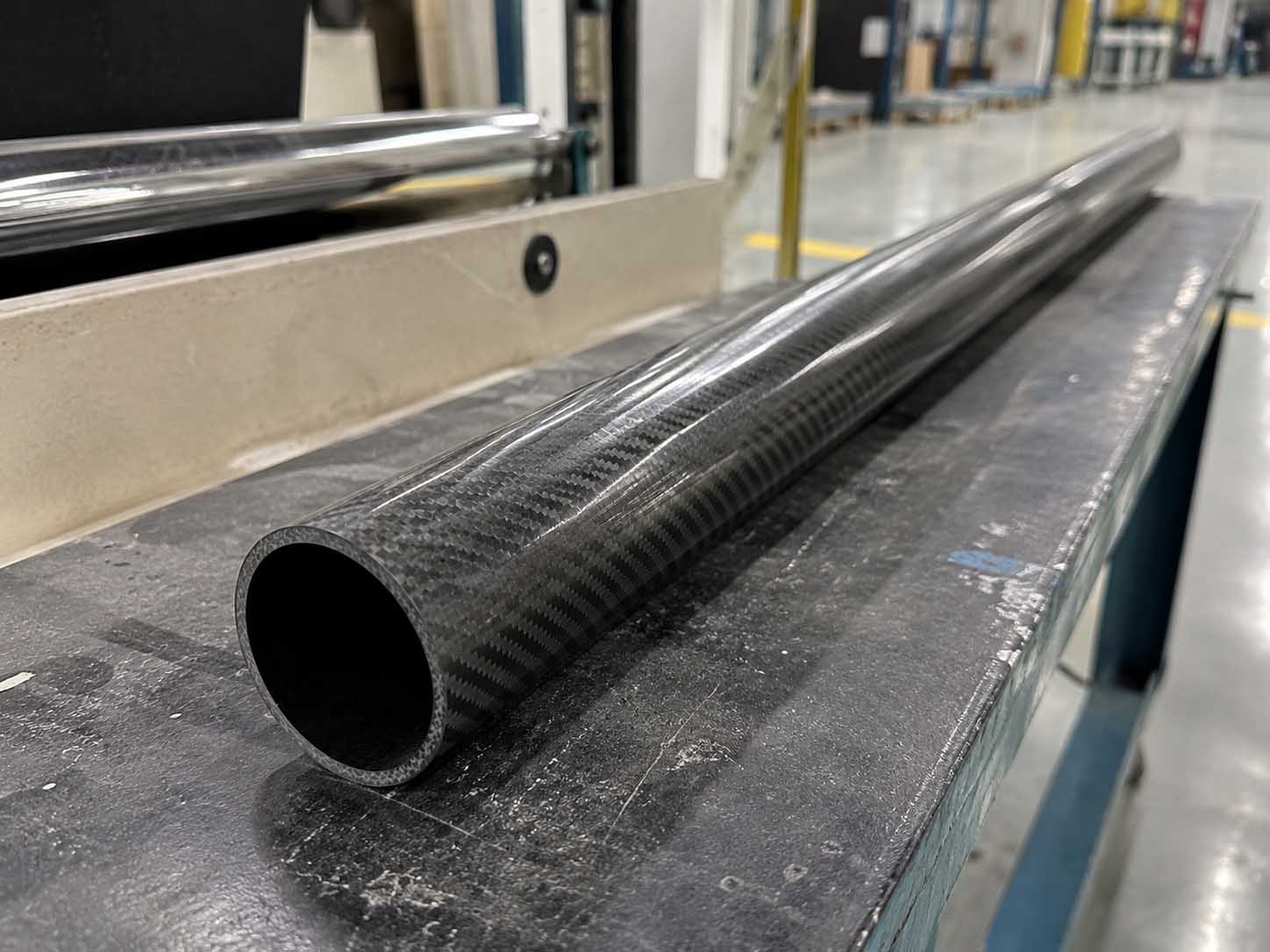
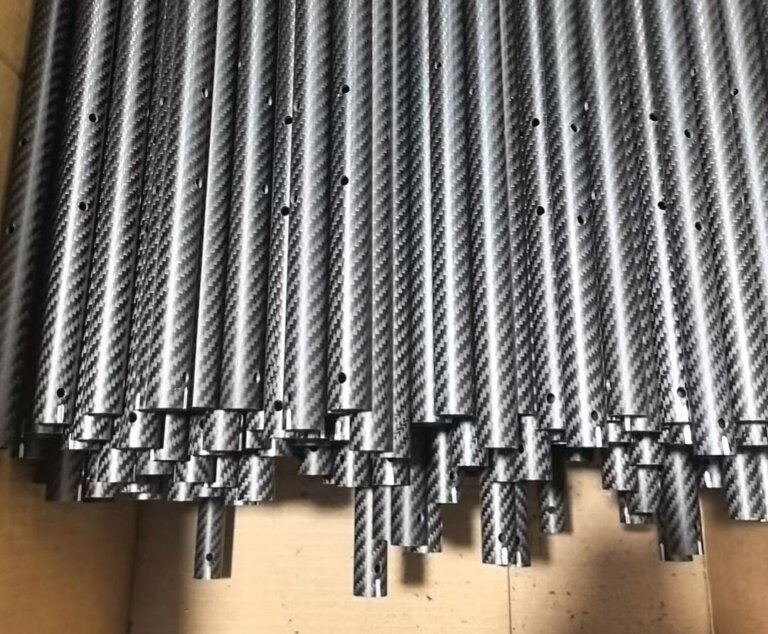
For long-span lightweight structures, a carbon fiber tube 2000mm often requires far more than simple appearance quality. Aerospace applications demand stable fiber orientation, controlled curing deformation, and consistent dimensional accuracy. Small variations in straightness or layup symmetry may affect assembly precision and structural reliability during testing.
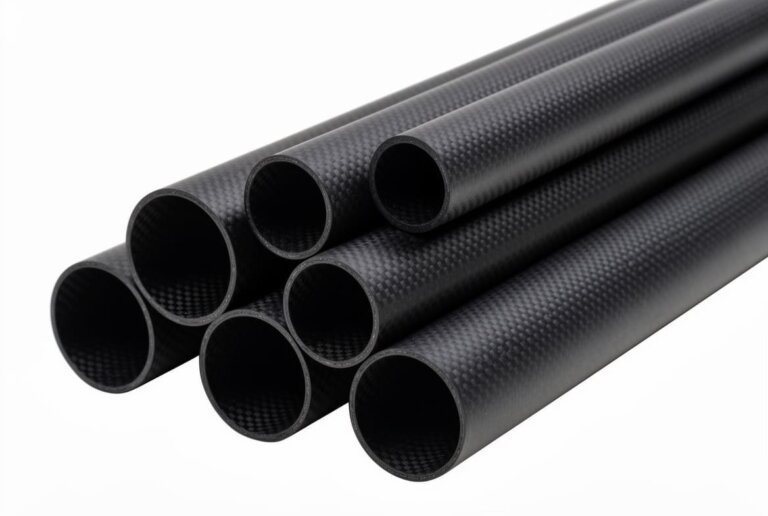
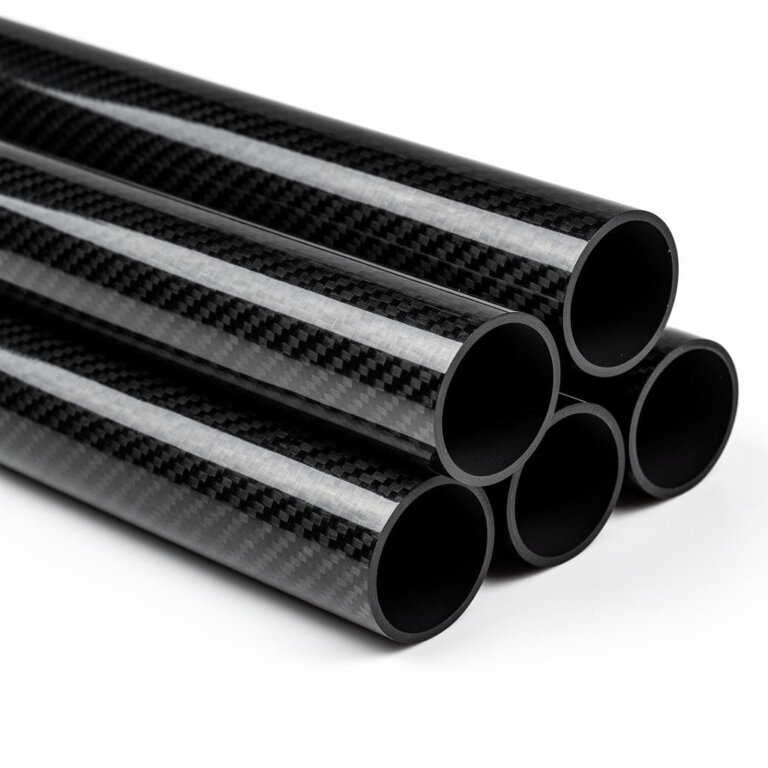
Our T700 carbon fiber composite tubes use a balanced and symmetric layup structure. Common fiber orientations include 0° / ±45° / 90°, distributed evenly across both sides of the centerline. This design helps reduce internal stress during curing while improving axial stiffness, torsional strength, and radial stability. In addition, a 3K twill surface layer provides a clean cosmetic finish without compromising structural performance.
Compression and flexural properties remain critical for aerospace structures. Typical T700 composite tubes achieve compressive strength around 230 MPa, while tensile strength may exceed 800 MPa depending on final tube specifications. Flexural behavior also depends heavily on outer diameter, wall thickness, resin system, and layup sequence. Because of that, real testing based on customer dimensions remains very important.
Several aerospace customers also compare T300, T700, and T800 materials before prototype production. T300 carbon fiber offers good processing stability and lower cost. T700 provides a stronger balance between stiffness and strength for structural parts. Meanwhile, T800 delivers even higher tensile performance for advanced lightweight systems.
Carbon Fiber Tube Selection Guide for Industrial Applications
Sådan vælger du det rigtige 4-tommers kulfiberrør til dit projekt
Hvorfor dronerør af kulfiber er uundværlige for moderne UAV’er
Sådan finder du plader i luftfartskvalitet uden lange leveringstider
Kulfiberrør i den europæiske kompositindustri | Markedstendenser i 2026
Sådan anmoder du om et tilbud på et enkelt specialfremstillet kulfiberrør
For example, our 94 × 100 × 1200 mm T700 carbon fiber tube with 3 mm wall thickness weighs approximately 1.83 kg/m. A thicker 90 × 100 × 1200 mm version with 5 mm wall thickness reaches around 2.96 kg/m. Tube straightness tolerance typically remains within ±0.1 mm, while roundness stays around ±0.2–0.25 mm.
Many customers searching for a carbon fiber tube 2000mm also require low-volume prototype support before mass production. Therefore, we provide sample production with MOQ starting from one piece. Samples remain subject to a sample fee depending on dimensions and material selection.
No matter wich country, aerospace projects, carbon fiber tubes are usually shipped by express courier or air freight DDP. This helps customers reduce import handling complexity while speeding up prototype evaluation and structural testing.