 German
 English
 Czech
 Spanish
 Hebrew
 French
 Danish
 Portuguese
 Norwegian
 Dutch
Inhaltsübersicht
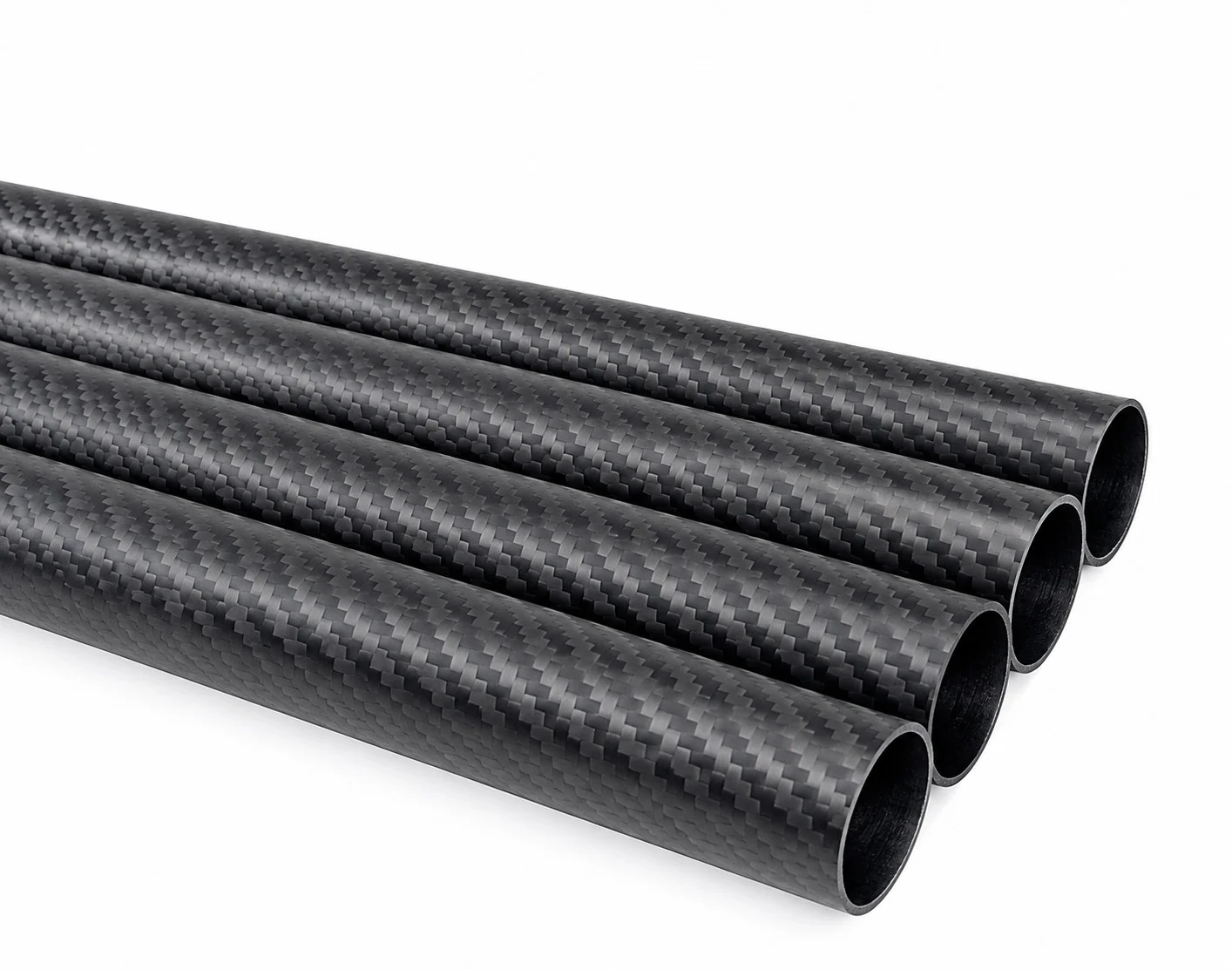
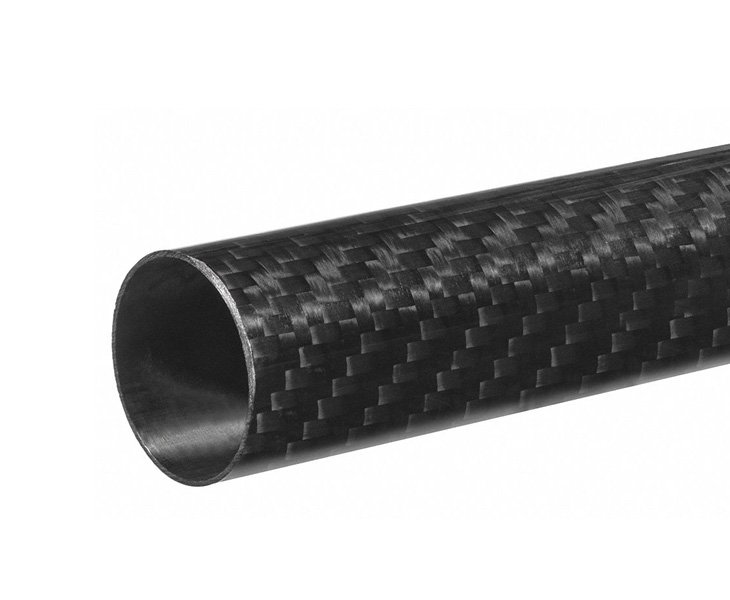
A T800-Kohlenstofffaserrohr ist eine effektive, leichte Strukturlösung für Windkanal-Modellhalterungen, die hohe Steifigkeit, geringe Durchbiegung und stabile Performance unter aerodynamischer Belastung erfordern. Für Windkanaltests mit maßstabsgetreuen Gebäudemodellen kann ein kundenspezifisch rollgewickeltes T800-Kohlenstofffaserrohr Rohr als starre, freitragende Stützstrebe dienen, auch als Sting bekannt, wobei es ein PLA- oder anderes Leichtbaumodell trägt und unerwünschte Schwingungen minimiert.
Diese Art von Projekt erfordert mehr als die Auswahl einer starken Kohlenstofffaser-Qualität. Die endgültige Stützleistung hängt vom Rohrdurchmesser, der Wandstärke, der ungestützten Länge, der Laminatorientierung, den Montagebedingungen, dem Modellgewicht und der aerodynamischen Testumgebung ab.
Projektanforderungen
Ein Kunde benötigte ein Rundes Kohlefaserrohr zur Verwendung als Stützstrebe mit fester Basis bei hochfrequenten aerodynamischen Tests von Gebäudemodellen im Maßstab 1:400.
Die vorgeschlagenen Rohranforderungen umfassten:
Anwendung: Windkanaltests zur Halterung von maßstabsgetreuen Gebäudemodellen
Halterungsbedingung: Am Fuß starr fixiert, wobei das Modell oben montiert wird
Rohrlänge: 15–30 in / 381–762 mm
Rohrdurchmesser: 2–3 in / 50.8–76.2 mm
Wandstärke: 1/16–1/8 in / ca. 1.6–3.2 mm
Oberflächenanforderung: Mattoberfläche für eine Reibschlussmontage
Strukturkonzept: Unidirektionale Innenlagen mit einer Außenlage aus Twill-Gewebe
Priorität: Hohe Biegesteifigkeit und geringe Schwingung
Da das Rohr als freitragender Balken wirkt, trägt das Wurzelende das höchste Biegemoment. Das Rohr muss steif genug bleiben, um eine sichtbare Verschiebung des Gebäudemodells während der Luftstromtests zu verhindern, und gleichzeitig leicht genug bleiben, um unnötige Belastungen der Halterung zu reduzieren und übermäßige Beeinträchtigungen des Testaufbaus zu vermeiden.
Verwandte Artikel:
How to Evaluate Quality Control for Carbon Fiber Drone Components
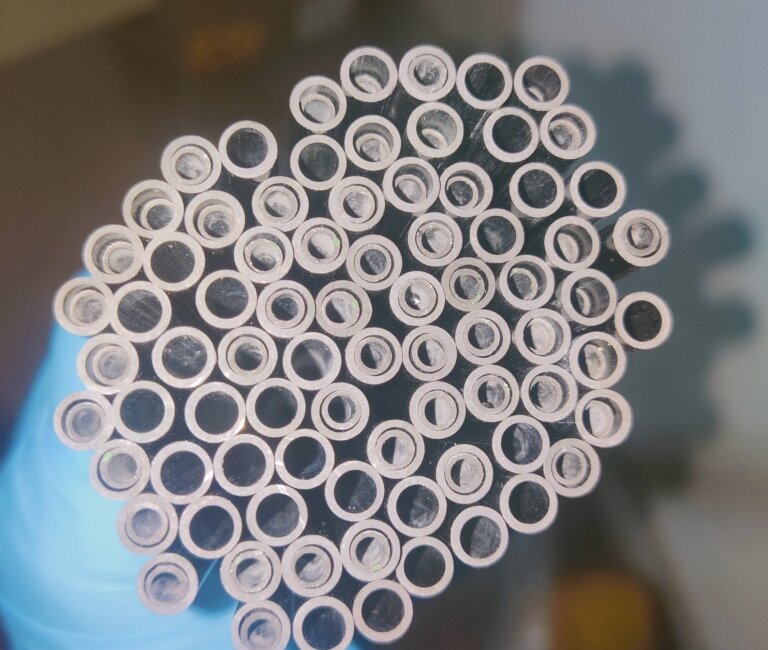
So überprüfen Sie die Abmessungen von Kohlenstofffaserrohren für UAVs
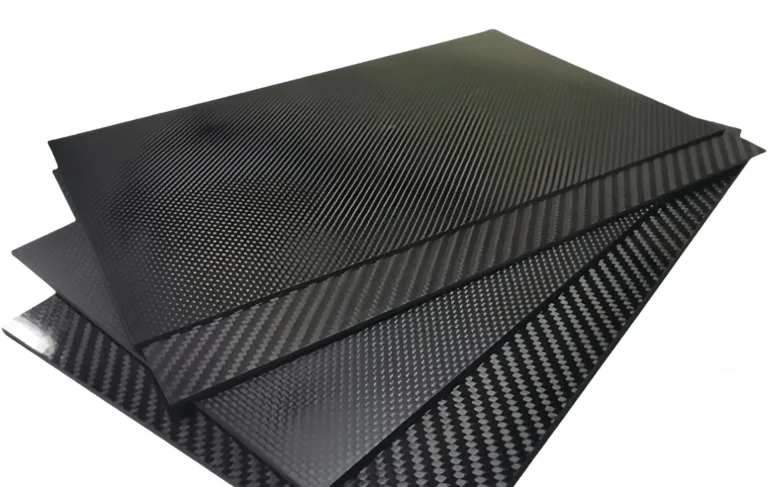
CFK-Platten für Outdoor-Ausrüstung: UV-, Feuchtigkeits- und Langzeitbewitterung
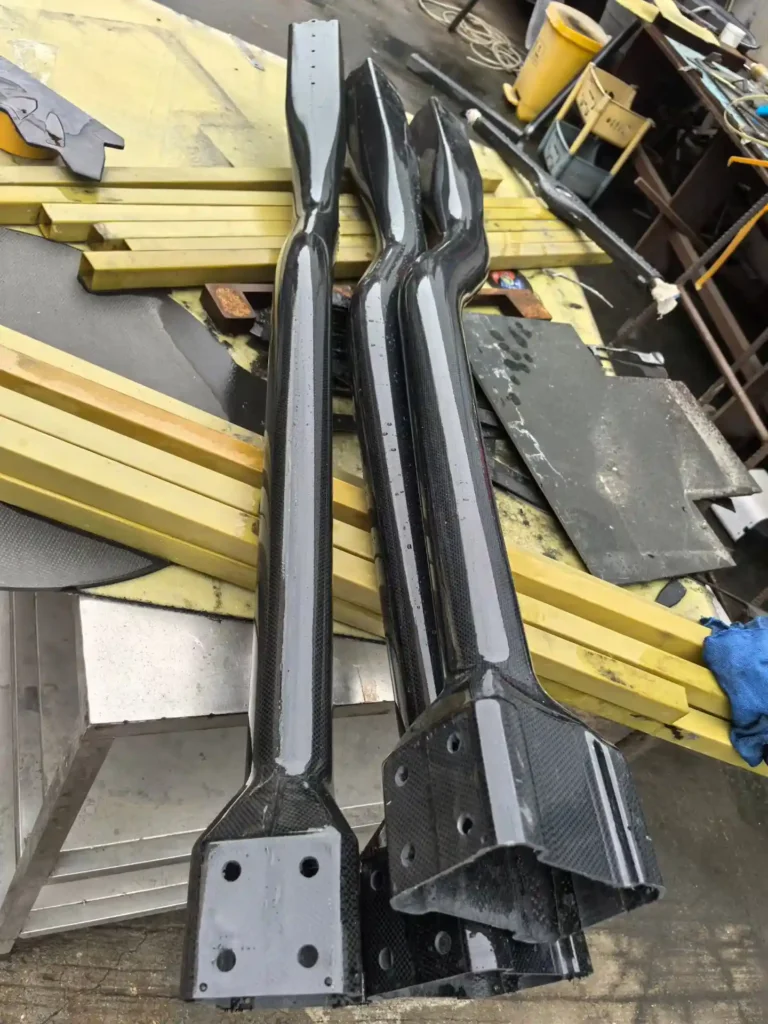
Carbonfaserplatten für Rahmen: Verziehen nach CNC-Bearbeitung verhindern
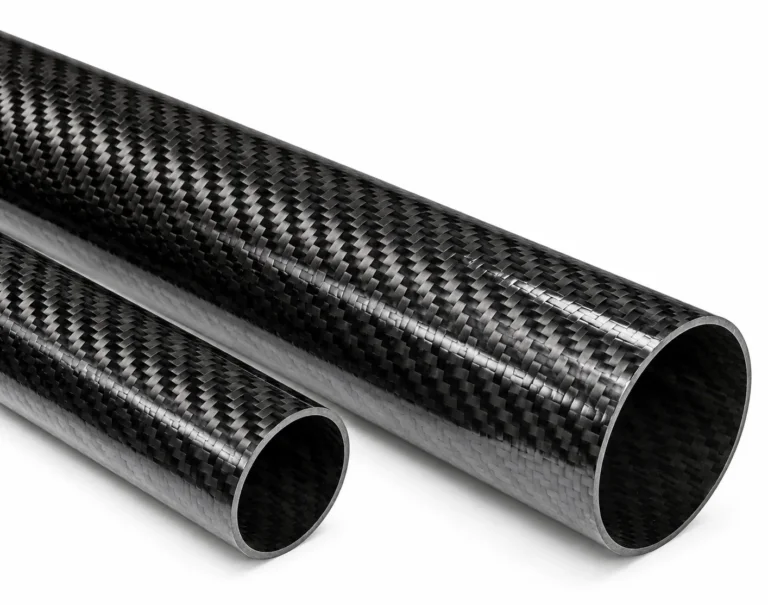
Carbonfaserrohre zur Ausrichtung des Heckauslegers und zur Trimmsteuerung bei Segelflugzeugen
Carbonfaserrohr für UAV-Antennenplatzierung und GNSS-Design
Warum Windkanal-Sting-Anwendungen mehr als Standardrohre erfordern
Bei Windkanaltests wird das Rohr, das ein maßstabsgetreues Modell hält, oft als “Sting” bezeichnet. Seine Aufgabe klingt einfach – das Modell an Ort und Stelle halten –, doch die Anforderungen sind strenger, als sie scheinen. Es muss unter aerodynamischer Last der Biegung widerstehen, eine Durchbiegung vermeiden, die Positionsdaten verfälschen würde, und während hochfrequenter Tests seine eigene Resonanzfrequenz meiden. Ein Rohr, das lediglich “stark” ist, ist hier nicht automatisch die richtige Wahl; am wichtigsten sind Steifigkeit und Schwingungsverhalten, nicht nur, wie viel Last es vor dem Versagen aufnehmen kann.
Hier beginnen sich ein Allzweck-Kohlenstofffaserrohr und ein ordnungsgemäß spezifiziertes T800-Kohlenstofffaserrohr zu unterscheiden.
Warum ein T800-Kohlenstofffaserrohr wählen?
T800-Kohlenstofffaser wird häufig für Hochleistungs-Verbundstrukturen ausgewählt, da sie eine höhere Steifigkeit als Kohlenstofffaser-Güten mit Standardmodul bietet. Sie eignet sich für Anwendungen, bei denen sowohl Gewichtsreduzierung als auch Biegewiderstand wichtig sind, darunter Luft- und Raumfahrtkomponenten, Drohnenstrukturen, Präzisionsprüfvorrichtungen, Roboterarme und Windkanal-Stützsysteme.
Für eine Windkanal-Sting-Anwendung kann ein T800-Kohlenstofffaserrohr mehrere Vorteile bieten:
Hohe spezifische Steifigkeit für lange, ungestützte Stützstrukturen
Geringeres Strukturgewicht als Stützelemente aus Stahl oder Aluminium
Gute Ermüdungsbeständigkeit für wiederholte Testzyklen
Geringe Wärmeausdehnung im Vergleich zu vielen Metallalternativen
Anpassbarer Lagenaufbau für axiale Steifigkeit, Torsionsstabilität und lokale Verstärkung
Saubere Kohlenstofffaser-Optik mit Optionen für matte oder glänzende Oberflächen
T800 allein garantiert jedoch nicht, dass ein Rohr das Steifigkeitsziel erreicht. Ein gut ausgelegtes Laminatdesign ist ebenso wichtig. In vielen Anwendungen ist die Kombination aus T800-Faser, einem ausreichend großen Außendurchmesser und einem überwiegend axialen UD-Lagenaufbau wichtiger als eine bloße Erhöhung der Wanddicke.
Wo T800 in der Faser-Gütenpalette einzuordnen ist
T800 liegt in der Faserfamilie von Toray zwischen T700 und T1000 und ist eine gängige Wahl, wenn ein Projekt eine deutliche Festigkeitssteigerung gegenüber Fasern mit Standardmodul benötigt, ohne auf die höheren Kosten von T1000 zu wechseln. Speziell für Sting-Anwendungen ist es wichtig, klar zu benennen, was T800 tatsächlich verbessert: Die Zugfestigkeitsgewinne sind bedeutender als die Steifigkeitsgewinne. Wenn das Hauptversagensrisiko der Strebe eher Biegen oder Vibration als Bruch unter Zug ist, sind Wanddicke, Lagenaufbau und Rohrgeometrie in der Regel wichtiger als der Wechsel zu einer höheren Faser-Güte. Ein gut ausgelegtes T800-Kohlenstofffaserrohr kann ein schlecht laminiertes T1000-Rohr in genau dieser Art von steifigkeitskritischem Anwendungsfall übertreffen.
Empfohlene Rohrkonstruktion
Für ein hochsteifes Kohlenstofffaserrohr, das als Windkanalmodell-Halterung verwendet wird, wird eine rollgewickelte Bauweise empfohlen. Rollgewickelte Rohre ermöglichen es, den Lagenaufbau an die Lastrichtung und die Anforderungen der Vorrichtung anzupassen.
Ein praktischer Hybrid-Lagenaufbau kann Folgendes umfassen:
0°-unidirektionale Kohlenstofffaserlagen als Hauptstrukturlagen für die Biegesteifigkeit entlang der Rohrlänge
90°-Umfangslagen zur Verbesserung der Rundheit, Quetschfestigkeit und Radialstabilität
±45°-Verstärkungslagen to improve torsional performance and resistance to off-axis loads
3K 2×2 twill carbon fiber outer layer for surface quality, machining stability, and a professional carbon fiber appearance
The internal UD carbon fiber layers carry most of the longitudinal bending load. Since the building model is mounted at the top of a fixed-base tube, the support behaves similarly to a cantilever beam. Axial fiber orientation is therefore critical for reducing deflection.
The twill outer layer is not only decorative. It can provide a consistent outer surface, improve handling during production, and support a matte finish that is better suited to friction-fit assembly than a high-gloss surface.
Wall Thickness and Length Considerations
The requested wall thickness range of 1/16–1/8 in is feasible for many custom carbon fiber tubes. However, the correct wall thickness should be determined by the final load case.
A 15 in tube and a 30 in tube may have the same diameter and wall thickness, but the longer tube will deflect much more under the same top load. In cantilever applications, deflection increases rapidly as unsupported length increases.
For this reason, the 30 in version should be evaluated as the critical design condition. Depending on the building model weight, wind speed, and acceptable movement at the model top, the tube may require:
A higher percentage of 0° T800 UD layers
A larger outer diameter within the 2–3 in range
A wall thickness closer to 1/8 in
Local reinforcement at the fixed base
Reinforced mounting zones at the model interface
For applications with a strict vibration requirement, the design should also consider the tube’s natural frequency. A stiffer and lighter structure generally helps raise the natural frequency and reduce the risk of resonance during high-frequency aerodynamic testing.
Sizing for Stiffness: Diameter, Wall Thickness, and Length Together
A tube spec rarely stands on wall thickness alone — diameter, wall thickness, and length all interact. A strut in the 2–3 inch diameter range with a 1/16″ to 1/8″ wall, running 15 to 30 inches long, sits in a length-to-diameter ratio where stiffness and buckling resistance both need attention, not just tensile strength. Thicker walls add stiffness but also add weight and cost, which matters when the tube is mounted on precision test equipment. The right answer usually comes from matching wall thickness to the actual span and mounting condition, rather than defaulting to the thickest option in the tolerance range.
Getting From Spec Sheet to Sample
Custom sting tubes like this typically don’t come off a standard catalog page — diameter, wall thickness, layup combination, and finish all need to be confirmed against the specific test setup before production starts. Roll-wrapped hybrid layups (unidirectional plus twill) can be produced in small batches for testing and validation before committing to a larger order, which is usually the right way to confirm stiffness and fit before scaling up.
Anpassungsoptionen
A custom T800 carbon fiber tube can be produced with tailored structural and cosmetic specifications, including:
T700, T800, or hybrid carbon fiber material options
Round tube OD and ID customization
Wall thickness from approximately 1.6 mm to 3.2 mm or higher
Lengths from 15–30 in, with CNC cut-to-length service
UD, hoop, ±45°, and twill hybrid laminate structures
3K twill matte surface finish
Root-end reinforcement for rigid fixture mounting
Drilling, slotting, trimming, sanding, and bonding preparation
Tight-tolerance dimensions for model installation
Information Needed for Final Design
Before confirming the final T800 carbon fiber tube specification, the following information should be reviewed:
Building model weight and center of gravity
Maximum wind speed and expected aerodynamic force
Test frequency range
Maximum acceptable deflection at the model top
Required tube outer diameter or model mounting-hole diameter
Insertion depth and connection method
Quantity, sample requirement, and delivery location
A custom T800 carbon fiber tube with a UD structural core and 3K twill matte outer layer can provide a strong solution for wind tunnel building model support. By optimizing fiber orientation, diameter, wall thickness, and mounting details, the tube can be engineered for high stiffness, reduced vibration, stable installation, and repeatable aerodynamic testing performance.
T800 Carbon Fiber Tube
Häufig gestellte Fragen
Answers to common questions about T800 carbon fiber tubes, layup design, wall thickness, surface finish, and custom production.
Applications needing a strength upgrade over standard-modulus fiber without the cost of T1000 — sting tubes, structural test fixtures, and lightweight support struts among them.
It depends on whether the load case is stiffness-driven or strength-driven. For most sting applications, layup structure and wall thickness affect stiffness more than the jump from T800 to T1000.
Yes — combining unidirectional and twill weave layers in the same tube is a common approach for parts needing both axial stiffness and torsional resistance.
Commonly in the 1/16" to 1/8" range, though the right thickness depends on tube length and how the base is mounted.
Yes, matte finishing with controlled outer diameter tolerance is standard for parts that rely on friction fit rather than adhesive bonding.
Small-batch and sample orders are available for testing and validation before larger production runs.
Yes, sample tubes can be produced first so stiffness, fit, and finish can be confirmed against the actual test setup.
Diameter, wall thickness, length, layup preference, surface finish, and the load or mounting condition the tube will see in use.