
 German
 English
 Japanese
 Arabic
 Czech
 Spanish
 French
 Italian
 Danish
 Polish
 Portuguese
 Norwegian
 Dutch
Inhaltsübersicht
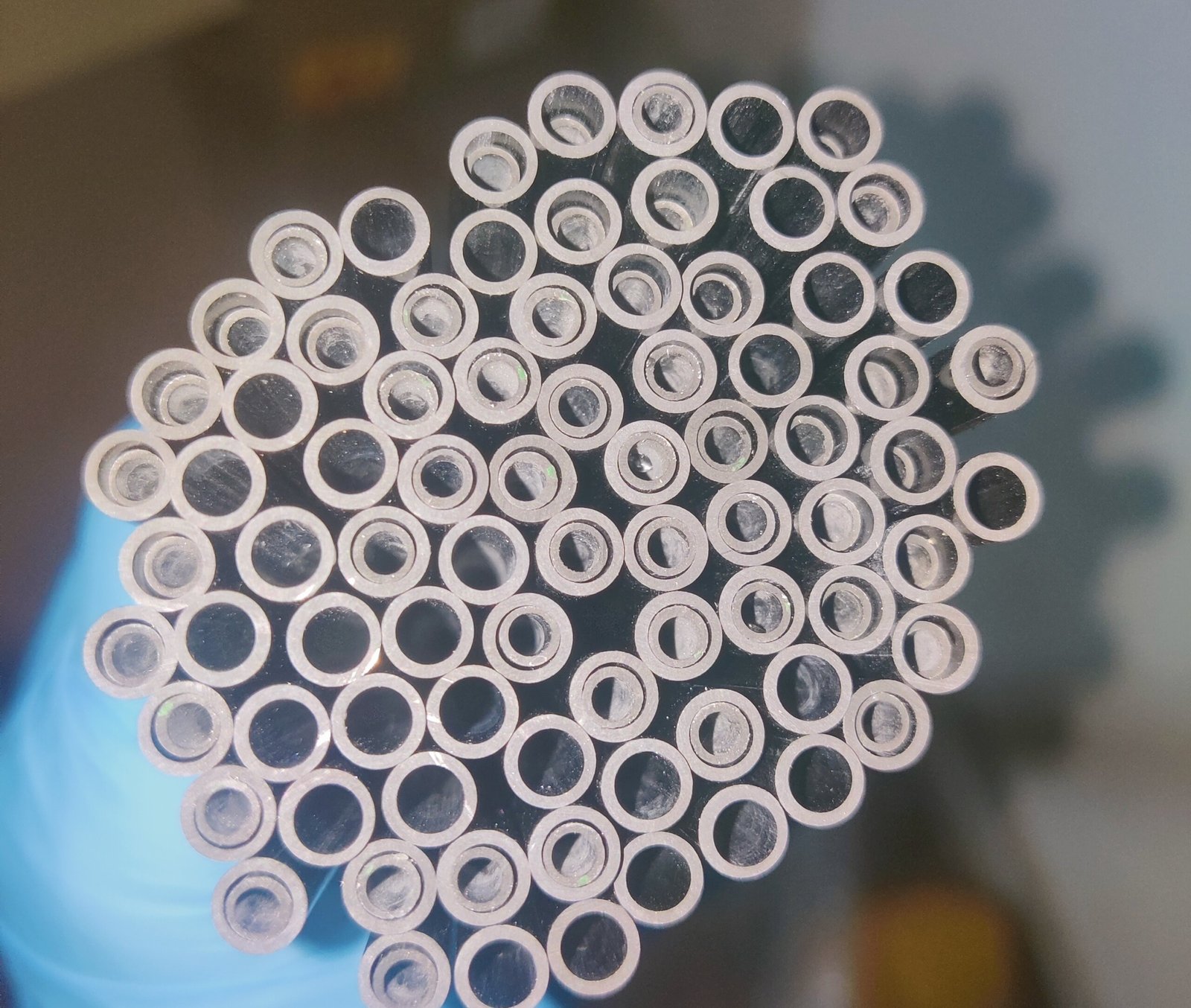
Ein praktischer Leitfaden zur Prüfung von Außendurchmesser, Innendurchmesser, Wandstärke und Geradheit—von der Musterfreigabe bis zur Chargenprüfung.
Die Maßgenauigkeit beeinflusst, wie reibungslos ein Rohr in eine UAV-Baugruppe passt und wie konsistent Teile gefertigt werden können. Bei der Beschaffung von Carbonfaserrohren für UAVs, sollten Käufer kritische Abmessungen und Prüfmethoden vor Produktionsbeginn vereinbaren. Klare Anforderungen helfen, Montageprobleme, Verzögerungen und Streitigkeiten über akzeptable Qualität zu verringern.
Welche Abmessungen sollten Käufer prüfen?
Die wichtigsten Abmessungen, die spezifiziert und geprüft werden sollten, sind:
- Außendurchmesser (OD): beeinflusst, wie das Rohr in Schellen, Verbindungen und Anschlüsse passt.
- Innendurchmesser (ID): wichtig, wenn Komponenten in das Rohr passen müssen.
- Wandstärke: kann Gewicht, Passung und strukturelle Leistung beeinflussen.
- Länge: sollte dem Design und jeder erforderlichen Schnittzugabe entsprechen.
- Geradheit: ist wichtig, wenn Rohre über eine lange Spannweite verlegt oder mit anderen Komponenten ausgerichtet werden.
Nicht jede Abmessung ist gleich wichtig. Identifizieren Sie, welche Messungen Montage oder Funktion beeinflussen, und markieren Sie diese in der Zeichnung als kritisch. Dies gibt dem Lieferanten und dem Wareneingangsprüfteam eine klare Grundlage für die Abnahme.
Verwandte Artikel:
So überprüfen Sie die Abmessungen von Kohlenstofffaserrohren für UAVs
CFK-Platten für Outdoor-Ausrüstung: UV-, Feuchtigkeits- und Langzeitbewitterung
Carbonfaserplatten für Rahmen: Verziehen nach CNC-Bearbeitung verhindern
Carbonfaserrohre zur Ausrichtung des Heckauslegers und zur Trimmsteuerung bei Segelflugzeugen
Carbonfaserrohr für UAV-Antennenplatzierung und GNSS-Design
Bestellung von Carbonfaserrohren in mehreren Größen für den Bau eines UAV-Segelflugzeugs
Wie werden Rohrabmessungen gemessen?
Ein Lieferant kann kalibrierte Messschieber, Mikrometer, Lehren oder andere geeignete Prüfmittel verwenden. Die Methode sollte zur zu prüfenden Toleranz und zur Form des Rohrs passen.
Für OD und ID nehmen Sie Messungen an mehreren Stellen entlang des Rohrs vor. Wenn das Rohr oval sein kann, messen Sie an jeder Stelle in mehr als einer Richtung. Prüfen Sie die Wandstärke auch an mehreren Stellen, insbesondere wenn Gleichmäßigkeit wichtig ist.
Straightness can be checked by placing the tube on a flat reference surface or using a suitable fixture and measuring the deviation along its length. Buyers should agree with the supplier on the inspection method, measurement locations, and equipment before production.
How Should Buyers Specify Tolerances?
Provide a drawing or specification that states the required dimensions, units, tolerance limits, and measurement locations. Avoid relying on descriptions such as “standard tolerance” unless the applicable standard and its requirements are clearly identified.
When requesting a quote for Carbonfaserrohren für UAVs, include the tube length, OD, ID or wall thickness, end conditions, and any machining requirements. Also identify dimensions that are critical for assembly. If the tube needs drilled holes, cut ends, or bonded fittings, state whether tolerances apply before or after these operations.
If the design allows a range, specify it. Overly tight tolerances may increase inspection effort, production time, and cost, so define limits based on actual fit and performance requirements.
How Can Buyers Confirm Sample and Batch Consistency?
Before placing a larger order, review a production-representative sample against the approved drawing. Record the measured values and keep the accepted sample or inspection report as a reference.
For ongoing orders, agree on a batch inspection plan. It should state how many tubes are measured, which dimensions are checked, and what happens if a result falls outside the agreed limits. Ask for traceability linking the inspection results to the relevant production batch.
These steps are particularly useful when ordering Carbonfaserrohren für UAVs in different lengths or configurations. A consistent process helps buyers identify variation early and communicate corrective actions with the supplier.
What Inspection Documents Should Suppliers Provide?
Depending on the order, buyers may request a dimensional inspection report, material or batch identification, and records for any secondary machining. The report should list the specification, measured results, inspection date, and batch reference.
Documents support verification, but they do not replace clear requirements or appropriate incoming checks. Buyers should confirm that the report covers the critical dimensions agreed for their order.
UAV Carbon Fiber Tubes
Find answers about carbon fiber tube dimensions, OD and ID measurement, production tolerances, inspection reports, and quality control for UAV applications.
01
Which dimensions should buyers check on UAV carbon fiber tubes?
Typically, OD, ID, wall thickness, length, and straightness. Prioritize the dimensions that affect assembly and function.
02
How should the inner and outer diameters be measured?
Use suitable calibrated equipment and take measurements at multiple points. Measure in more than one direction where ovality may affect fit.
03
What can cause dimensional variation between production batches?
Variation can come from differences in production setup, tooling, curing, cutting, or secondary machining. Batch inspection and traceability help detect it.
04
What tolerance information should buyers include in a quote request?
Provide a drawing with units, tolerance limits, critical dimensions, measurement locations, and any requirements for cutting or machining.
05
What should a supplier’s inspection report include?
It should identify the part and production batch, list the dimensions checked and their measured values, and reference the applicable specification.