
 Polish
  English
  German
  Japanese
  Arabic
  Czech
Czech  Spanish
  French
  Italian
  Danish
  Portuguese
  Norwegian
  Dutch
Dutch 
Spis treści
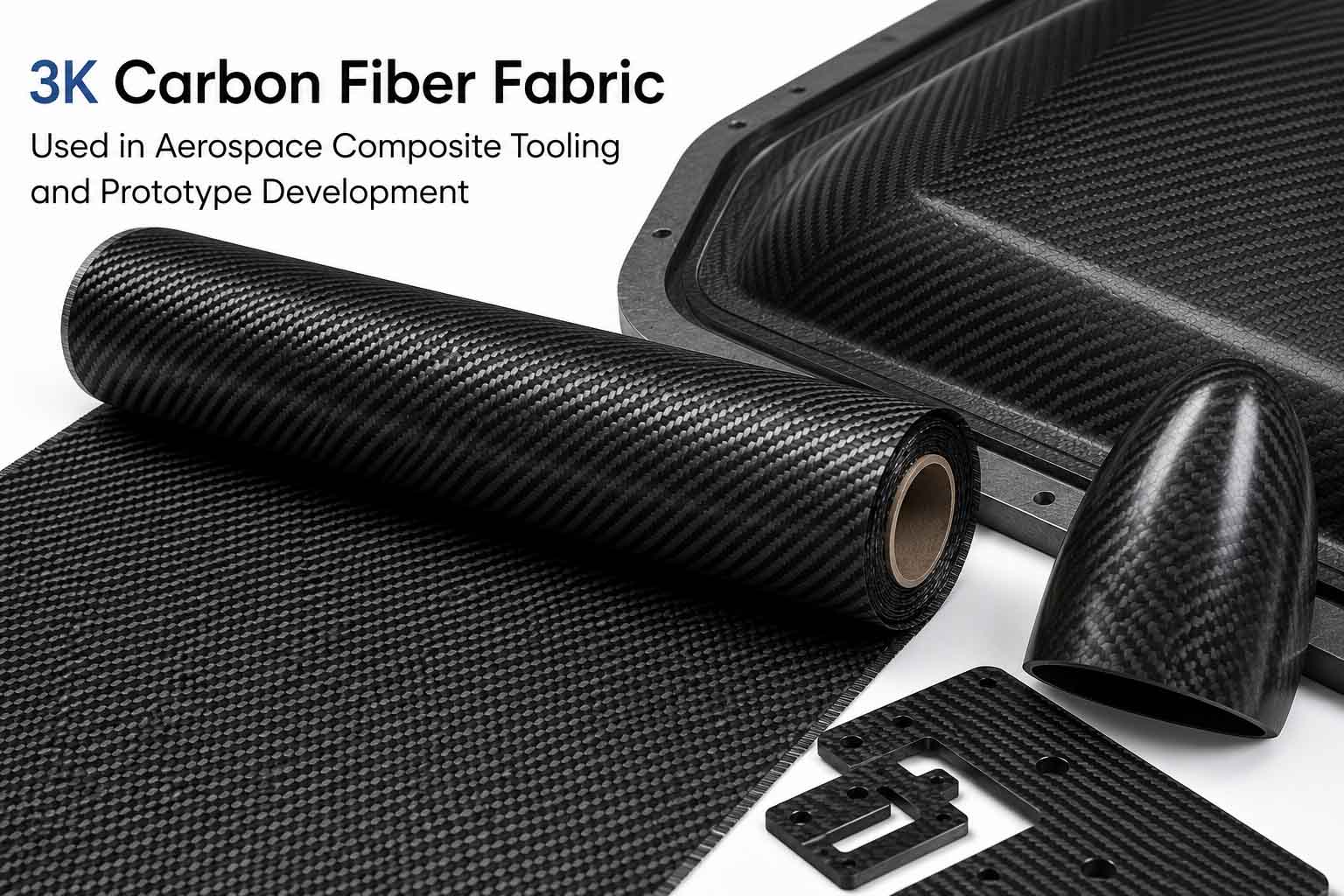
Dimensional instability, mold deformation, and inconsistent laminate quality are persistent challenges in aerospace prototype development. Teams often face extended cure cycles, material waste, and delayed validation when early material decisions do not align with process requirements. The choice between Carbon Prepreg and Tooling Prepreg is rarely straightforward, especially when balancing structural performance with tooling durability. These challenges highlight the importance of understanding how different prepreg systems behave under real manufacturing conditions.
Why 3K Carbon Fiber Fabric Remains Popular in Aerospace Prototype Development
3K Carbon Fiber Fabric continues to be widely used in aerospace composite materials because it offers a balance between surface finish, drapability, and mechanical performance. Engineers value its relatively tight weave, which enables smoother surface quality—critical for aerodynamic components and visible prototype parts. During prototype development, where iteration speed matters, 3K fabrics are easier to handle compared to heavier tow fabrics, reducing layup errors.
However, challenges arise in complex geometries where bridging or fiber distortion can occur. Despite newer material options, 3K Carbon Fiber Fabric remains a practical choice because it supports lightweight structures while maintaining acceptable consistency during early-stage validation and testing.
Powiązane artykuły:
Jak weryfikować wymiary rur z włókna węglowego do UAV
Arkusze CFRP do sprzętu outdoorowego: odporność na promieniowanie UV, wilgoć i długotrwałe warunki atmosferyczne
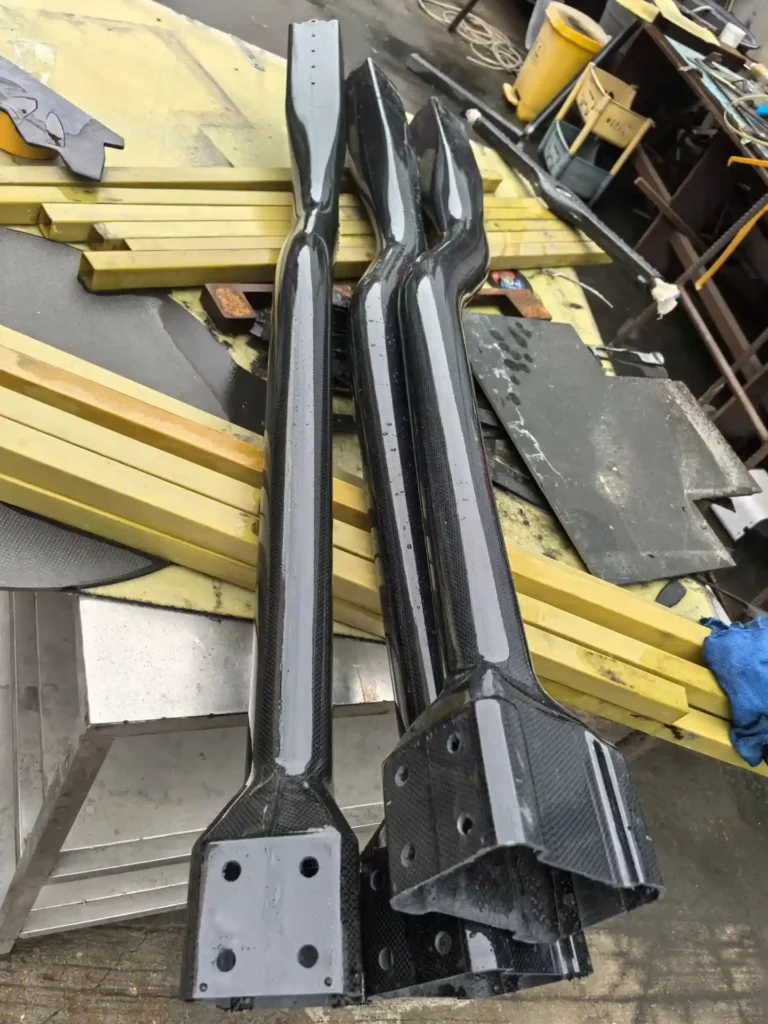
Płyty z włókna węglowego do ram: zapobieganie deformacji po CNC
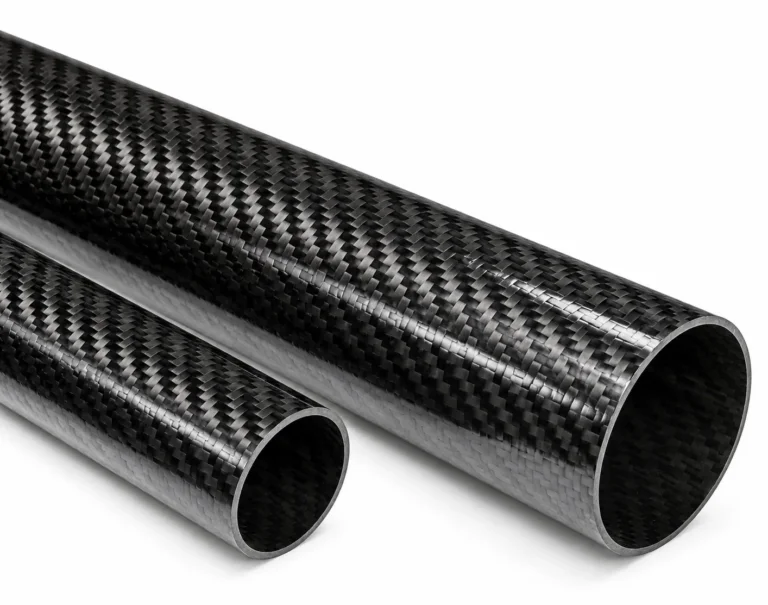
Rury z włókna węglowego do wyrównania belki ogonowej szybowca i kontroli trymowania
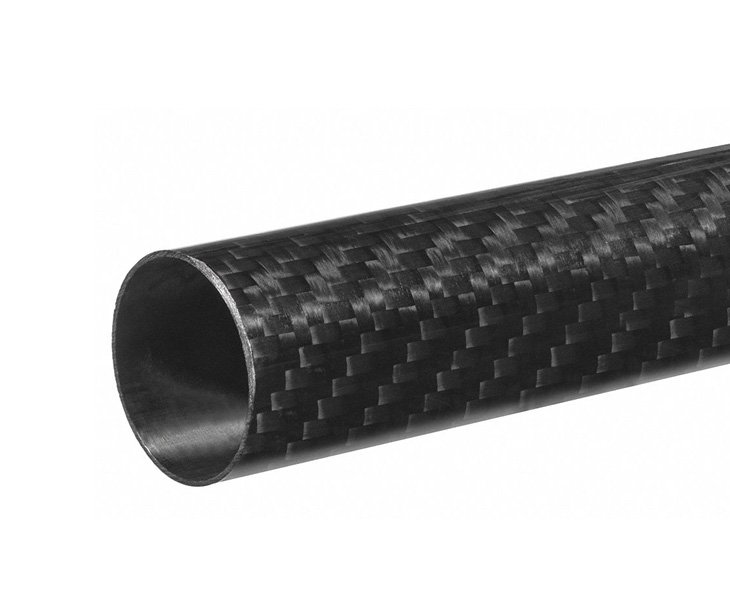
Rura z włókna węglowego do rozmieszczenia anteny UAV i projektowania GNSS
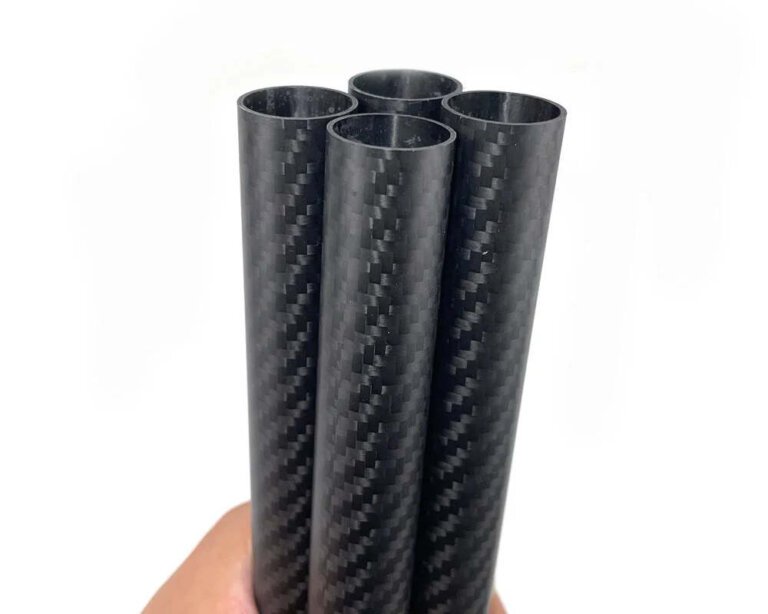
Zamówienie rur z włókna węglowego w wielu rozmiarach do budowy szybowca UAV
Carbon Prepreg and Aerospace Composite Materials: Solving Consistency Problems
Carbon Prepreg plays a central role in improving repeatability across aerospace composite materials manufacturing. Unlike hand layup with dry carbon fiber fabric, prepreg systems provide a controlled fiber-to-resin ratio, which directly impacts mechanical consistency and test reliability.
In prototype validation, even small variations in resin content can lead to failed structural tests or unexpected fatigue behavior. Prepreg reduces these risks by standardizing material properties across batches.
However, it introduces its own constraints, such as limited out-time and strict storage requirements. In practice, aerospace teams often shift to Carbon Prepreg after early prototypes fail due to variability, recognizing that manufacturing repeatability is just as critical as design accuracy.
How Tooling Prepreg Improves Aerospace Mold Manufacturing Stability
Tooling Prepreg is specifically engineered for composite tooling applications, where dimensional stability and thermal resistance are more important than weight savings. In aerospace mold manufacturing, molds must withstand repeated cure cycles without distortion.
Standard composite materials used for parts often lack the stiffness or low thermal expansion required for tooling. Tooling Prepreg addresses this by incorporating resins and reinforcements optimized for high glass transition temperatures and minimal shrinkage. This results in more stable molds that maintain tight tolerances over time.
For composite tooling used in autoclave or high-temperature processes, selecting the right tooling prepreg directly impacts mold durability, reducing the frequency of rework and replacement.
3K Carbon Fiber Fabric and Tooling Prepreg: Reducing Curing and Rework Risks
Combining 3K Carbon Fiber Fabric with Tooling Prepreg requires careful cure cycle management to avoid common defects such as mold distortion, resin-rich areas, or delamination. Differences in thermal expansion between the mold and laminate can introduce residual stresses during curing. If not properly controlled, this leads to part warping or surface imperfections that require costly rework.
Engineers often encounter issues when cure profiles are optimized for the laminate but not for the tooling material. Effective process control involves aligning cure temperatures, ramp rates, and dwell times across both systems.
By understanding how these materials interact, manufacturers can improve production efficiency and reduce the likelihood of scrap during prototype builds.
Choosing Between Carbon Prepreg and Tooling Prepreg for Aerospace Projects
Selecting between Carbon Prepreg and Tooling Prepreg depends on the specific requirements of the aerospace project rather than a single performance metric. Experienced composite manufacturers evaluate factors such as operating temperature, required dimensional accuracy, tooling lifespan, and expected production volume.
For example, short-run prototype development may prioritize faster turnaround and lower tooling cost, while long-term programs demand highly durable composite molds. Carbon Prepreg is typically chosen for structural components where mechanical performance is critical, whereas Tooling Prepreg is selected to ensure mold stability and repeatability.
By aligning material selection with project goals, engineers can avoid unnecessary redesigns and ensure smoother transitions from prototype to production.
Podsumowanie
Successful aerospace prototype development depends heavily on selecting the appropriate combination of Carbon Prepreg, Tooling Prepreg, and 3K Carbon Fiber Fabric from the outset. When materials are matched correctly to process and performance requirements, teams can reduce tooling failures, improve dimensional accuracy, and shorten validation cycles.
Experienced composite manufacturers play a key role in this process by guiding material selection, optimizing tooling strategies, and minimizing overall project risk.