
 Polish
  English
  German
  Japanese
  Arabic
  Czech
Czech  Spanish
  French
  Italian
  Danish
  Portuguese
  Norwegian
  Dutch
Dutch 
Spis treści
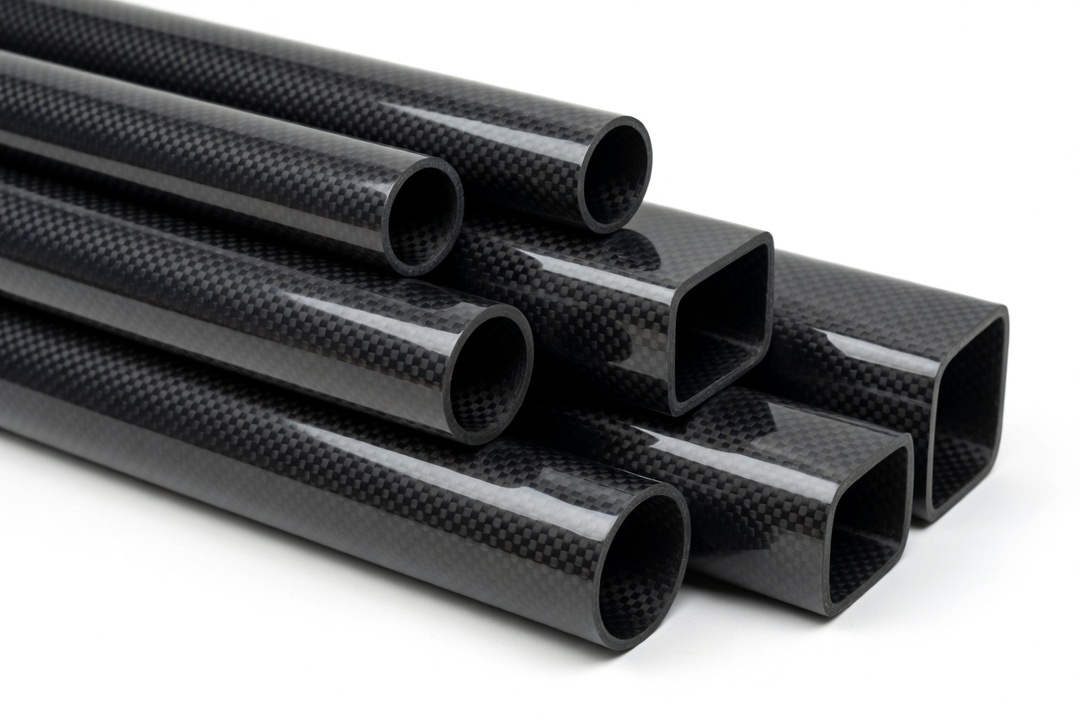
Many buyers focus on the tube size first. They check the outside diameter, wall thickness, and length. Those numbers are important, but they are only part of the design.
The carbon fiber tube layup has just as much influence on the finished tube.
A tube with the same dimensions can behave very differently when the fiber directions change. One tube may resist bending very well. Another may twist less under load. The difference comes from the layup, not from the outside size.
We worked with a customer who builds inspection robots for pipelines. They first ordered tubes from another supplier because the price looked attractive. After assembly, the robot arm flexed more than expected. When they cut one of the tubes open, they found that the internal layers did not match the drawing they had approved.
The supplier kept the same wall thickness but changed the layer sequence to make production easier.
After we produced the same custom carbon fiber tube using the original layup schedule, the customer measured much better stiffness during testing. No design changes were needed on their side.
That is why engineers spend time creating a layup schedule. Every layer has a purpose.
How We Build Carbon Fiber Tubes From Your CAD Drawing
Every project starts with your drawing, not with our standard products.
Some customers send a complete 3D model. Others provide a PDF drawing with dimensions and a laminate schedule. Both work for us.
Before production begins, our engineers review every detail, including:
If we notice something that could create manufacturing problems, we contact you before making the mold. For example, one customer requested a very small inside radius near the tube end. It would have increased the risk of wrinkles during layup. Instead of changing the drawing without notice, we discussed two options with their engineer. After a short review, they approved a small adjustment that kept the mechanical performance while improving production stability.
This process helps both sides avoid surprises after the tubes are finished.
Why This Process Matters
T300, T500 and T800 Carbon Fiber Tube Supplier Comparison
Many customers ask whether they should always choose T800.
The answer is usually no.
Each material serves a different purpose.
| Material | Characteristics | Typical Applications |
|---|---|---|
| T300 | Good balance between strength and cost | Industrial equipment, sports products, machine frames |
| T500 | Higher strength with moderate weight reduction | Robotics, automation equipment, precision machinery |
| T800 | Higher stiffness and lower weight | UAVs, aerospace parts, racing components |
For example, a factory making automated packaging machines often chooses T300 because the tubes remain strong while keeping the project within budget.
A drone manufacturer may select T800 because reducing even a few hundred grams can increase flight time.
The right material depends on your application, not simply on choosing the highest grade.
If your drawing specifies T300, T500, or T800, we purchase and manufacture with that material. We do not replace it with another grade unless you approve the change.
Powiązane artykuły:
Złącza do rur z włókna węglowego: jak wybrać odpowiedni typ
Czy dostawca rur z włókna węglowego jest w stanie dostosować się do Twojego indywidualnego harmonogramu układania warstw?
Producent dużych arkuszy z włókna węglowego | Panele na zamówienie
Rury z włókna węglowego owijane w rolkach: 5 kluczowych zalet w porównaniu z rurami pultrudowanymi
Rury z włókna węglowego T700 a T300: weryfikacja parametrów i jakości
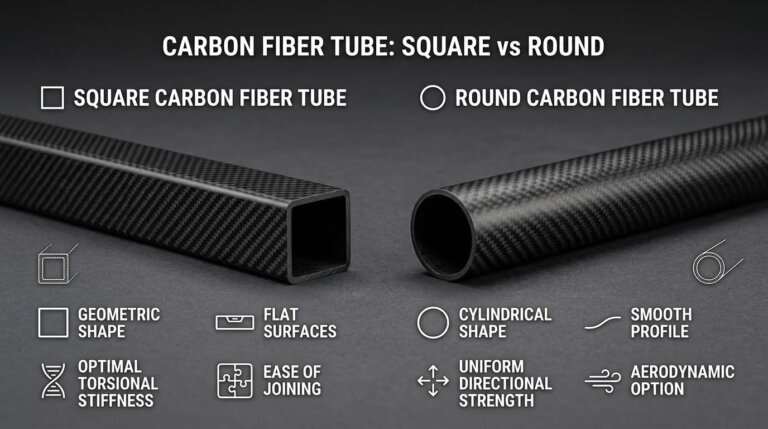
Rura kwadratowa z włókna węglowego a rura okrągła: wyjaśnienie różnic w sztywności w przemyśle lotniczym
Can We Produce According to Your Layer Schedule?
Yes.
Many of our customers already have finished engineering drawings before they contact us. Their documents specify every layer of the laminate, including fiber orientation, number of plies, ply thickness, carbon fiber grade, and optional reinforcement materials.
If we believe a certain layup may create production risks, we stop and discuss it with you first. We never assume that a different layup will produce the same result.
What Your Layer Schedule Can Include
Quality Checks Before Production Starts
Quality control does not begin after the tube comes out of the mold.
It starts much earlier. Before the first layer is placed on the mandrel, our engineers confirm all critical details from your drawing and specifications.
This review only takes a short time, but it prevents many production mistakes. A few years ago, a customer sent an updated drawing one day before production. The outside dimensions stayed the same, but the layup schedule changed from six layers to eight layers. Because we always check the latest revision before production starts, our team caught the update in time. The correct drawing went into production, and the customer avoided receiving a full batch of parts built to an older version.
Small checks like this save both time and cost later.
What We Confirm Before Production
Wybór odpowiedniego dostawcy rur z włókna węglowego do Twojego projektu
If you need a custom carbon fiber tube built to your exact drawing and layup schedule, we’re here to help. Send us your CAD files or specifications, and our team will review your project and provide practical manufacturing advice.