
 Polish
  English
  German
  Japanese
  Arabic
  Czech
Czech  Spanish
  French
  Italian
  Danish
  Portuguese
  Norwegian
  Dutch
Dutch 
Spis treści
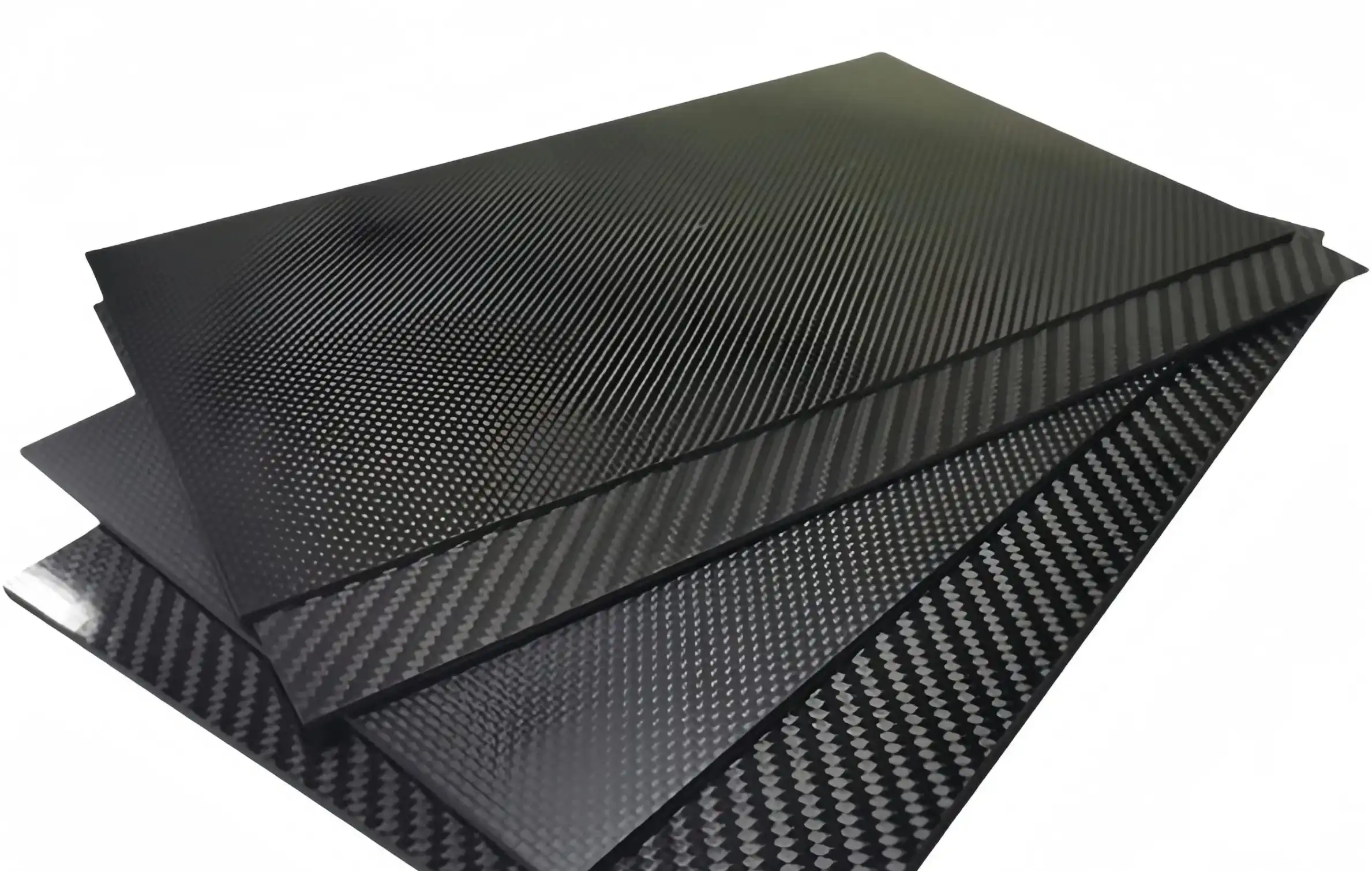
A CFRP sheet can look excellent when it leaves the workshop and still cause problems after a year on outdoor equipment. The surface loses gloss. The edges turn pale. A bolt hole starts to show a dark line around it.
The carbon fiber is rarely the first part to fail. The resin surface, coating, cut edges, holes, and bonded joints are usually more exposed to sunlight and water.
For outdoor use, CFRP sheets need more than a good-looking carbon finish. They need a resin system, edge protection, and surface coating matched to the actual installation environment.
Why the Carbon Fiber Is Not the Only Part That Ages Outdoors
Carbon fiber itself is stable in many outdoor conditions. The resin around it is not always as stable.
Epoxy resin can yellow, lose gloss, chalk, or develop fine surface cracks after long exposure to sunlight. These changes may start as cosmetic problems. Over time, they can expose the laminate and make moisture entry easier.
A customer may see a panel fade and assume the carbon fiber has failed. In many cases, the issue begins at the resin surface or coating. UV exposure can cause photochemical changes in epoxy coatings, leading to discoloration, chalking, cracking, and loss of surface performance.
This is why “carbon fiber is weather resistant” is not enough information for an outdoor panel. The full material system matters.
Powiązane artykuły:
CFRP Sheets for Outdoor Equipment: UV, Moisture and Long-Term Weathering
Carbon Fiber Plates for Frames: Prevent Warping After CNC
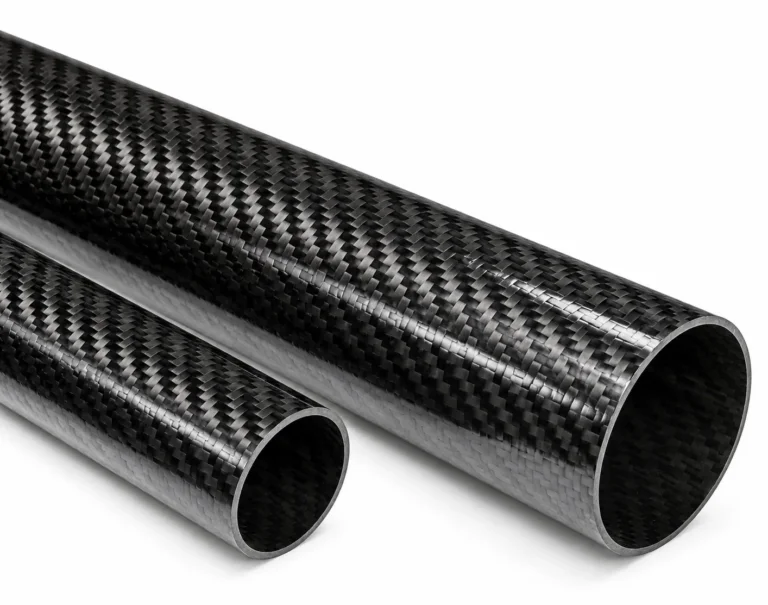
Carbon Fiber Tubes for Glider Tail Boom Alignment & Trim Control
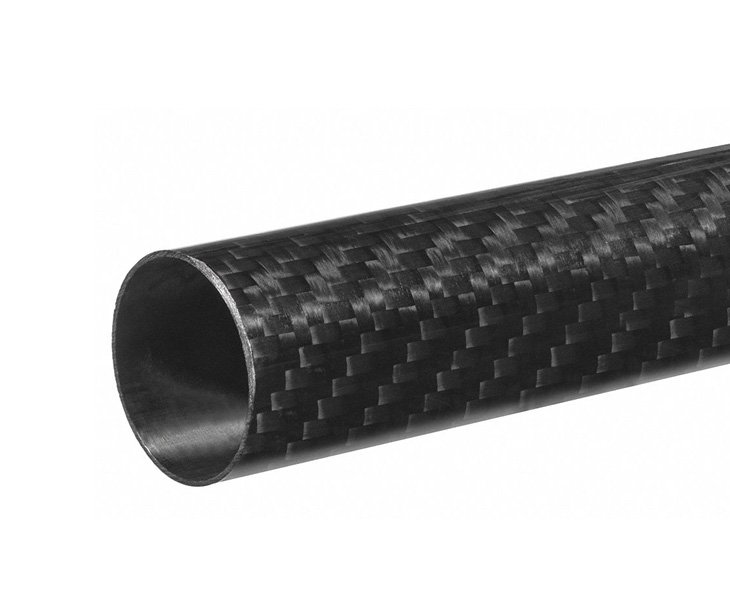
Carbon Fiber Tube for UAV Antenna Placement & GNSS Design
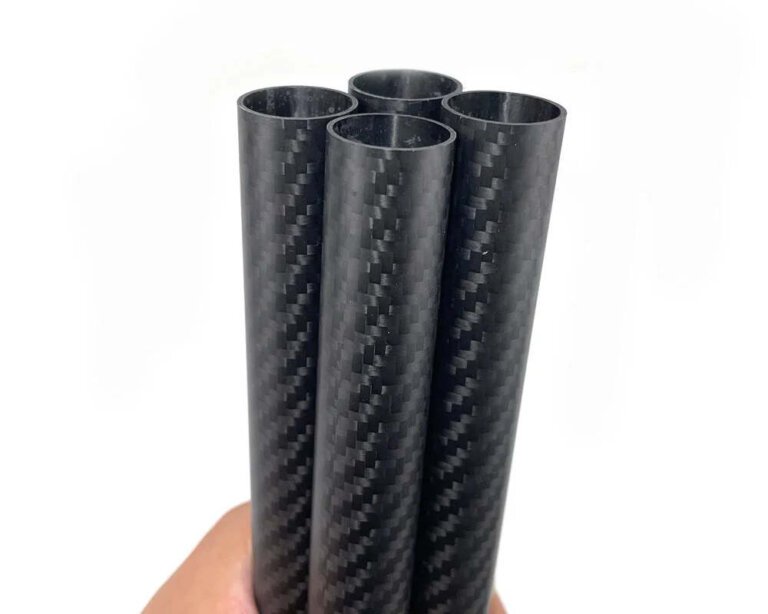
Multi-Size Carbon Fiber Tube Order for a UAV Glider Build
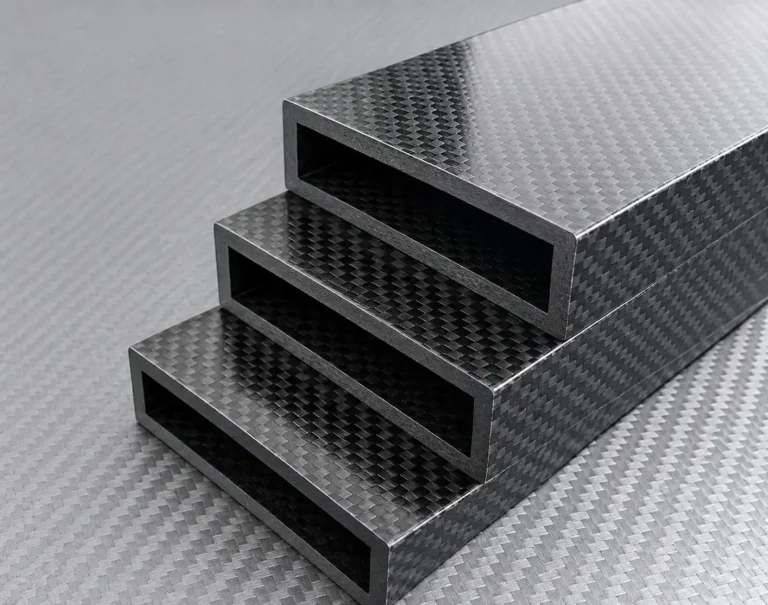
Carbon Fiber Rectangular Tube for Lightweight Rover Robotic Arms
Resin System and Surface Finish: The First Line of Outdoor Protection
When buyers request CFRP sheets for outdoor equipment, they should describe the working environment before choosing a finish.
A sheet used indoors may only need a clean surface and good machining quality. A sheet installed on agricultural machinery, marine equipment, solar structures, communication enclosures, or transport equipment faces sunlight, rain, humidity, dirt, and temperature changes.
Ask these questions before ordering:
Will the sheet receive direct sunlight?
Will it face salt spray, mud, cleaning chemicals, or standing water?
What is the expected service temperature range?
Is the surface visible, load-bearing, or both?
How long should the finish stay presentable?
Can the panel be repaired or recoated in service?
An epoxy-only surface can work in some protected applications. For long-term direct sunlight, a UV-resistant topcoat is usually the safer choice. Aliphatic polyurethane coatings generally retain color and gloss longer than epoxy-only systems under UV exposure.
Edges, Holes and Bonded Joints: Where Moisture Usually Enters
Outdoor failure often starts at the edge of a CFRP sheet, not in the middle.
A cut edge exposes the laminate layers. A drilled hole creates a new path for water. A scratch, chipped corner, or poorly sealed fastener can let moisture reach the resin and fiber interface. Once water enters, it may not remain at the surface.
Moisture can affect bonded joints as well. Water may enter along the bond line and weaken the interface between the adhesive and CFRP substrate. Research on CFRP bonded joints shows that moisture and heat can reduce joint strength over time, with damage often beginning near the edge of the bonded area.
For outdoor panels, protect the weak points:
Seal cut edges where possible
Deburr and coat drilled holes
Use washers and gaskets where fasteners pass through the sheet
Avoid leaving standing water around bolt heads
Design drainage paths so water does not collect in joints
Protect bonded areas with a compatible adhesive and edge sealing
A small edge-sealing detail can prevent a much larger repair later.
Choosing a Coating for CFRP Sheets Used Outdoors
A coating should match both the CFRP sheet and the service environment.
For a visible equipment panel, a UV-stable topcoat helps maintain color, gloss, and surface condition. For a hidden structural panel, the priority may be edge sealing, moisture resistance, and mechanical protection rather than appearance.
Common options include:
Clear protective coating over the carbon surface
Pigmented polyurethane topcoat
Epoxy primer with a UV-resistant topcoat
Protective film for transport and early service life
Local edge sealing around holes and cutouts
Do not assume that one coating suits every project. A panel near the sea may need more attention to salt exposure. A panel in a hot, sunny region may need stronger UV protection. A panel exposed to cleaning chemicals may need a different surface system.
The coating should cover the areas most likely to fail first: the face, back face, edges, drilled holes, and any bonded joint.
Testing CFRP Sheets for the Real Outdoor Environment
“Will it last outdoors?” is too broad a question for a supplier to answer accurately.
A better question is: What test conditions match the installation?
Accelerated weathering tests combine UV light, heat, and moisture to study how coatings and polymer materials respond to outdoor conditions. ASTM G154 uses fluorescent UV lamps with controlled UV and moisture cycles. ASTM G155 uses xenon arc lamps to reproduce a broader range of natural sunlight conditions.
Before testing, define:
The UV cycle and light source
Temperature and humidity conditions
Water spray or condensation exposure
Test duration
Properties to measure
Acceptance limits
Useful checks include color change, gloss loss, chalking, cracking, coating adhesion, edge condition, and mechanical strength after exposure.
Do not convert test hours directly into outdoor years. A 1,000-hour test does not automatically mean one year, five years, or ten years outdoors. The result depends on the resin, coating, UV spectrum, temperature, humidity, and the property being measured.
CFRP Sheets for Outdoor Use
Find answers about water resistance, UV exposure, outdoor coatings, edge sealing, and testing requirements for carbon fiber sheets.
01
Are CFRP sheets waterproof?
CFRP sheets resist water better than many unprotected materials, but they are not automatically maintenance-free outdoors. Water can enter through cut edges, drilled holes, scratches, and damaged coatings. Seal exposed edges and protect fastener areas for outdoor use.
02
Does carbon fiber fade in sunlight?
The carbon fiber itself is not usually the first part to fade. The resin and coating are more exposed to UV. An epoxy surface can yellow, lose gloss, chalk, or crack after outdoor exposure. Learn more about UV resistance of epoxy and polyurethane coatings.
03
Can I use an epoxy-only finish outdoors?
An epoxy-only finish may be acceptable for some protected applications, but it is not the best default for long-term direct sunlight. For outdoor equipment, an epoxy base system with a UV-resistant topcoat is often a more reliable choice. Compare epoxy and polyurethane UV resistance.
04
How should I protect cut edges and mounting holes?
Seal cut edges, coat drilled holes, and use gaskets or washers where fasteners pass through the sheet. These areas are common entry points for moisture. Good edge protection reduces the chance of water reaching the laminate or bond line. Read the related research.
05
How many UV test hours equal one year outdoors?
There is no universal conversion. The result depends on the resin, coating, UV spectrum, temperature, humidity, and test cycle. Define the test method, exposure duration, and acceptance criteria before testing.