
 Hebrew
 English
 German
 Czech
 Spanish
 French
 Danish
 Portuguese
 Norwegian
 Dutch
תוכן עניינים
החורים מתיישרים. מידות החוץ תואמות את השרטוט. עם זאת, פינה אחת של המסגרת יושבת מעל משטח ההרכבה.
הידוק הברגים מושך אותו כלפי מטה, אך אין בכך כדי להסביר מדוע החלק זז לאחר החיתוך.
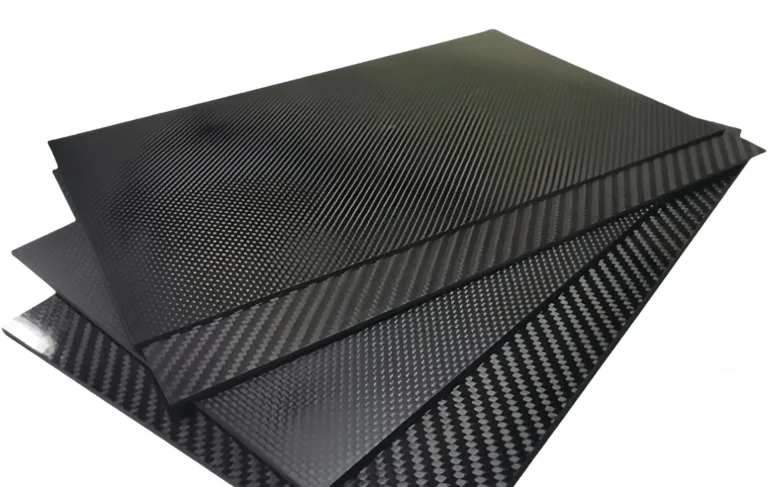
בעת רכישת לוחות סיבי פחמן למסגרות, בדקו יותר מעובי וגימור פני שטח. החלק המוגמר צריך לשמור על צורתו לאחר שיצא ממתקן ה-CNC—לא רק בזמן שהמכונה מחזיקה אותו שטוח.
שטוח לפני חיתוך, קמור לאחר שחרור: היכן מתחילה התעקמות המסגרת
לוח עשוי להיראות שטוח על המכונה משום שמהדקים או לחץ ואקום מחזיקים אותו כנגד השולחן. לאחר השחרור, הוא עשוי לחזור לצורתו המקורית.
חיתוך יכול גם לשנות את אופן התפלגות המאמץ בחלק. פתחים גדולים, זרועות צרות ומקטעי חיבור דקים מותירים פחות חומר להתנגדות לתנועה. מאמץ שיורי שנשמר בתוך הלוח המקורי עשוי להתבטא בכפיפה או פיתול לאחר העיבוד. כוחות הידוק וחיתוך לא אחידים יכולים להוסיף עיוות נוסף.
אל תאשימו את כלי החיתוך לפני בדיקת החומר הנכנס.
תעדו את צורת הלוח לפני העיבוד, ואז בדקו את המסגרת המוגמרת לאחר השחרור. השוואה זו עוזרת להבדיל בין בעיית חומר קיימת לבין עיוות שנוצר במהלך העיבוד.
מאמרים קשורים:
לוחות סיבי פחמן למסגרות: מה סימטריית שכבות יכולה
שני לוחות יכולים להיות בעלי אותו עובי ומשטח אריג טוויל, אך מבנים פנימיים שונים. האריג החיצוני אינו מלמד כיצד מסודרות השכבות שמתחתיו.
ללמינציה סימטרית יש חומר וכיווני סיבים תואמים משני צדי מישור האמצע שלה. בתורת הלמינציה הקלאסית, הדבר מבטל צימוד בין העמסה במישור לבין כפיפה. מבנה שכבות מאוזן מטפל בהשפעות צימוד אחרות; “מאוזן” ו“סימטרי” אינם מונחים ניתנים להחלפה. אף אחד מהתיאורים אינו מבטיח לוח מיוצר שטוח לחלוטין.
שאלו את הספק על הלמינציה, לא רק על השכבה הקוסמטית.
עבור לוחות סיבי פחמן למסגרות, פרטי רכישה שימושיים כוללים את כיווני הסיבים הפנימיים, האם מבנה השכבות סימטרי, וכיצד נבדקת השטיחות של החומר הנכנס. שאלות אלה מועילות יותר מאשר לבקש רק “פחמן 3K באיכות גבוהה”.”
הידוק הלוח ללא כפייתו לשטיחות
מתקן הידוק צריך להבטיח את החומר מבלי להשתמש בכוח מופרז כדי לתקן את צורתו הטבעית.
התמיכה חשובה ביותר סביב זרועות ארוכות, דפנות צרות ופתחים גדולים. לוח עשוי להתחיל את העבודה כשהוא נתמך היטב, ואז להפוך גמיש כאשר כלי החיתוך מסיר את החומר שסביבו.
A backing board or close-fitting support can reduce movement beneath the cutting area. Vacuum workholding may suit some shapes, but its holding force must remain adequate as openings are cut. Mechanical clamps need broad contact areas and enough pressure to resist cutting—not enough to bend the stock.
For carbon fiber plates for frames with delicate sections, consider retaining tabs or a surrounding border until the last operation. Sharp, composite-appropriate tools and controlled cutting forces also help protect edges and reduce movement. There is no single feed-and-speed setting that suits every carbon laminate.
Approve the Finished Frame, Not Just the Uncut Sheet
A small square sample tells you little about a large frame with narrow arms and several openings.
Use a representative part for first-article approval. It should include the features most likely to expose a problem: long unsupported sections, closely spaced mounting points, or large pockets.
A practical check follows the part through the process:
Measure the incoming sheet.
Machine the agreed frame design.
Inspect it after removing all machining restraints.
Repeat the measurement after an agreed settling period.
Check fit with the actual spacers or mating components.
Measuring immediately after release and again after the part has relaxed can reveal changes that a fixture-based inspection misses.
Keep the results with the approved drawing. A sample that fits only after being forced into place should not quietly become the production standard.
Specify Flatness Before Ordering Carbon Fiber Plates for Frames
“Must be flat” leaves too much room for disagreement.
State which areas matter. A frame may need close contact at four mounting pads without requiring the same limit across every decorative opening or unsupported arm.
The inspection plan should identify the support points, measurement method, allowed deviation, and whether the part is checked freely or in a defined restrained condition. Measurements should not use pressure that hides the shape error.
There is no universal flatness limit for every frame. Set the requirement around the assembly’s needs, then confirm that the supplier can measure it consistently.
FAQ
Why do carbon frame plates warp after cutting?
Possible causes include an already bowed sheet, fixture pressure, cutting forces, and residual stress redistribution. Compare the plate before machining with the released part to narrow down the cause.
Does a symmetric layup guarantee flatness?
No. Symmetry removes certain laminate coupling effects, but manufacturing stresses and processing conditions can still affect the final shape.
Will a thicker plate solve the problem?
Greater thickness can increase bending stiffness, but it does not remove residual stress or correct poor workholding. Review the cause before adding weight and material cost.
How should the finished frame be inspected?
Use the agreed support and measurement conditions. Remove machining restraints for a free-state check, and record any change after the specified settling period.
Can the assembly screws pull a warped frame flat?
Do not treat extra screw force as an automatic fix. Some assemblies use planned restraint, but that condition must be part of the design. Otherwise, forced fit can hide a part that does not meet its acceptance requirement.
Before releasing a batch of carbon fiber plates for frames, agree on the finished-part check. A short discussion about support points and flatness limits is easier than sorting out a box of frames that need force to assemble.